
Recorded on 11 December 1949, put out by Mercury the following year, laid under the car chases of Bonnie and Clyde in 1967 and entered in the Library of Congress's National Recording Registry in 2004, the banjo tune that made the word famous was "Foggy Mountain Breakdown", and the North Carolina picker who wrote it was Earl Scruggs, playing it at a gallop with Lester Flatt and the Foggy Mountain Boys.
In bluegrass a breakdown is a race.
The breakdown metal bands build their songs around is the same word pointed the other way. Instead of racing, the band kicks the legs out from under its own tempo, halves the pulse, throws away every note but the lowest open string on the guitar, deadens that string at the bridge and slams it into the floor of the room again and again, with gaps between the blows wide enough to hear the PA hum. The fiddle tune adds. The metal one takes away.
Same word. Opposite job.
What is a breakdown in metal?
A breakdown in metal is the passage where a heavy song stops moving forward and starts pressing down. The click track does not change while the beat the crowd feels halves; the riff shrinks to one or two notes, usually the open bottom string chopped into short palm-muted bursts; the drummer gives up the fast pattern and plays the slow one; and the silences between those hits become as much a part of the riff as the notes. You do not hum a breakdown. You stand inside it.
Dance music had its own breakdown first, and it sits closer to the metal one than the banjo does. In disco and the club records that followed it, a breakdown is the stretch where the producer pulls the arrangement out until only the drums are left, and Tom Moulton, the New York remixer credited with stretching the disco break out of Don Downing's "Dream World" in 1974, made the break the surprise turn of a record that otherwise ran on one plane. Metal took the same arithmetic and made it violent. The producer strips the song back to its bones; the metal band hits the room with them.
Picture a VFW hall that runs independent wrestling on Saturday nights and rents the same room to five heavy bands on Sunday afternoon, with the ring still standing in the corner. Running the ropes is the blast beat: the big man hits one side, rebounds, hits the other, fast and loud, the cables twanging, and nobody in the front row moves. Then he stops running. He climbs the corner post, two slow beats, stands on the top turnbuckle while the whole hall counts with him, and drops, three hundred pounds landing flat on a canvas stretched over plywood, the boards splitting under the mat with a crack that rocks the front row back on its heels and bounces the ring bell off its table. The body did not get bigger between the ropes and the turnbuckle. It got slower, and it got higher, and that is a breakdown.
The parts are the same in every heavy genre that uses one: the halved pulse, the open low string, the space, the drum pattern, and the drop that gets the band from the fast section into the slow one. How those parts sit inside a song, alongside the blast beat, the tremolo riff and the two voices, is laid out in the mechanics of deathcore. Taken alone, the breakdown is a smaller machine, and a stranger one.
The deathcore breakdown
Hardcore had the breakdown first and metalcore kept it, so what makes the deathcore breakdown its own thing is the distance it has to fall. A hardcore band drops from a punk tempo into a mosh tempo. A deathcore band drops from blast-beat speed into half time on a guitar tuned down to A or B, and the bigger the fall, the harder the landing. The speed on either side is there to make the slow part feel slower.
The second difference is how many of them there are. A hardcore song may build to one mosh part and end. A deathcore song often carries two or three breakdowns, each one heavier than the last. The genre writes its songs as a series of approaches to that moment, an order its players sum up as blast, build, breakdown, and everything in the first two words is there to load the third.
Split up in April 2010, back on reunion stages in 2014, and signed to Nuclear Blast for a comeback record released on 22 July 2016, the Montreal band that has stood two singers at the front of its stage since 2004 was Despised Icon, and Beast put that two-voice line-up back in front of the crowd after seven years without a new album. The album went to number two on Billboard's Heatseekers chart, the list for acts that have never reached the top 100 of the Billboard 200.
The voice changes job inside a deathcore breakdown. Hardcore shouts its breakdowns. Deathcore growls them from the bottom of the chest, and the room feels the word in its ribs before it hears it.
The breakdown metal took from hardcore
The slow part began as a dance instruction. In the New York hardcore clubs of the early 1980s, bands dropped out of the fast punk beat into a heavier, slower stretch that the metalheads in the crowd began calling the mosh part from around 1983, while the hardcore players called it a skank part, and the whole point of it was the crowd: the fast sections were for running, the slow one for the kids who wanted to swing their arms in the space it opened. Metal riffs crept into those slow sections through the late 1980s, and by the 1990s the metallic hardcore bands were building whole songs as a chain of them.
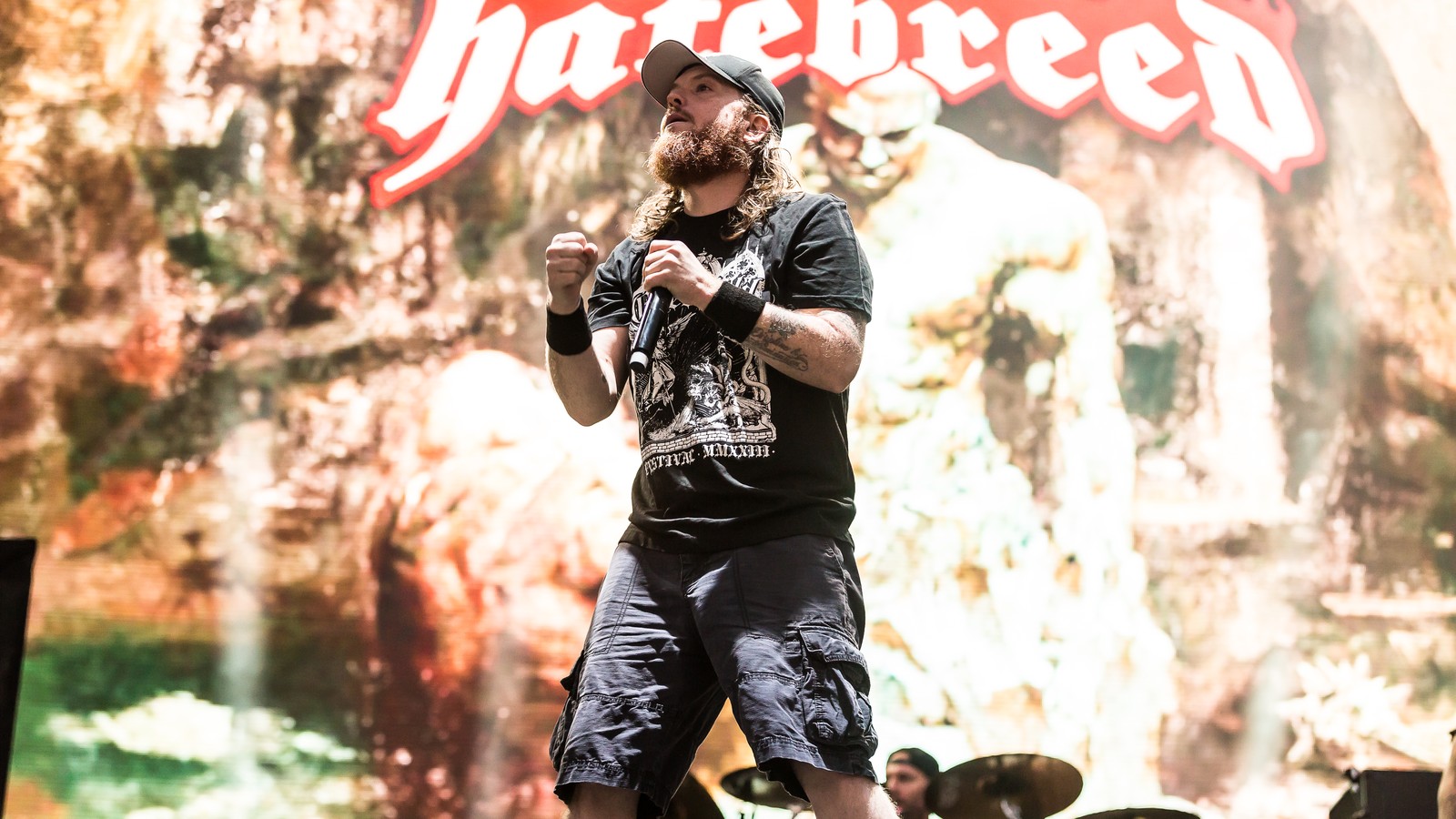
Released on Universal in March 2002, five years after a Victory debut that had turned their name into a byword for metallic hardcore, Perseverance was the record that shoved the beatdown in front of a major-label audience, and the Connecticut band that made it was Hatebreed. Its lead single, "I Will Be Heard", runs 2:58 and carries the hardcore floor that deathcore inherited.
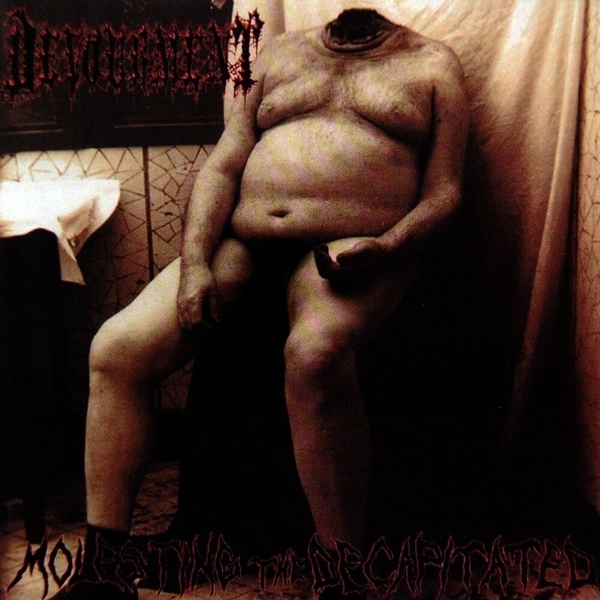
Death metal reached the same place from the other side. The brutal death metal bands of Long Island and Texas spent the 1990s slowing their own songs into syncopated, palm-muted grooves on the lowest note they could reach, and the Dallas band that stripped the death metal song down to those grooves on a debut released by United Guttural in 1999 (catalogue number UGR 005), Molesting the Decapitated, was Devourment, after Internal Bleeding had drawn up the blueprint in 1995. Slam is a breakdown that never ends. The riff stays half time for minutes, and the drum part is built to stamp it flat.
"Festering Vomitous Mass", the opening track of that debut, is over in 2:53, and the drop from blast speed into the slam is the move the deathcore bands of the next decade would make the centre of every song. It is the same drop the hardcore kids danced to, played by people who had never needed a floor to dance on.
| Era | Where | Falls from | Typical cue | What lands |
|---|---|---|---|---|
| Early 1980s | New York hardcore | Fast punk beat | A bark from the singer, or silence | A slower two-step riff for the floor |
| 1990s | Metallic hardcore | Mid-tempo groove | A shout, a cymbal choke | Metal riffing at half speed, chained section to section |
| 1990s | Brutal death metal and slam | A blast beat | Often none | A syncopated groove on the lowest note, held for minutes |
| 2000s | Deathcore | A blast beat | A squeal over the last bar, then a gap | Half time on a string tuned to A or B, a china cymbal on the quarter notes |
| 2010s | Downtempo deathcore | Another breakdown | A held chord ringing out | Half time halved again, long silences between hits |
Deathcore tied the two lines into one knot. The Cleansing, the debut Century Media released for Suicide Silence on 18 September 2007, put tempo changes and breakdowns under songs that went from blast to breakdown and back, and by 2015 Black Tongue had pushed the idea to its end on The Unconquerable Dark, a downtempo deathcore record also released by Century Media, on 4 September 2015, where the breakdown is the climate. Every branch since has kept the drop, and following it is the same as following the genre from the demos to the revival.
What makes a breakdown heavy
Tempo halving comes first, and it is a trick played on the body rather than on the clock. The click in the drummer's ear can run at 180 beats a minute straight through the change while every kid on the floor starts moving at 90, because the drums stop marking every beat and mark every other one, and a room follows the drums, never the click. Nothing slows down. Everything gets twice as much room. Each hit now has a full beat to hang in the air before the next one lands, and a crowd that was being dragged along at full speed a second earlier gets to throw its whole weight into every blow.
Then the open low string, the heaviest note the guitar owns and one it can play without a finger on the neck. Palm-muted, it gives up its ring and most of its pitch. What comes out is concussive, a thump with a growl wrapped round it, and on a seven-string in drop A it sits around 55 hertz, low enough to share a register with the kick drum. Choked that way, the note lands like a fifty-pound stage weight shoved off the back of a box truck onto the asphalt: no sustain, no tune worth naming, just a crack and a dent where it hit.
Space is the part people forget. A breakdown with no gaps is a chug riff, busy and hot; a breakdown with gaps is a set of separate blows, and each one can be heard and felt on its own. The silence before the first hit is the widest gap of all. A band that stops dead for one beat, everything cut, the room frozen mid-stamp, and then drops onto the open string has turned one bar of nothing into the loudest moment of the night.
Nothing slows down. Everything gets twice as much room.
The drum pattern is what nails the guitar to the floor. In most deathcore breakdowns the loudest voice on the kit is not the kick or the snare. It is a china cymbal, the trashy one with the flipped-up rim, which marks every quarter note and cracks across the top of the breakdown like a cafeteria tray thrown flat onto the floor of the high school gym where the Saturday matinee runs, a wide, blunt slap on every beat that tells the room where the pulse is while the low end hides it in syncopation. Without the china the breakdown loses its map.
Last comes the drop itself, the instant the band falls out of the fast section and into the slow one. Whatever the cue that warns the room, it is there to earn the drop, and the whole tonnage of the song rides on that first beat. When every player hits the first beat on the same instant, the passage lands as one blow; when they smear it, the room hears four people arriving at the same place.
That is the whole machine, and the slow part needs no fast note of its own, only a fast one before it to fall from. A band that halves the pulse, picks the lowest string, leaves holes, lets the china crack the quarter notes and falls into it all at once has built one. The breach in the song is the point of the song. In deathcore the breakdown is not a section the band passes through on the way to something else. It is the destination, and the blast beat is the road there.
