
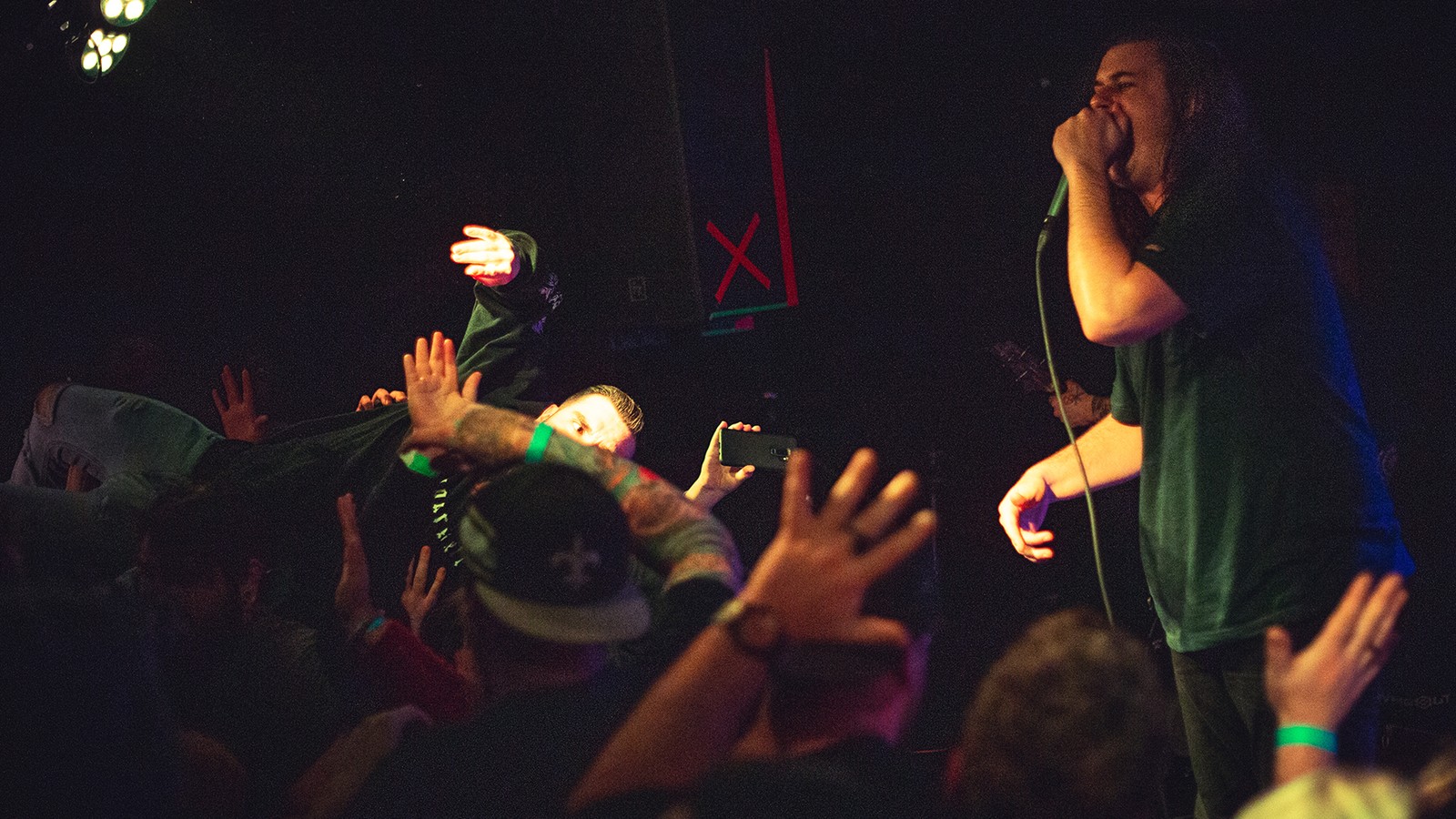
Five full-length albums in a little over ten years, and the whole catalogue in no hurry at all. Formed in Florida in 2013, on record with a self-titled EP that October and still releasing albums a decade later, from The Hate Campaign in February 2015 to Phobias in February 2025, the band that ripped the fast sections out of deathcore and let the breakdown swallow the whole song is Traitors, one of the two names every honest list of downtempo deathcore bands has to open with.
The other is from Hull. Both started the same year.
Picture the old cast-iron radiator a club tears off its green room wall during a renovation, too heavy for two roadies to carry down the stairs, so somebody tips it over the rail of the second-floor fire escape into the empty back lot: a long second of nothing but the fall, a low hum you feel in the steel steps under your boots, and then the thing smashes into the asphalt hard enough to crack it open and rattle every van window in the lot. A downtempo song is that radiator, dropped again and again. The fall is the space between hits. The landing is the breakdown. You stand there waiting for the next one.
What downtempo deathcore takes out of the song
Start from the deathcore everybody knows, the blast, the tremolo riff, the growl and then the drop, and subtract. Downtempo deathcore cuts the tempo to something near half the pace of a standard deathcore record, tunes the guitars down past where a seven-string stops sounding like a guitar, and then removes almost everything that is not a breakdown, so that the song becomes a chain of slow, palm-muted hits with long sub drops rumbling underneath and nothing fast left to set them up. Speed was the first thing deathcore could afford to lose. The breakdown was the one thing it could not.
The thing nobody warns you about is the silence. A standard deathcore breakdown is busy, with the kick drum filling the gaps between the guitar hits. A downtempo breakdown leaves the gaps open. The guitar hits, the chord rings out or is choked dead, and then there is a beat, sometimes two, where only the sub drop and the room noise are left, before the next hit lands. That gap is where the weight lives, and it is the part that came from doom and sludge, the leaden, funereal pacing those genres had always used, rather than from the hardcore side of the family. Beatdown, the closest neighbour, keeps hardcore as its second parent and keeps the two-step. Downtempo keeps the dirge.
The branch sits beside slam, technical speed and the orchestra in the six-way split of the 2010s, and its place in the story is the slow end of it. Reviewers of these records keep making the same complaint, that an album moves from one slow breakdown to the next and gets predictable by the end, and the complaint is accurate. It is also the definition. A band that answers it by adding a blast section has started leaving the branch.
The nickname doomcore turns up on flyers and in the occasional review, Ghost Cult filed its Black Tongue coverage under it, and it is a loan from gabber producers who had the word first. MusicBrainz and Rate Your Music both file the style under its plain name. Metal Archives barely knows it exists.
The downtempo deathcore bands that built the branch
Formed in Hull in 2013 by players who had come through Infant Annihilator, a band famous for cramming more notes into a bar than seemed legal, the five-piece that went the opposite way and built its name on half-time weight is Black Tongue. Falsifier came out in May 2013 and Born Hanged a year later, and Century Media collected the two as Born Hanged / Falsifier [Redux] in 2014. Then came The Unconquerable Dark on 4 September 2015.
That record is the one to hear first, and not because it is the most extreme. Heavy Blog Is Heavy's review heard a band that had slowed down immensely, all midtempo grooves and half-time breakdowns, with "Plague Worship" riddled with them and Eddie Hermida of Suicide Silence taking the one guest verse, on "Vermintide". Between the hits the guitars hang in the air like a ground-loop hum through a cheap PA, rising in every gap until the next chord stamps it flat. Nadir followed on 31 October 2018.
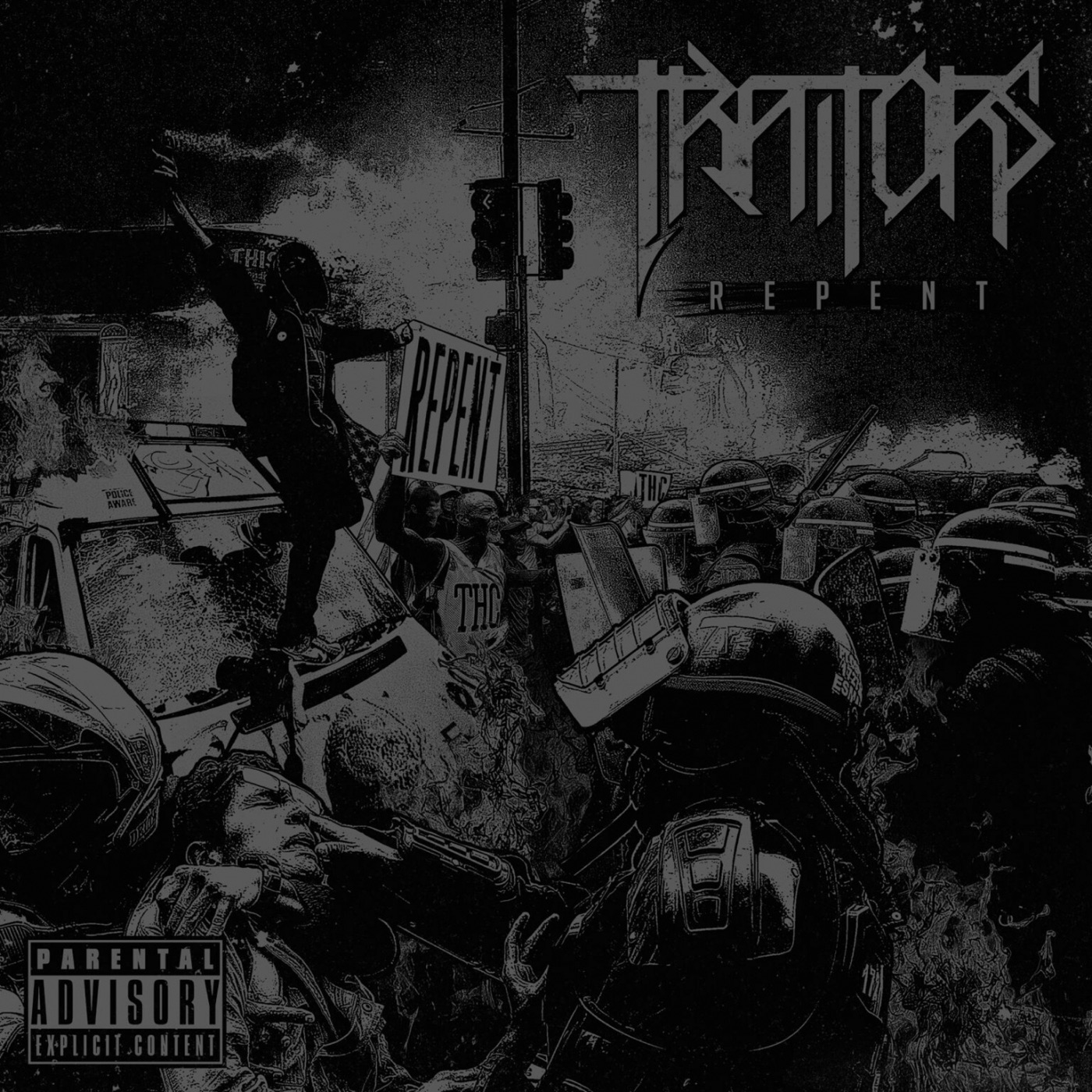
Few in the branch released more often than Traitors, and not one of those records sped up. Between the self-titled EP of October 2013 and Repent on 25 February 2019 the Florida band put out four full-lengths, The Hate Campaign, Mental State in October 2016, Anger Issues in February 2018 and Repent, plus the Night Terrors EP in December 2015, every one of them built on the same downtuned, sludgy chug, a riff that sinks into the beat like the back wheels of a loaded van in a festival car park after three days of rain, axle-deep, spinning, hurling mud over everybody pushing. Tyler Shelton leads the band on vocals. The output never sped the music up.
Then a six-year gap, filled with singles, and Phobias, self-released on 21 February 2025 with "No Witness" out ahead of it in January. Dead Rhetoric heard chunky breakdowns on "No Witness" and a slow-burn one on "10DXM" and complained, again, that the format grows predictable. It gave the record 6.5 out of 10. The band did not change a thing. That refusal is the credential.
Formed in 2012 and fronted by Davis Rider's growl, the American crew that played the slow sound as raw beatdown is Immoralist. A debut EP, Widow, came out in April 2013 on the small label We Are Triumphant, and the full-length Unholy followed on 22 July 2016, self-released. Two releases, and both of them all weight.
North of the border, the band that took the template to Canada was Falsifier, formed in the winter of 2013 in Ontario. Dead Rhetoric set its second EP, Life in Death, beside The Acacia Strain and Black Tongue and heard simplistic riffing and breakdowns sure to incite a riot, and the band signed to Artery Recordings in 2016 before releasing the full-length World Demise on 22 September 2017. A band can share a name with Black Tongue's first EP and still be its own animal. This one is.
Speed was the first thing deathcore could afford to lose. The breakdown was the one thing it could not.
Slower again, from Rotterdam to Copenhagen
The Dutch and Danish arm of the branch arrived later and ended up on bigger labels. Formed in 2014 by musicians from the Netherlands and Slovakia, on record with Tyrannotophia through Unique Leader on 7 June 2019 and with Aeons of Oblivion two years later, the Rotterdam band that carried downtempo back onto a major metal label is Distant. Century Media released Heritage on 10 February 2023.
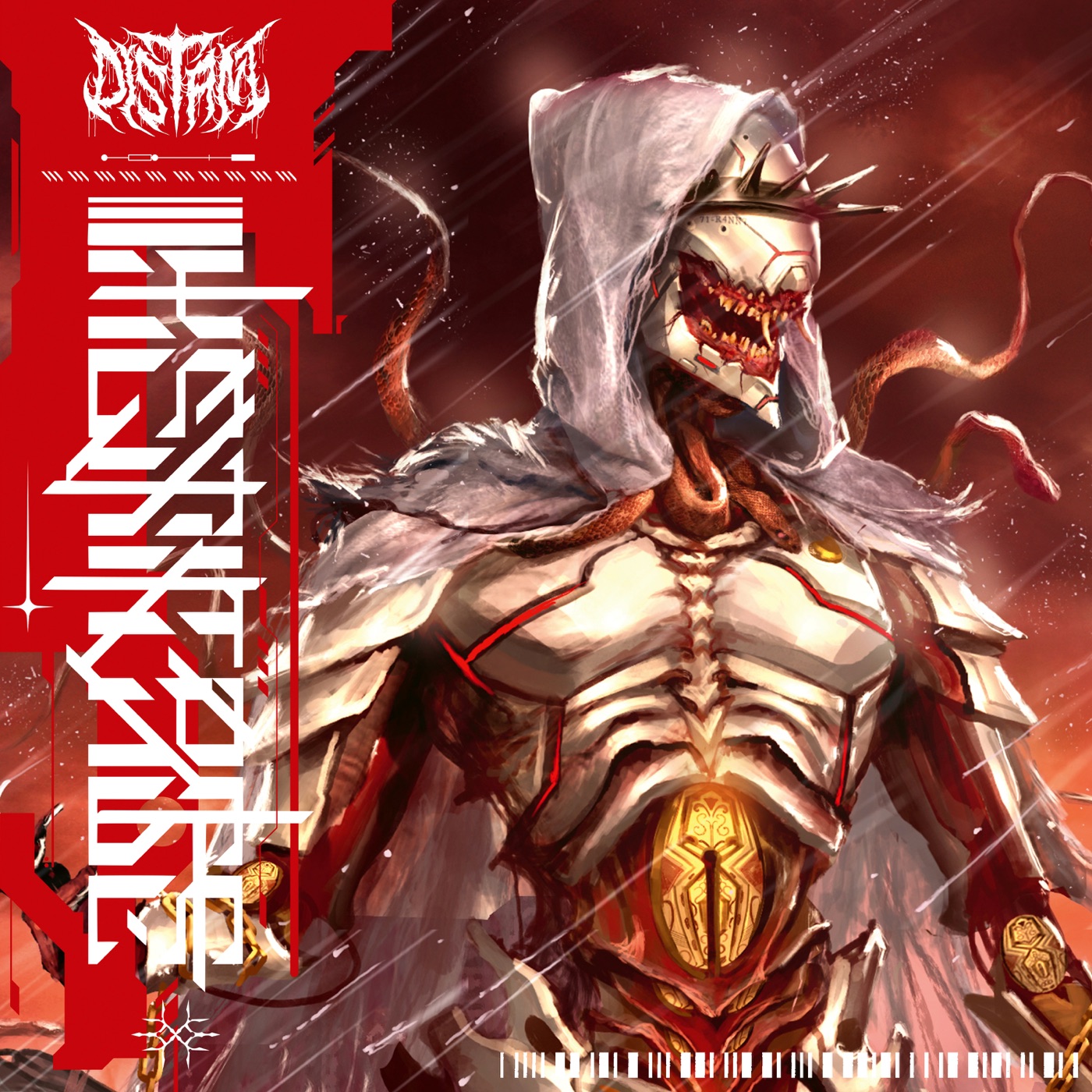
Three reviews of Heritage land on the same thing. Angry Metal Guy heard a band still preferring to crush through predominantly slow-to-mid-paced pummels, Teeth of the Divine heard the back half settle into mid-paced, slowed-down downtempo with whirrs and beeps in the background, and Distorted Sound heard a breakdown on "A Sentence to Suffer" that is a torturous rendition of "again but slower". That last one is the whole branch in a single move, a riff that runs out of road like a merch van coasting out of gas on the interstate, still rolling, slower on every rise, until the engine dies and the full weight of the trailer shoves it the last few feet.
"A Sentence to Suffer" is the track the reviews keep pointing at, and Century Media put it up with a lyric video. Alan Grnja's growl sits low under the guitars of Nouri Yetgin, and the drums of René Gerbrandij leave the gaps open. In 2024 the band went back to its 2017 EP Tsukuyomi and rebuilt it as Tsukuyomi: The Origin, with Alex Erian of Despised Icon, Matt Heafy of Trivium, David Simonich of Signs of the Swarm and Travis Worland of Enterprise Earth on guest vocals.
Formed in Copenhagen in 2015, the Danish crew that started at a crawl and then found a higher gear is Cabal. The Purge EP came in 2016, and Mark of Rot, on Long Branch in 2018, slowed the chug to what Heavy Blog Is Heavy called a snail pace beatdown sound, sleek and high in gain, with a reviewer's complaint that the low drops lose their novelty by the fourth. Drag Me Down followed on Long Branch in 2020, with Matt Heafy and Jamie Hails of Polaris as guests.
Then Nuclear Blast signed them in 2021, and Magno Interitus, in October 2022, picked up speed, with uptempo tracks such as "Insidious" and "Exsanguination" running close to thrash. Everything Rots came in 2025. Cabal belongs to the branch for the early records, and the later ones show exactly where the branch ends: the moment the blast comes back, the band has walked out of the slow room and into the rest of the genre.
The beatdown side of the slow road
Formed in Melbourne, Florida, in 2014, on record with the Abandonment EP in 2015 and with Death of Me on Stay Sick Recordings on 10 November 2017, the band that hauled the downtempo crawl back toward the hardcore floor is Bodysnatcher. This Heavy Void followed on 31 January 2020, Bleed-Abide on MNRK Heavy on 22 April 2022, and Hell Is Here, Hell Is Home on the same label on 10 April 2026.
"Take Me to Hell", released as a single in February 2021, is the clearest place to hear the difference. The tempo is slow, and it is still a two-step tempo, the groove pitched to turn a roller rink full of kids into a demolition derby of windmills and floor-punches rather than to pin anyone in place, and the vocal cadence is hardcore's. In the same year the band covered "Smash Your Enemies" by Hatebreed, which says plenty about where the second parent is. Bodysnatcher name Hatebreed and Terror among their influences. Both halves are audible. That makes Bodysnatcher the hinge between downtempo and beatdown, and the reason the two are easy to confuse: same tunings, same breakdown-first writing, different second parent.
Seven bands, seven records
| Band | From | Formed | Start with | Why it is here |
|---|---|---|---|---|
| Traitors | Florida, US | 2013 | Repent (2019) | Five albums of downtuned, sludgy chug |
| Black Tongue | Hull, England | 2013 | The Unconquerable Dark (2015) | Half-time grooves and open gaps, on Century Media |
| Immoralist | US | 2012 | Unholy (2016) | The slow sound in its first wave |
| Falsifier | Ontario, Canada | 2013 | World Demise (2017) | The template taken north, on Artery |
| Distant | Rotterdam, Netherlands | 2014 | Heritage (2023) | "Again but slower" as a method |
| Cabal | Copenhagen, Denmark | 2015 | Mark of Rot (2018) | The crawl before the band sped up |
| Bodysnatcher | Melbourne, Florida, US | 2014 | Bleed-Abide (2022) | The beatdown edge of the branch |
The branch has a birth year, or near enough. Three of the seven bands started in 2013, on small labels and self-releases, and the branch reached Century Media twice, with Black Tongue in 2014 and Distant in 2023, without ever changing what it did. Every one of these bands sired its sound by subtraction, and six of the seven kept their slow tempo on every bigger stage they reached; Cabal is the one that traded it.
The deathcore of the 2010s had another way out of the blast, and it went in the opposite direction from this one. Where downtempo stopped the crowd moving and held it still, nu-deathcore brought the bounce back, with the same tunings, simpler riffs built for jumping, and the breakdown still underneath.
The test is the same for every band in the branch. Take away the blast beat, slow the tempo until the gaps between hits count as much as the hits, keep the deathcore growl and the deathcore tuning, and ask whether anything is missing. For Traitors, Black Tongue and Distant, nothing is. Set beside the faster branches, the slow road has its place in the story of how one sound split into branches.

