
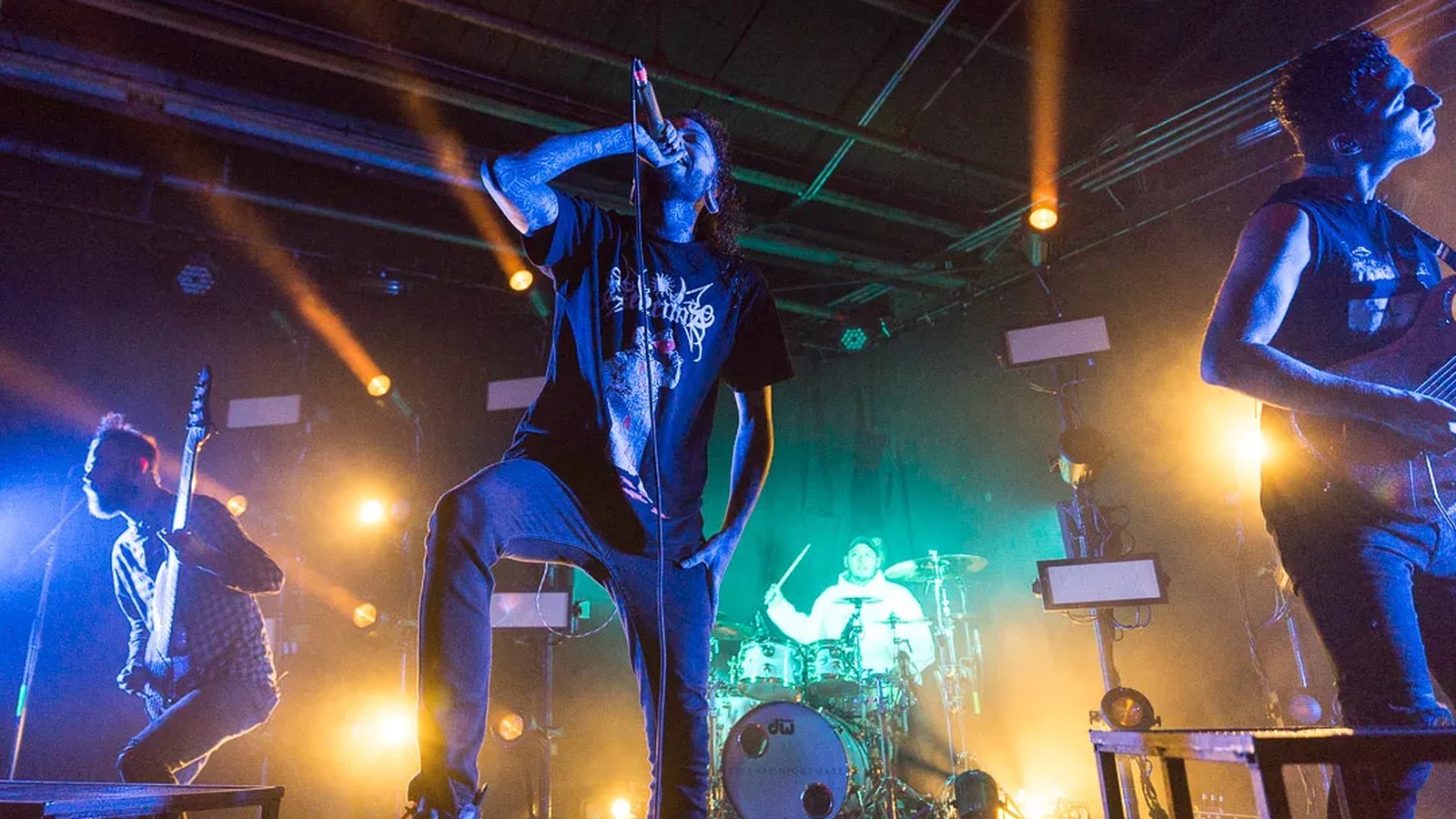
The low gets the credit. The high gets through. Deathcore screams at the top of the range are the half of the voice built to survive the band itself, a torn, narrow edge that climbs over three tuned-down guitars and a triggered kick drum after those same guitars have already flattened the growl underneath into the floor, and every singer in the genre trades between the two registers because neither one can carry a song on its own.
Back on Century Media for Remember... You Must Die on 10 March 2023, nine years after walking over from All Shall Perish in October 2013 to take the microphone, the singer whose "piercing screams" Sierra Light of mxdwn heard cutting through the mix of that record on 18 May 2023, guttural growls right beside them, is Eddie Hermida of Suicide Silence. Cutting through is the job. Everything else is decoration.
Stand on the sidewalk outside an all-ages hall during a breakdown and listen. The kick drum and the guitars come through the brick as one dull pounding that rattles the side windows of every car parked along the curb, and halfway down the row the pounding trips an old station wagon's alarm, and the siren goes up thin and whooping over the whole block, and a kid on the curb kicks the bumper to shut it up and only sets it off again. Every person on the sidewalk hears the alarm before they hear the band. That is the high. The low shakes the street to its asphalt; the high is the one sound that climbs out of the shaking, pitched where the guitars and the kick have left nothing standing, and it carries through a wall that swallows everything below it.
So the high is one register among several in the vocals in deathcore, and the only one whose work is to be heard over the band rather than under it. The guttural adds weight. The squeal adds a hit. The high adds distance, a far end of the range against which the near end can be measured.
Deathcore screams at the top: fry against false chord
Two names cover most of what lives up there, fry and false chord. What the larynx does to make either one belongs to the wider story of how metal singers scream, from the hard rock rasp to the growl. On a record the question is simpler. What does each one sound like, and what does it do to the song around it?
Heard through speakers, fry is the thinner of the pair: a high, dry rasp with a grain you can almost count, bright and narrow, the crackle a voice makes at the bottom of ordinary speech dragged up to the top of the range and blown out until it tears. It sounds like a sheet of bubble wrap wrung between two fists at the merch table after load-out, hundreds of cells bursting so close together that the pops stop being separate and become one dry ripping rasp, the plastic shredding a little further with every twist. It carries very little low end of its own. That is exactly why it rides so cleanly over guitars that hog all of it.
False chord is the fuller one. Same height, more body: a roar with a pitch buried somewhere inside it, rounder and heavier than fry, the distortion smeared over the note instead of breaking the note into grit. In gear terms, fry behaves like a fuzz pedal on a dying nine-volt battery, the signal sputtering out in separate spits, while false chord behaves like an amp's lead channel with the gain dimed, the note still there under the dirt and the whole tone pushing air. A high that has to sound huge leans toward the second. A high that has to slice leans toward the first.
Most singers use both, often inside one line, and the seam between them moves from record to record. The ear does not care what the sound is called, only whether it cuts.
The black metal shriek in deathcore
Produced in Denmark by Tue Madsen and put out by Century Media on 18 September 2007, the first full-length by Suicide Silence, The Cleansing, already carried a third kind of high, the long black metal shriek, stacked under Mitch Lucker's growls in the hearing AllMusic gave the record, and the shriek has been part of the genre's palette ever since. It came over from black metal. It stayed because it does something fry cannot.
A shriek is not a louder fry. It is longer, thinner and colder, held on one vowel for a bar or more instead of chopped into the rhythm, with more air in it and less grit, stretched over the music like a wire rather than slammed down into it. Picture the steam wand on the espresso machine at a coffee shop that books Sunday matinees, jammed open by a kid leaning on the lever between bands, screaming thin and scalding for a whole verse while the milk jug rattles itself off the drip tray and nobody behind the counter can find the valve. The shriek holds. The fry hits.
Released by Century Media on 23 June 2023, the fourth full-length of Mental Cruelty, Zwielicht, brought a new man to the microphone, and the singer whose "shrieking highs" Andrew Kapper of Wall of Sound heard carrying "that phlegmy attack" a week before release, beside guttural lows and even soaring cleans, is Lukas Nicolai. Phlegmy is the telling word: in Kapper's hearing the shriek has a wet, ragged front edge. The same review called the powerhouse ending of "Pest" staggering and heard Nicolai's vocals as "manically possessed". A shriek with that attack on it is a lacerating thing. It also still has to make room for the breakdown.
The low shakes the street to its asphalt; the high is the one sound that climbs out of the shaking.
The low/high trade-off, in one throat or in two
Every deathcore singer works the same arithmetic. One throat, two registers, and a song that wants both inside the same breath, which means the switch itself becomes part of the performance: the drop from the top of the range to the bottom with no gap, the climb back with no run-up. The singers who make it sound effortless are the ones the genre remembers. The cost is that the high never gets the stage to itself for long, because the low is always due back.
Formed in Salt Lake City and driven through every arrangement of that trade a band can try, one throat, then two, then one again, the band that turned the question into a line-up decision is Chelsea Grin. On Ashes to Ashes, released by Artery and Razor & Tie on 8 July 2014 and carried to number 27 on the Billboard 200, the main American album chart, Pablo Viveros, on drums, began singing the mid and low parts beside Alex Koehler, who kept the high-ranged screams for himself; Wall of Sound, looking back in January 2024, still described the pair as sharing vocal duties. "Playing with Fire", which the band put out with an official video, comes from that record. Split that way, the trade stops being a switch inside one body and becomes a call and answer across the stage. The high no longer has to clear the way for the low inside one breath.
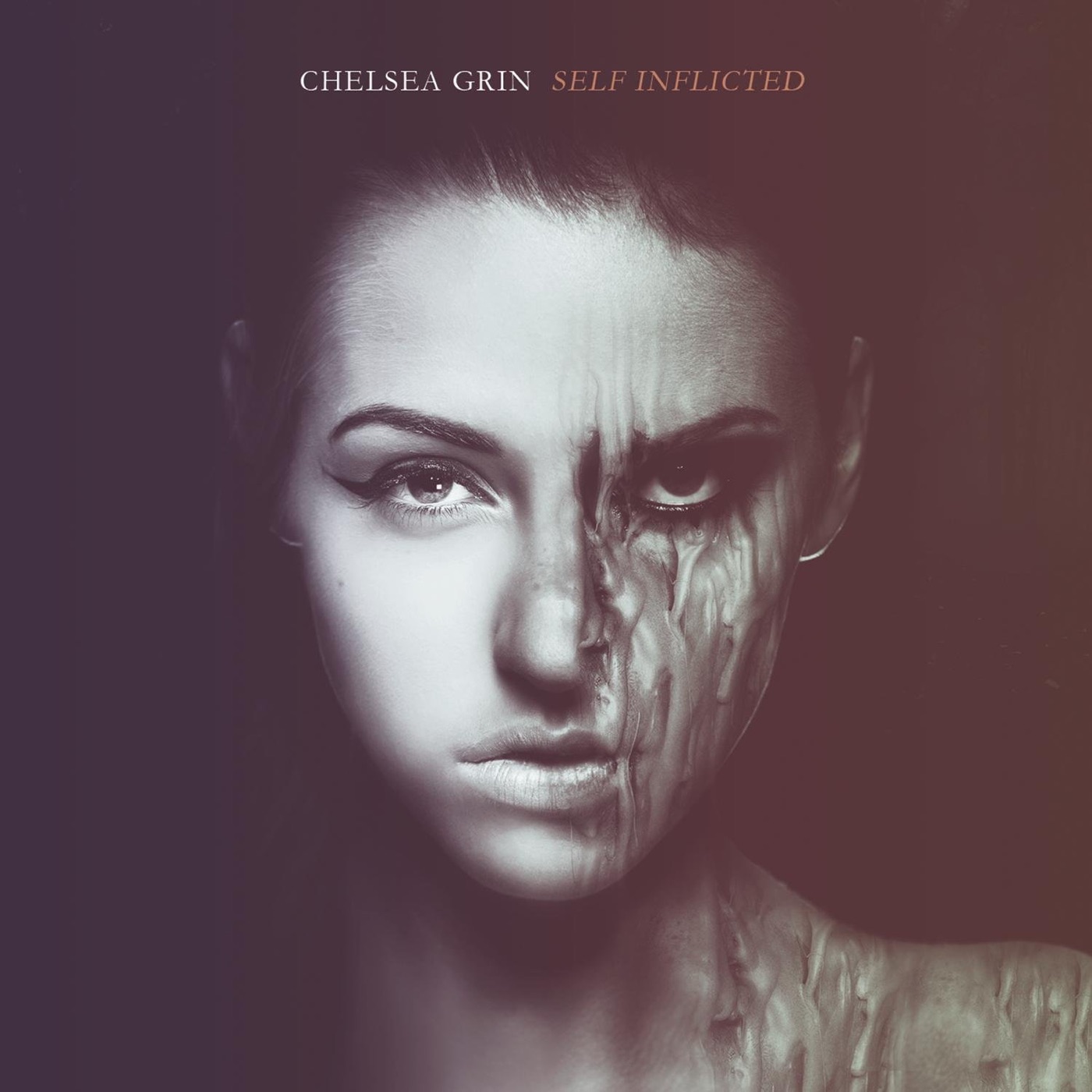
The arrangement held for one more record. Self Inflicted, released by Rise on 1 July 2016, was the first Chelsea Grin record on that label, and it was the last Chelsea Grin album with Koehler at the front, with Viveros credited on drums and backing vocals. When Koehler left in 2018, the job went back into a single throat. Tom Barber, the voice of Lorna Shore until then, took the microphone and took the trade back with it.
Two-singer bands are a lineage of their own, and the founding case, Despised Icon, ran a pair of front men side by side, an arrangement it had settled on by 2004. Most of the genre went the other way. One throat carrying both registers became the norm, and the high became the thing a single singer had to earn alongside the low rather than a second person's specialism.
What the high does against the breakdown and the blast
On the fast parts the high usually leads. A blast beat crams snare and kick into every gap in the bar, the guitars tremolo or chug underneath, and a voice that wants to be heard over that barrage has to go where the drums and the guitars are not, which is up. A guttural over a blast adds mass to a sound that already has plenty. A shriek over a blast adds a line, something long and thin for the ear to follow while the kit tears the floor up below it.
On the breakdown the order flips. The low takes the bar, the band drops onto one chord and the voice drops with it, and the high gets a smaller, sharper job: the cue in the bar before the drop, or one scream laid across the first hit, a thin line sitting on top of the weight so that the ear has something to measure the weight against. The high announces the drop and then gets out of the way. A singer who keeps shrieking through a whole breakdown has blunted it.
That is why even the bands built around the bottom of the range keep a top. Released by Century Media on 28 July 2023, Amongst the Low & Empty is a Signs of the Swarm record from the slam-heavy end of the genre, and the singer whom V13's review in August 2023 heard running filthy lows, saliva-drenched gutturals and "feral highs" through it is David Simonich. The highs are not a softening. They are the spearhead the lows follow in.
Take the high out of deathcore and the genre keeps its breakdowns, but every breakdown arrives at the same weight, with nothing above it to show how far it fell. Beyond dispute, the high is what makes the low read as low. The span between the two ends is the instrument, not either end alone, and the singers who own both ends know it.
The one thing a deathcore singer can add that is not a scream at all is a sung line, and that is the old argument over clean vocals in deathcore, and why they divide. The screams settle nothing there. They only set the height a clean voice would have to compete with.

