
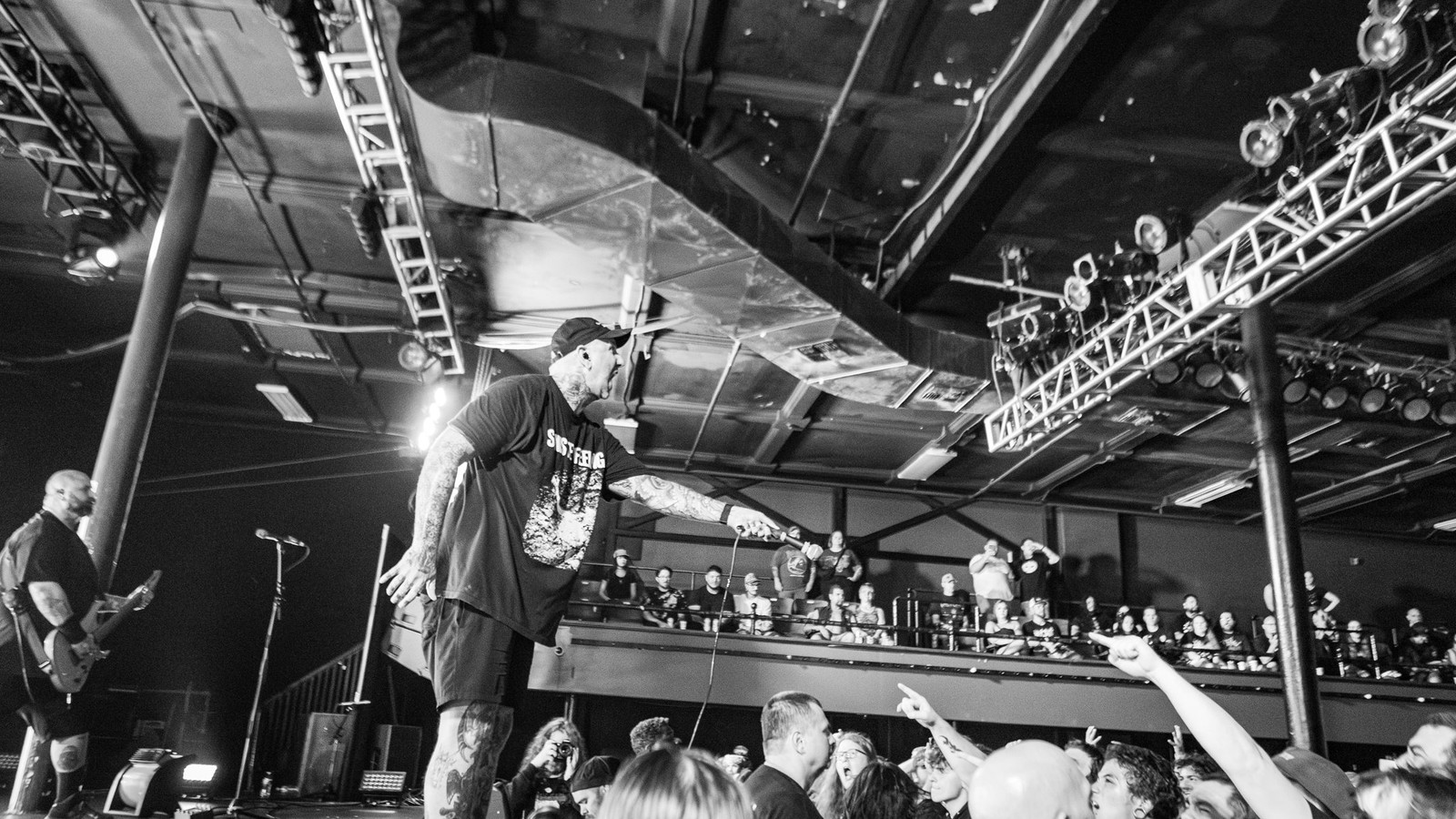
"When we're writing, we're literally going, 'Would we mosh to this?'" Isaac Hale told J. Bennett of Bandcamp Daily, in a feature of 19 August 2019 that ran four days before his band put out its second album, and the question he asks while the songs are written is the same one that settles the argument over whether Knocked Loose is deathcore. Ask what a song is written to do, then ask what it is built from. The two answers do not always match.
Formed in Oldham County, Kentucky, in June 2013, signed to Pure Noise Records, sent onto the Billboard 200 at number 26 with A Different Shade of Blue in August 2019 and at number 23 with You Won't Go Before You're Supposed To in May 2024, and armed with breakdowns that rip a room's front rows off their feet and fling them back against the stage, the Kentucky crew that keeps getting asked whether it is a deathcore band is Knocked Loose. Is Knocked Loose deathcore? No. It is a hardcore band at deathcore weight, and the difference is written where nobody in the crowd ever looks.
Look at a kick drum after a tour. The front head, the one facing the crowd, carries the band's logo, and the logo is a label like any other: it says whatever the band or its label decided it should say. The batter head on the drummer's side tells the truth. Peel one off a hardcore kit in late August and there is usually a single bruise worn into the plastic where one beater has hammered the same patch at stomping speed for three months. Peel one off a deathcore kit and there are two, side by side, beaten milky and soft by a double pedal running blasts until one of them has punched clean through and the head flaps in the trailer like a torn screen. Same drum. Same logo. Different wounds.
So every band on the border gets the same six questions, asked of its batter head rather than its logo. Does it blast? Is the breakdown the place each song is going? Does the voice go down to a guttural? Do the riffs come off death metal's shelf? Which labels and which bills does it live on? And what does the band call itself? Five of the six are mechanics. The sixth is only testimony.
Is Knocked Loose deathcore? The batter head says no
Run the five mechanical questions on the Kentucky band and four of them land on hardcore's side. Decibel filed it as a "beatdown" band whose music is built around floor-punching breakdowns, and heard those breakdowns as the foundation and the springboard for other flourishes, which makes them a hardcore habit rather than the place each song is going. The blast beat is not what the band is filed by. Bryan Garris works high: one reviewer counted on his signature highs and another heard a wretched mosh call, while the guttural turns up as a guest, a Devourment-style growl that closes "…And Still I Wander South" in Decibel's account. And the bills are hardcore's bills: Terror, Harm's Way, Every Time I Die, Stick to Your Guns.
"Mistakes Like Fractures", the first single from A Different Shade of Blue, put out by Pure Noise on 4 April 2019 ahead of the album, is where the confusion starts and where it can be ended. The weight is real. Bandcamp Daily heard the metal menace of Entombed and Slayer in the band that summer, set beside the dissonant hardcore of Disembodied and the modern edge of Code Orange, and the breakdowns hit like a van's sliding door hurled shut so hard it jumps its track and buckles the panel, a single slam with the dead silence of the parking lot right behind it. A breakdown that holds a song up is hardcore's habit. A breakdown that a song is aimed at is deathcore's.
"Is Knocked Loose deathcore?" is a question the weight provokes, and the weight alone cannot settle. The one answer that points the other way is the riff shelf, where Decibel heard melodic death metal in the opener of A Different Shade of Blue and modern death metal in another track. The band's own testimony stays with hardcore: Hale called the record a statement that the band had pushed hardcore somewhere it had not been. Four answers for hardcore and one for metal is a border band. It is not a crossing. The whole map of deathcore and its neighbouring genres runs the same way: the parts decide, and the weight is never one of the parts.
| Band | Riff source | Labels | Bills and tours | Filed as | Verdict |
|---|---|---|---|---|---|
| Knocked Loose | Metallic hardcore, with Entombed and Slayer heard in it | Pure Noise | Terror, Harm's Way, Stick to Your Guns | Hardcore punk, beatdown hardcore | Hardcore |
| Whitechapel | Death metal | Metal Blade | Summer Slaughter 2008; Chelsea Grin and The Acacia Strain in 2026 | Deathcore | Deathcore |
| Chelsea Grin | Deathcore riffing and breakdowns | Artery, Rise, ONErpm | Carnifex in 2023; Whitechapel in 2026 | Deathcore | Deathcore |
| Infant Annihilator | Technical death metal | Self-released | None; a studio project | Deathcore, technical death metal | Technical deathcore |
| Emmure | Nu metal, Meshuggah | Victory, SharpTone | Co-headline with The Acacia Strain, 2014 | Metalcore, deathcore, nu metal | Border, filed three ways |
| Waking the Cadaver | Slam death metal | Necroharmonic, Unique Leader | Napalm Death, Immolation | Brutal and slam death metal; also deathcore | Slam, deathcore by birth |
| The Black Dahlia Murder | Swedish melodic death metal, Carcass | Metal Blade | Headliner, Summer Slaughter 2008 | Melodic death metal | Melodic death metal |
| The Acacia Strain | Hardcore, doom, sludge, death metal | Devil's Head, Prosthetic, Rise, Closed Casket | Terror, Hatebreed, Knocked Loose; Whitechapel, Dying Fetus | Metalcore, deathcore | Both, by design |
Whitechapel, Chelsea Grin and Infant Annihilator answer yes
Some bands get asked the question only because they changed something, and the answer is the same once the change is measured. Formed in Knoxville, Tennessee, in 2006, signed to Metal Blade within two years, built around three guitarists who have stood in the front line since 2007, and fronted from the first demo by Phil Bozeman, the band whose 2021 record made people wonder was Whitechapel. Bozeman sang clean through most of Kin, and a sung chorus is not a thing deathcore's count usually carries.
"Hymns in Dissonance", the title track Metal Blade released with a video on 15 January 2025, was the reply. The album that followed on 7 March was produced in house by guitarist Zach Householder, and guitarist Alex Wade said it does not follow Kin musically at all and is, if anything, the polar opposite. The brief was the band's heaviest album to date, and reviewers heard blast beats, death metal riffs, breakdowns and deathcore vocals in the result. Every question answers deathcore. One record of singing never moved the band off the line. It only showed where the line runs.
One record of singing never moved the band off the line. It only showed where the line runs.
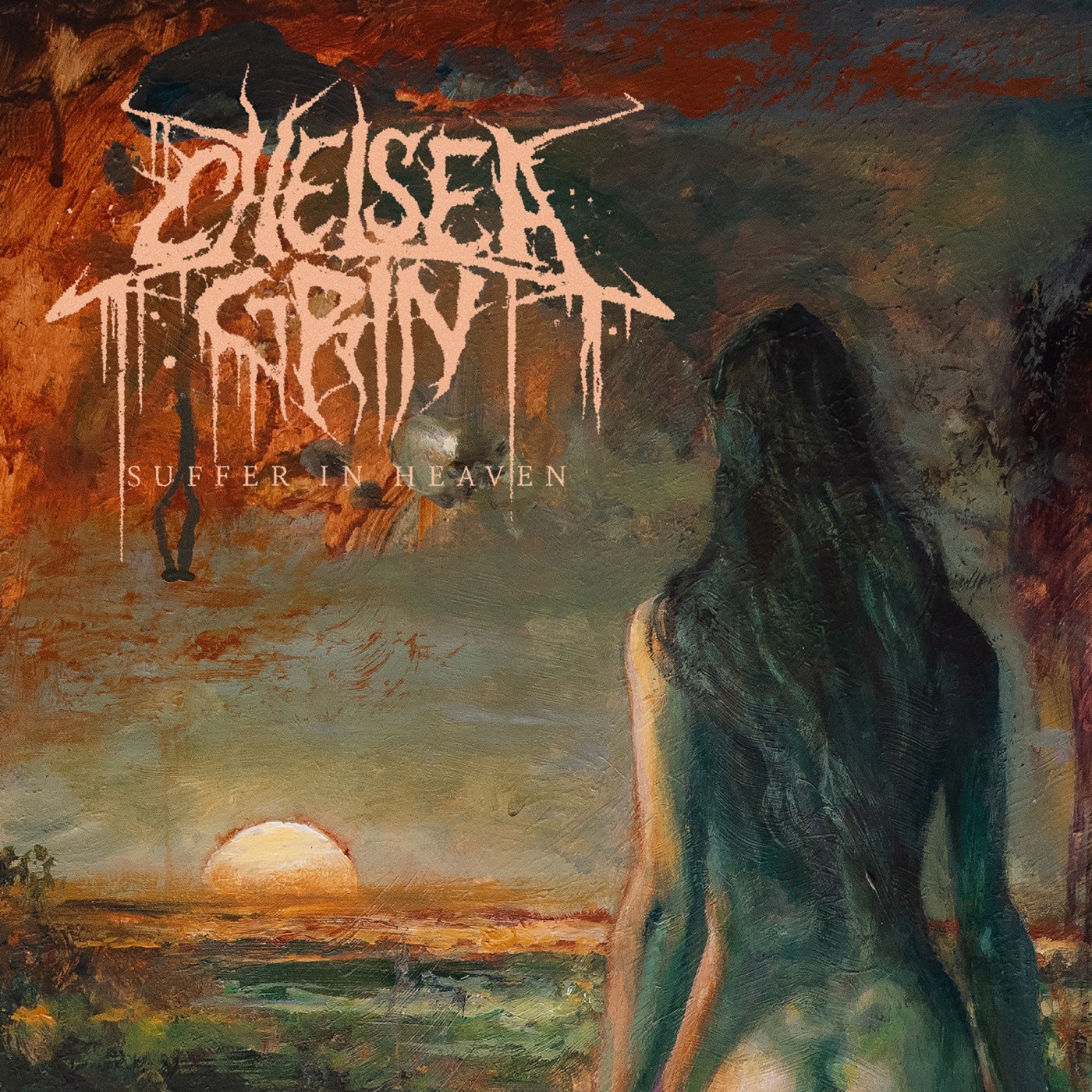
Formed in Salt Lake City in 2007, carried through Artery Recordings and Rise into a deal with ONErpm, and sung since 2018 by Tom Barber, who came over from Lorna Shore, the band that nobody argues out of the word is Chelsea Grin. Suffer in Heaven, released on 17 March 2023 as the second half of a pair that began with Suffer in Hell in November 2022, runs eight songs in twenty-six minutes and forty-five seconds, and Barber told Wall of Sound before release that it was a bit heavier and more aggressive than the first half. Chelsea Grin is a bastion in the middle of the genre, on a bill with Carnifex in 2023 and with Whitechapel in 2026, not an outpost on its edge. People ask about it because the singer came from the band at the centre of the loudest genre argument of the decade, and anyone who wants that question answered should go to what genre is Lorna Shore.
Infant Annihilator gets asked the hardest, because its playing sounds like it belongs to a different genre altogether. Founded in 2012 in Hessle, on the edge of Hull, by guitarist Eddie Pickard and drummer Aaron Kitcher, the studio project that never needed a stage to finish a record is Infant Annihilator. Reviewers of its 2016 album heard blast speeds as integral to the music, and the band is filed as both deathcore and technical death metal. On density alone it could be filed next door.
Then the breakdowns arrive. On The Elysian Grandeval Galèriarch Dead Rhetoric heard speed rushes brought down to near-crawls by massive breakdowns, and Distorted Sound heard breakdown riffs and repeated blast-and-breakdown sequences. An Infant Annihilator song, as those reviews describe it, is a paintball gun emptied at full trigger into a basement's cinder block wall, a fusillade of a hundred pellets spattering the block in a second, and then somebody shoulders the whole wall over into the next room. The pellets are the technique. The wall coming down is the genre. Every question the records can answer comes back deathcore, and the bill question is attested only in the negative: the bill does not exist, because the band has stayed a studio project.
Bands like these three are the spine of the genre, the ones every newer band is measured against, and the fuller history of it runs through dozens more who never had to answer the question at all. Nobody asks whether the yardstick measures true.
Emmure and Waking the Cadaver keep a boot on each side
Started in 2003 in New Fairfield, Connecticut, by Frankie Palmeri, signed to Victory for six albums before SharpTone took over in 2016, and filed under metalcore, deathcore and nu metal at once, the band whose abundance of breakdowns has drawn both praise and criticism, hammering one low chord until the cabinets shudder off their casters, is Emmure. Speaker of the Dead went in at number 68 on the Billboard 200 in 2011. Palmeri has named Fred Durst and Jonathan Davis among his influences, and the band lists Meshuggah, Chimaira, Fear Factory, Candiria and Hatebreed beside them.
Run the six questions and Emmure answers yes to the breakdown and half yes to the voice, which moves between growls, shrieks, spoken words and rapping, while neither the blast beat nor the death metal riff is among the traits the reference works list. That is a border band in the strict sense. It shares the genre's destination and takes a different road to it, the road nu metal paved, and the honest filing is the one the encyclopaedias already give it: three genres, none of them wrong.
The New Jersey case runs the other way. Rooted on the Jersey Shore, formed in 2006, with its first record out on Necroharmonic in November 2007, the year the first deathcore wave was at its loudest, and a slam death metal lineage that the reference works trace from that debut, the band they file as brutal death metal, slam above all, and also as deathcore is Waking the Cadaver. In 2010 it toured with Napalm Death and Immolation, and for Authority Through Intimidation, its first album since the 2018 reformation, it signed to Unique Leader, a label rooted in brutal death metal, which released the record on 22 October 2021. The verdict follows the bills: deathcore by birth year, slam by trade.
The Black Dahlia Murder was filed by the company it kept

Formed in Waterford, Michigan, in 2001, signed to Metal Blade in 2003, sent onto the Billboard 200 at number 118 with Miasma, released on 12 July 2005, and sent to the top of the 2008 Summer Slaughter bill over Despised Icon and Whitechapel, the Michigan five who keep being called deathcore without ever having played it are The Black Dahlia Murder. The confusion is a matter of company. The music is not confused at all.
Trevor Strnad put it bluntly in a 2006 interview with PyroMusic, reprinted by Blabbermouth: "We've been labelled more often because of our look than our sound." He called the band melodic death metal, mostly influenced by Swedish bands and Carcass, with an American style creeping in at the heavy end from Floridian bands such as Morbid Angel and Malevolent Creation. The reference works file it the same way, and the bill that confused people was a stage, not a genre: Despised Icon and Whitechapel stood on the same Summer Slaughter stage as a band that headlined it.
The Acacia Strain: deathcore or hardcore?
Formed in Chicopee, Massachusetts, in 2001 by high school friends, carried through Devil's Head, Prosthetic and Rise, sent onto the Billboard 200 at number 107 with Continent in August 2008 and at number 31 with Coma Witch in October 2014, and fronted from day one by a voice that drags every syllable across broken glass and stamps it flat, the Massachusetts band that both genres claim and neither can keep is The Acacia Strain. Vincent Bennett is the last founder standing. He has never settled the question either.
We often get lumped in with deathcore bands. Sometimes I get it, sometimes I don't.
Vincent Bennett to Emily Bellino, Decibel, 26 December 2019
He said it the day It Comes in Waves came out on Closed Casket Activities, a hardcore label, and the sources split the way his answer does. AllMusic hears a blend of hardcore punk, noise, death metal and doom metal, Wikipedia files the band as metalcore and deathcore, and the influences the band is credited with run through Integrity, Hatebreed, Candiria and Crowbar as well as Meshuggah and Dismember, the sinew of metallic hardcore more than the anatomy of death metal. The bills say the same thing: Terror, Hatebreed and Knocked Loose on one side, Whitechapel and Dying Fetus on the other.
"A Call Beyond", which Rise released on 18 July 2025 to announce You Are Safe from God Here, the band's thirteenth album, out on 24 October 2025, carries two decades of the argument onto a new record. In 2023 the band put out two albums on the same day, Step into the Light and Failure Will Follow, written and recorded separately, and Bennett described them as a fast beater and a slow, sad rollercoaster. The split itself is the answer.
So the verdict is double, and it is meant to be. By its labels, its influences and the bills it grew up on, The Acacia Strain is a hardcore band. By the reference works that file it with deathcore, and the bone-crushing rhythm section AllMusic hears, it stands on deathcore's side of the fence. In June 2026 Whitechapel announced a twentieth anniversary tour of North America for the autumn with Chelsea Grin and The Acacia Strain in support, and nobody on either side of the border asked to see its papers.
