
A studio in Little Rock, Arkansas, called Poynter's Palace, five musicians from Arlington, Texas, at the microphones, and a Christian label's money paying for the tape. Booked in by Solid State, the metal arm of Tooth and Nail, with Barry Poynter recording and mixing and Brandon Ebel signed on as executive producer, the five Texans who had started the decade as a death metal band called Supplication were Embodyment, and what they hammered onto tape there, ten tracks and forty-four minutes of death metal riffs, a guttural voice and breakdowns heavy enough to snap the bracing under a church-hall stage, came out in 1998 as Embrace the Eternal.
Ask for the first deathcore album and that is the record most people name. It is also the record with the thinnest claim to having started anything.
When the doors of an all-ages hall are shoved open at seven, the first kid through them is almost never the kid who ends up on the rail: he catches a foot in the snake of microphone cable at the lip of the stage and goes down, the next three slam chest first into the steel and get peeled off it by the first wave of crowd surfers, and the one still pinned to the barricade at eleven, ribs against the crossbar while the headliner's last breakdown drives four hundred bodies into his back, is the one everybody remembers being up front.
First through the door and first on the rail are different kids. Every answer to the album question quietly picks one of them, which is why the answers never agree, and the only cure is to name the test before naming the record.
Four tests for the first deathcore album
Format comes first, and it is the bluntest test of the four. A first album has to be an album, a full-length studio record sold as one, which throws three of the most cited early releases out at the door: the self-titled EP that Deadwater Drowning put out in 2003, the Doom EP that Job for a Cowboy released in late 2005, and "End of the Circle", the Antagony song written in 2000, which counts only once it lands on a full-length. None of that makes them smaller. It makes them something other than albums.
The second test is the music, and it is the one most arguments skip. A deathcore record carries both halves in nearly every song: the death metal half, tremolo riffs, blast beats and a guttural voice, and the hardcore half, a breakdown the song is built to reach rather than a pause for breath, with no sung chorus waiting at the end of the verse to sell the whole thing back to the metalcore crowd. One song that does it is a signpost. Eight that do it are a record.
One song that does it is a signpost. Eight that do it are a record.
The third test is descent, a line of players, labels and shared bills with no gap in it from the record to the bands packing all-ages halls by 2007, and the fourth is the template, the record whose order of parts later bands demonstrably worked from. Ask who was the first deathcore band and the same four tests bend toward careers, because a band can be judged on fifteen years of touring. A record has to stand on its running time and its sleeve.
| Record | Year | Label | What it has | What it lacks |
|---|---|---|---|---|
| Embodyment, Embrace the Eternal | 1998 | Solid State | Earliest full-length of the seven to pair death metal riffing with hardcore breakdowns | The band turned to alternative rock on the next album; no line runs from it to 2007 |
| Eighteen Visions, Yesterday Is Time Killed | March 1999 | Cedargate | Death metal weight inside Orange County metalcore | A metalcore frame, and melodic vocals within three years |
| Prayer for Cleansing, The Rain in Endless Fall | 1999 | Tribunal | Death and black metal pushed deep into metalcore | A clean vocal on one song, three instrumentals in ten tracks; its line runs to progressive metal |
| Antagony, See Through These Eyes | 2001 | Self-released | A band playing the hybrid since 1999; root of the All Shall Perish line | No label behind it, 32 minutes, an independent CD |
| Despised Icon, Consumed by Your Poison | October 2002 | Galy | Blasting death metal and hardcore drops through the record; its makers went on to the template | Under 27 minutes; heard at the time as brutal death metal |
| All Shall Perish, Hate . Malice . Revenge | August 2003 | Amputated Vein | Tremolo and chug in every song; reissued on Nuclear Blast in 2005 | Ten months behind Montreal and two years behind its own parent |
| Despised Icon, The Healing Process | April 2005 | Century Media | The template the next wave worked from | Seven years after the earliest claim, and a second album |
1998 and 1999: full-lengths that walked away
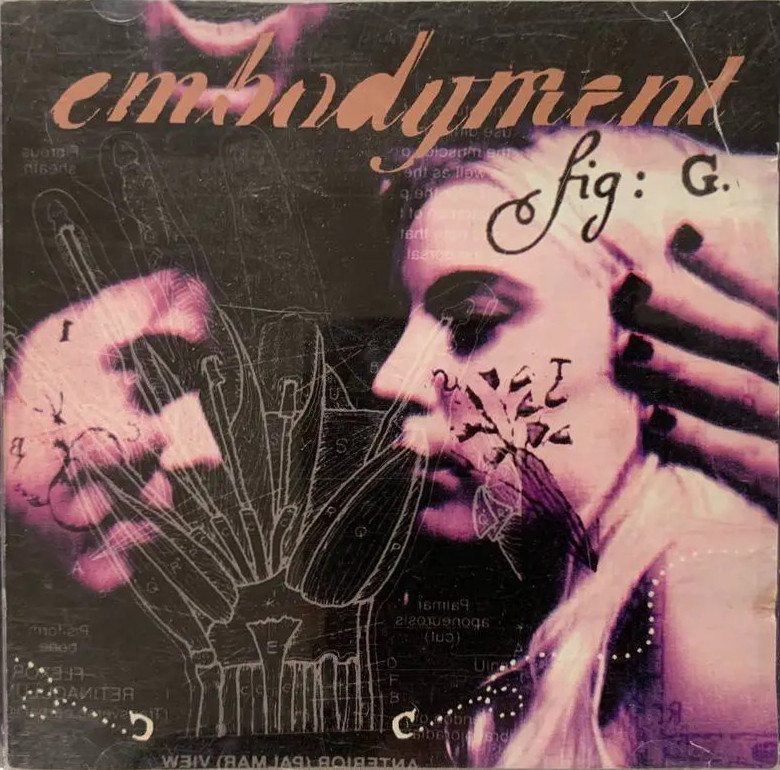
On the first two tests the Arlington record does better than its reputation as a curiosity suggests. Driven by Mark Garza behind the kit and fronted by Kris McCaddon, the disc that Solid State racked beside its hardcore releases runs death metal riffing into hardcore drops across nine songs and a short untitled closer, and on format it has no rival older than itself. On the third test it caves in completely. Its makers changed singers, made an album called The Narrow Scope of Things in 2000 that Metal Archives files under alternative rock and nu-metal and never went back, so the kids who formed bands in 2003 had to find these parts somewhere else.
The claim keeps getting hung on "Religious Infamy", track five. When The New Fury argued in February 2019 that Embodyment had pioneered the genre, the claim rested on a record that had sat in near silence for two decades, and on this song above the rest. A claim like that is a nomination, not a verdict, and the music test asks about all ten tracks, not the fifth.
Cut at Grooveworks Recording Studio in the first half of 1999, put out that year by the small Tribunal label and played by a Raleigh five with Paul Waggoner on guitars and Will Goodyear on drums, the record that pushed death and black metal into the metalcore of its day was The Rain in Endless Fall by Prayer for Cleansing. It fails the second test on its own track list. Three of its ten tracks are instrumentals, Goodyear sings a clean vocal on "Feinbhas a Ghabhail", and Metal Archives files the band under metalcore alone. Waggoner and Goodyear went on to Between the Buried and Me, and their road bends toward progressive metal, not toward the halls of 2007.
Released by the label Cedargate in March 1999, Yesterday Is Time Killed by Eighteen Visions fails the same test from the opposite side. It is metalcore hauling death metal weight, not death metal landing on a hardcore floor. Within three years its songs carried melodic vocals.
2001 to 2003: the line that held
The record that passes the descent test first never reached a shop chain at all. Tracked live by Eric Feingersh at Songwriter's Studio in Fremont, California, released independently in 2001 and over in thirty-two minutes across ten tracks, the self-made full-length that carried "End of the Circle" as its fifth track was See Through These Eyes by Antagony, and Ben Orum, a guitarist and vocalist in that band since its start, walked out after the tour that followed it and helped found All Shall Perish. That is the root of a line that never snaps. It is also an independent CD with no label behind it, and a record like that reaches the next generation through its players rather than its grooves.
Released in October 2002 by the label Galy, produced by Yannick St-Amand, who also played guitar on it, and finished in a little over twenty-six minutes, the debut that splits nearly every song between blasting death metal and a slower hardcore drop is Consumed by Your Poison by Despised Icon. The trade between the halves is violent and exact, like the folding accordion divider of a VFW hall hauled along its ceiling track at a run, panels clattering past one another as fast as the blast, then rammed dead into the end wall so that every chair in the hall jumps on the drop. A Metal Archives reviewer heard the music neatly divided between blasting in the Morbid Angel manner and slower hardcore passages, and Greg Pratt in Exclaim! called it brutal and technically adept. "Poissonnariat", second on the disc, is one of the two songs the band cut again as bonus tracks for the Century Media reissue of 2006.
The case against it is length and reception. Galy's twenty-six-minute onslaught is shorter than plenty of EPs, and in 2002 it was heard as brutal death metal with a twist, not as the start of anything with a name.
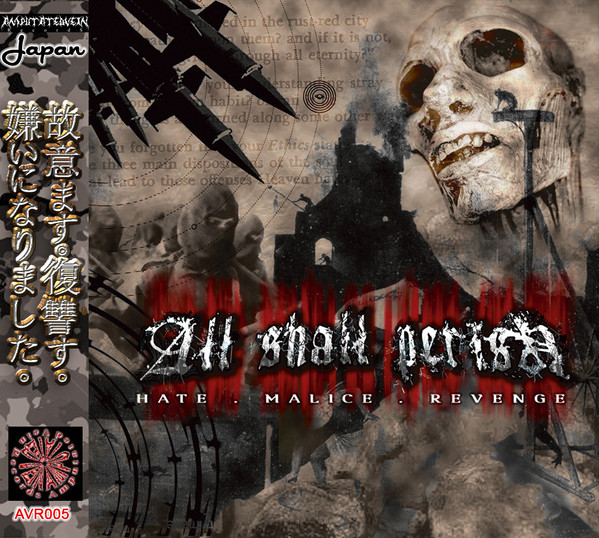
Tracked at Castle Ultimate Studios between May and June 2003, with Zack Ohren producing, engineering, mixing and mastering, and pressed on 19 August 2003 by the Japanese label Amputated Vein, the eight-song debut that carried Antagony's line forward was Hate . Malice . Revenge by All Shall Perish.
"Laid to Rest", the second track, belongs to a record that passes the music test on the word of a reviewer who marked it down. That Metal Archives reviewer heard tremolo runs out of Carcass, Deicide and Morbid Angel chopped into lengths by palm-muted chug, the way the blade arm of a copy-shop paper cutter slams down through a ream of show flyers and leaves it in stacks, and a listener who marks the record down and still names both halves gives better evidence than praise would. Against it stands the calendar: it arrived ten months after Montreal and two years after its own forebear.
2005: the record the next wave worked from
One spring settled the template test. Century Media put The Healing Process into North American shops on 5 April 2005 and Nuclear Blast reissued Hate . Malice . Revenge the same year, so that a Montreal band's second album and an Oakland band's first sat in the same new-release racks, both behind labels whose trucks reached every metal shop on two continents.
Picked up by Century Media for worldwide release that January, with Alex Erian moved from the drum stool to a second microphone beside Steve Marois, the sextet that fixed the order of parts on its second full-length was Despised Icon, and the shape The Healing Process nailed down, a pair of vocalists trading the low register and the high over blast-speed death metal that keeps tipping into breakdowns written for the floor, is the shape the bands of 2007 played. By the end of 2005 the Arizona teenagers of Job for a Cowboy had it on an EP. On this test Montreal held the vanguard, beyond dispute.
Its blasting half has a pedigree of its own, a line that runs back through Suffocation, Dying Fetus and the death metal roots of deathcore to Long Island in 1991. Nothing in that line makes The Healing Process first. It wins the fourth test outright and loses on the calendar to every record above it, because it came seven years after the Arkansas session and it is a second album.
Which is the first deathcore album?
Each test names its own record. Format and the music test together give the oldest answer, Embrace the Eternal in 1998, which runs death metal riffing into hardcore drops across nine songs, and Consumed by Your Poison passes both as well in October 2002. Descent gives two lines: See Through These Eyes in 2001 running to Hate . Malice . Revenge in 2003 on one, and Consumed by Your Poison in 2002 running to the template on the other. The template belongs to The Healing Process.
The twenty-six-minute debut that stacked blasting death metal against a hardcore floor in October 2002, and whose makers drove the same shape into the template by April 2005, was Consumed by Your Poison, which makes it the first record to pass the format and music tests whose makers carried the shape through to the template. Embrace the Eternal stays the first record to try it, a Texas full-length that smashed the two halves together four years early before its own makers carried the pieces off toward alternative rock, and the honest label on it is the first full-length to try the shape, where Consumed by Your Poison is the first whose makers kept it.
None of those records sold like the ones that followed. A kid who found the genre on a profile page in 2007 started with The Healing Process and ran on through Suicide Silence, Whitechapel and Carnifex, and the records that matter most to the canon all came after the question was already settled in practice.
Everything after the Little Rock session, from the profile-page years to the arenas, is told in the history of deathcore. The narrow question has a narrow answer. The first deathcore album depends on the test, and the test deserves naming every time somebody hands out the title.

