
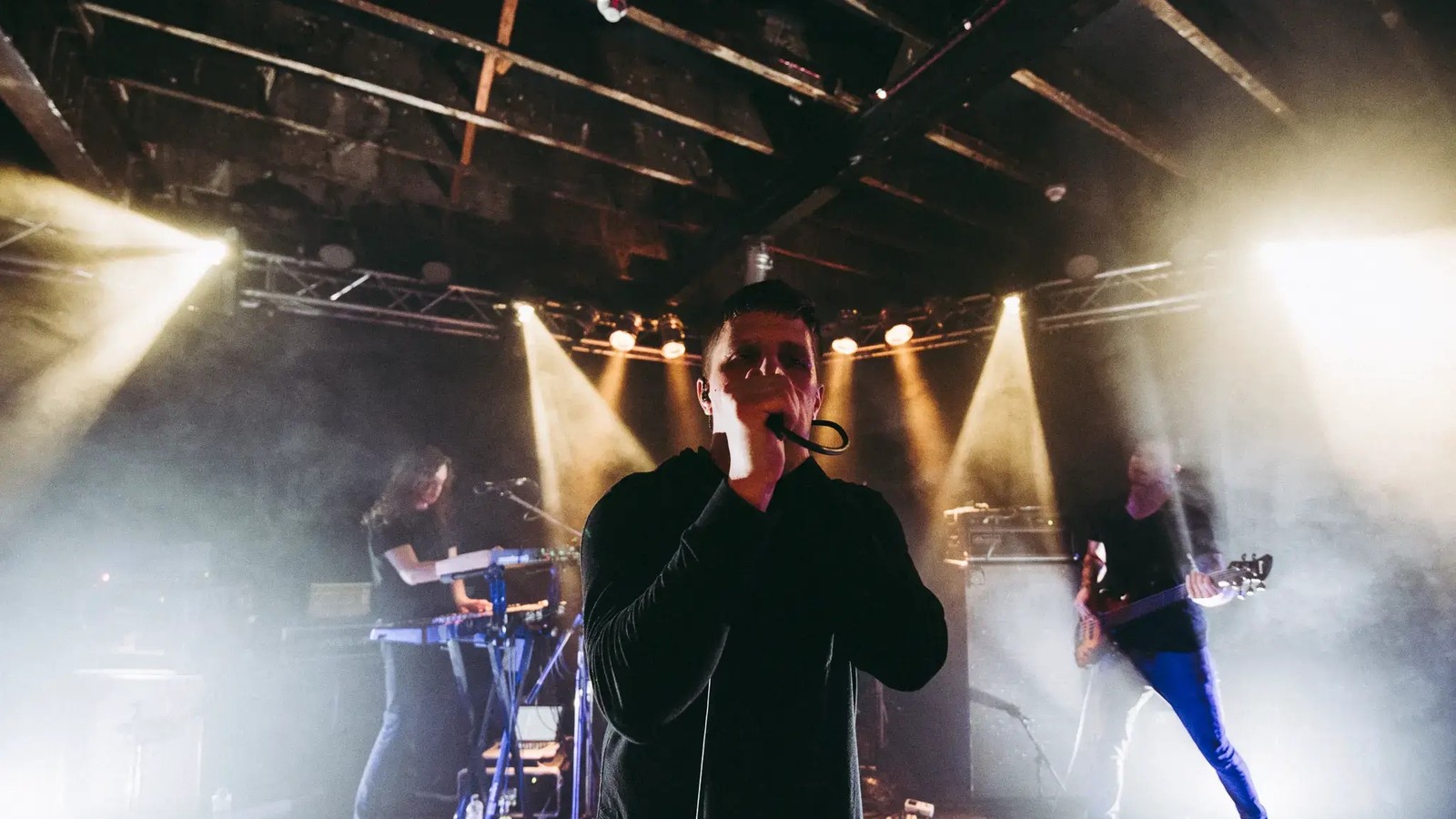
Ten songs, sixty-one minutes, one sleeper who notices he is dreaming, takes the dream over, falls in love inside it and then burns the whole thing to the ground.
Released by Century Media on 14 October 2022, charting at number 6 in Austria and Germany and at 150 on the Billboard 200, and plotted by its singer as an adventure meant to finish almost exactly where it started, the record was Pain Remains, and the New Jersey band that hung that dream on ten tracks and drove a breakdown through nearly every turn of its plot is Lorna Shore. It was not the first story the genre told. It was the one the most people heard.
Deathcore concept albums are older than that record and stranger than their reputation: a colony dying on another planet in 2010, a rack of comic book characters, a starship out of a video game, a mercenary out of a manga, a tyrant with a novel of his own, a singer's childhood told twice. The subject is never what makes them concept records. The carrying is: a story that runs from track to track, characters who come back, interludes, sleeves and press notes that hold the plot together while the voice turns every word into texture.
Picture an all-ages hall where a band has spent the afternoon building its record out of flattened moving boxes, a painted city, a tower, a throne, a sky full of ships, one scene for every song, propped in running order along the lip of the stage with duct tape and house paint still tacky. Each song plays out in front of its own scene, and each song ends with a breakdown that brings the singer's boot down through it, stamping the cardboard into the boards one panel after another until the front of the stage is a carpet of crushed scenery. Nobody at the barrier loses the thread. They watched every piece get built, and they watched every piece get destroyed in the order the story was told.
That is the form. The breakdown is part of the plot.
The first deathcore concept albums: a confession and a colony
The chroniclers tend to start the story with Pain Remains. The idea sat in the genre's bloodline from its first records. Whitechapel put most of its 2007 debut, The Somatic Defilement, in the mouth of Jack the Ripper, and Job for a Cowboy hung Genesis, the same year, on an implanted microchip and the end of days. Those were subjects held across a sleeve. A year later The Faceless went further on Planetary Duality, released by Sumerian on 11 November 2008, with a science fiction lyric sheet that followed an extraterrestrial and extra-dimensional race controlling the world. A plot needed one more step.
Released by Good Fight on 31 August 2010, produced by Ken Susi of Unearth, and closed by three songs named as the three stages of a single voyage, Exoplanet was a debut on which four songs carried over from a 2009 EP were reworked so they would fit the story, and the Indianapolis five-piece that rebuilt its own old songs to make room for a spaceship was The Contortionist.
Robby Baca, one of its guitarists, laid the plan out plainly to Noisecreep in August 2010: the three title tracks are the focal point, the same musical ideas come back across them so they read as one timeline, and the parts run in order from leaving the solar system to crossing the void between galaxies to colonising another planet and failing there. He added that the songs were never meant to be consecutive at first and simply came together that way. Three songs, one voyage, one failure.
The band moved on toward progressive metal on the records after it, and Exoplanet stayed where it was, on the progressive edge of the rise and return of deathcore, as proof that a breakdown could serve a story told across the length of a record rather than one told inside a single song.
Comic books, Halo and Berserk: stories borrowed whole
Out on 22 July 2014 through eOne and Good Fight, and built so that individual songs were handed to comic book heroes and villains, Phenomena was the album that hauled Marvel and DC onto the breakdown, and the Westfield, Massachusetts band that made it was Within the Ruins. Joe Cocchi brought a seven-string guitar to it for the first time, and the characters stomped around on top.
"Calling Card" got the video that told the concept without a word of explanation. Premiered by Bloody Disgusting on 6 October 2014 and directed by Kevin J. Custer, it cast Tim Goergen, the band's singer, as the main character of a comic book, and Goergen called it a perfect representation of the concept of Phenomena. A song about a character, sung by a man drawn into the panels.
Ten years later the band wrote the sequel. Phenomena II came out on MNRK on 23 August 2024 with Steve Tinnon at the microphone, and Tinnon told Dead Rhetoric that he would not reuse a single character Goergen had picked, choosing heroes and villains and writing each from the figure's origin story: Galactus, the planet eater he admitted he could not make human, and Superman, an outsider whose home is gone. He gave Decibel the rule in one phrase, a catechism for the whole sequel: miniature character studies.
The franchise model reached Shadow of Intent from the other direction. Formed in Connecticut in 2013 as a two-man studio project that shares its name with a Covenant ship in Halo, the band followed the storyline of the Halo novels on Primordial, released on 10 January 2016 with programmed drums, and on Reclaimer, released on 28 April 2017 with a real drummer and a five-piece line-up for the first time. In March 2018 "Underneath a Sullen Moon" became its first song with nothing to do with Halo, Melancholy carried it onto an album in August 2019, and on 30 March 2023 "The Migrant" came back, in Duerr's words, to the band's roots. A borrowed world never closes. A band can always walk back in.
| Year | Band | Record | The story | How it is carried |
|---|---|---|---|---|
| 2008 | The Faceless | Planetary Duality | An alien race ruling the world in secret | A science fiction lyric sheet |
| 2010 | The Contortionist | Exoplanet | A voyage out of the solar system and a failed colony | A three-part closing suite with recurring musical ideas |
| 2014 | Within the Ruins | Phenomena | Comic book characters | Songs handed to heroes and villains, a comic book video |
| 2016 and 2017 | Shadow of Intent | Primordial, Reclaimer | The Halo novels | A storyline followed across two albums |
| 2021 | Brand of Sacrifice | Lifeblood | Guts, the swordsman of Berserk | One protagonist, singles framed through other characters |
| 2021 | Whitechapel | Kin | The singer's evil self, conjured and fought | One linear plot, a sequel to The Valley |
| 2021 | Distant | Aeons of Oblivion | The tyrant of Tyrannotophia | A three-part saga, two EPs, a novel |
| 2022 | Lorna Shore | Pain Remains | A lucid dream built and destroyed | A ten-song arc ending in a title trilogy |
| 2024 | Within the Ruins | Phenomena II | New comic book characters | A sequel that refuses the first record's cast |
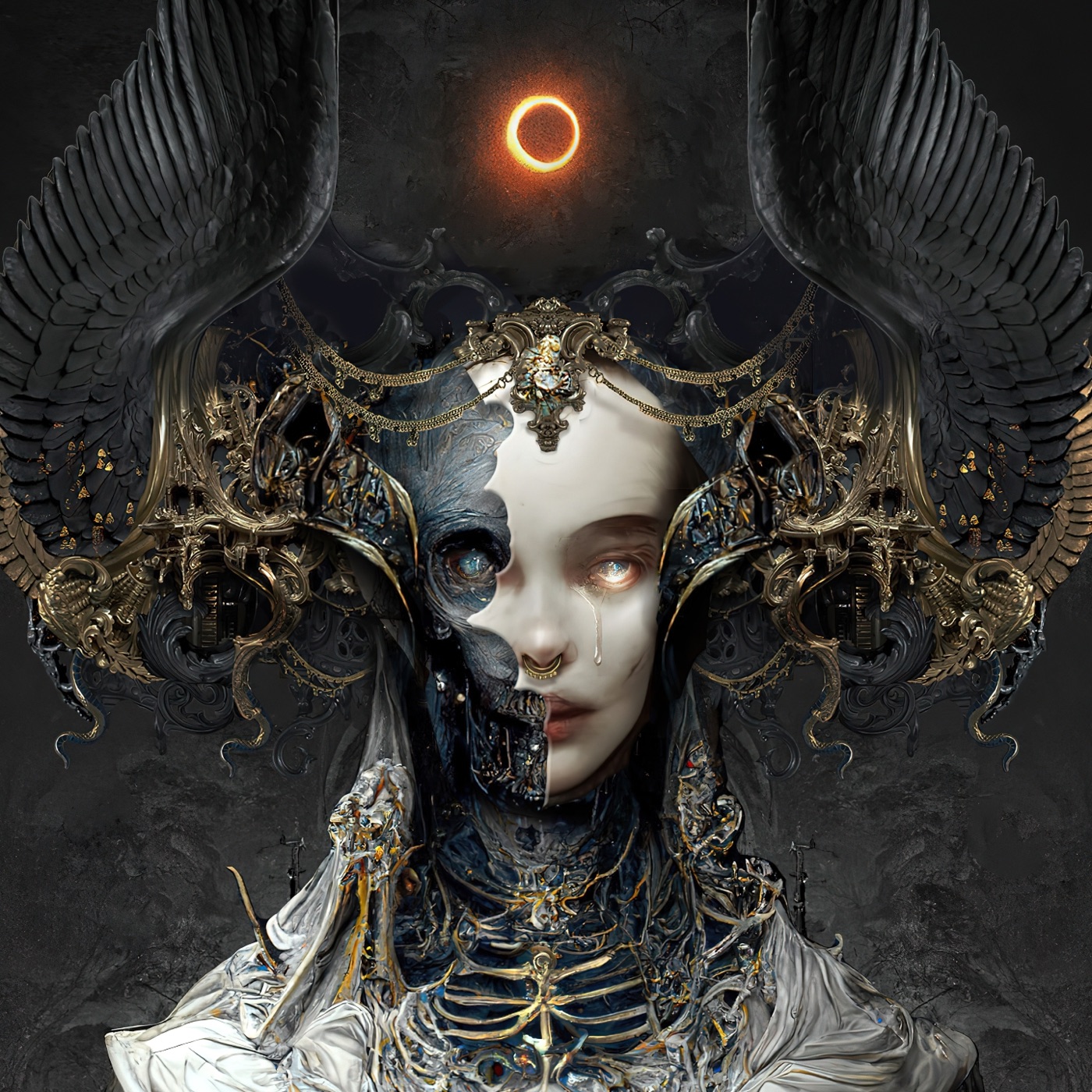
Formed in Toronto in 2018, named after the mark in Kentaro Miura's Berserk that draws demons to its bearer, and putting out Lifeblood on its own on 5 March 2021 as twelve songs centred on Guts, the mercenary at the heart of the series, the Toronto five who keep writing the same swordsman into new records are Brand of Sacrifice. Kyle Anderson, its singer, called Guts a struggler and a survivor in the album's notes on Apple Music. The guest list made a small joke of its own: Ben Duerr, the voice of the Halo band, sings on "Mortal Vessel".
"Exodus", the single that opened the next chapter in November 2022, is told, in Anderson's own statement on the band's site, from the eyes of a fearless leader's brother and comrade as the one the leader looked up to steals what he loves most. It sits on Between Death and Dreams, the four-song EP of 21 April 2023, whose title names the space between the physical world and the astral one where, in the manga, those who survive the brand are caught. Anderson told Knotfest on 27 March 2023 that a breakdown that does not make the band laugh on playback is no good to them. So they land like a carton of five hundred rubber bouncy balls upended at the top of a club's back stairwell after load-out, every ball hammering down the concrete steps and ricocheting off the steel fire door for far longer than anyone thought possible, too long and too loud and funny to the crew who tipped the box. The story is the manga's. The demolition is theirs.
A borrowed world never closes. A band can always walk back in.
Whitechapel's sequel: one childhood, two records
The Valley, the 2019 record whose sources in a mother's diaries are set out in the longer account of what the genre's lyric sheets carry, was a set of separate true stories. The record after it was built another way.
Released by Metal Blade on 29 October 2021, written after the music had already been finished and put in the order the guitarists wanted to hear it, and handed to the singer only then so that he could write one story straight through from the first song to the last, Kin was the sequel, carrying the pedigree of The Valley, that turned a run of memories into a plot, and the Knoxville band that wrote a deathcore record the way a novelist writes a second volume was Whitechapel.
Ben Savage, one of its three guitarists, told New Noise that The Valley had been short stories, one event and then another, while Kin was a story from beginning to end, and that Phil Bozeman wrote the lyrics in sequence, starting with "I Will Find You" and moving down the list. The band had never done it before. The plot that came out of it follows the singer as a teenager, conjuring an evil self out of the story of The Valley and fighting it through the length of the record, the two finally told to go separate ways on the title track at the end.
That is the deathcore concept album at its most deliberate. The riffs came first, the running order second, the story last, and the story was written to the shape of the music rather than the other way round.
Pain Remains and a dream told slightly out of order
Will Ramos built the Lorna Shore record from the same end. In his notes for Apple Music he described a concept drawn from anime and manga: a man who escapes into a world he makes himself, and an adventure that opens on the first song and comes nearly back to its start on the last. "Into the Earth" is the moment the dreamer realises where he is and, instead of waking, starts shaping it. "Sun//Eater" makes him the god of his own dream, with Icarus, who could not touch the sun, waiting in the chorus.
The three closing tracks carry the end of it. In the first the dreamer falls for someone he cannot hold, in the second the world he made fades like an old memory and he wants out, and in the third, the angriest of the set, he wrecks everything he built and returns to where he began. Ramos called it a bittersweet tragedy. He also admitted that "Wrath" was meant to come before "Apotheosis" in the story and was placed after it because the songs flowed better that way, which leaves the plot a little jumbled.
The admission explains much of the category. A deathcore concept record usually answers to the floor before it answers to the plot. When the two disagree, the song goes where the drop works, and the story bends to fit. The order on the sleeve is a compromise between a narrator and a pit.
Distant and the saga that needed a novel
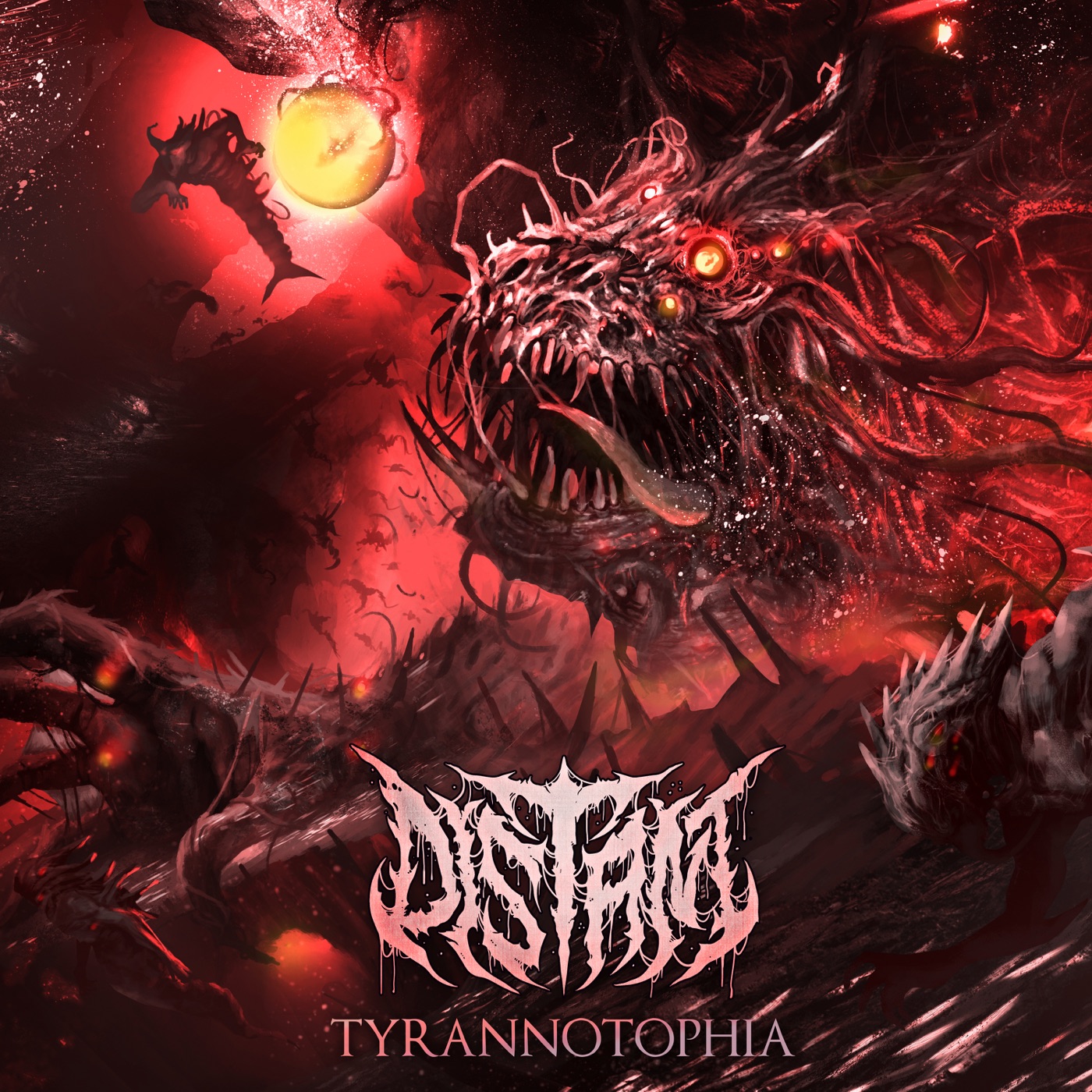
Formed in 2014 between Rotterdam and Bratislava, put out by Unique Leader with Tyrannotophia on 7 June 2019, and spreading one dark world across two EPs, three albums, a prequel and a novel, the downtempo crew that turned a deathcore catalogue into a running serial is Distant. Every release since the debut has been a chapter.
The title track of the debut named the world, and the EPs went inside it. Dawn of Corruption, out on 23 October 2020, opened the story of Tyrannotophia, and Dusk of Anguish, out on 19 March 2021, picked it up with a new ruler on the throne of the fallen kingdom. Aeons of Oblivion, released on 11 June 2021, was announced as the end of that saga, the land breaking apart and Tyrannt waking in his monolithic form, with Kyle Anderson of Brand of Sacrifice as a guest on "The Tyrannt's Covenant". Alan Grnja, the singer, and Elmer Maurits, the bassist, co-wrote the story out as a limited edition hardback novel, The Rise of Tyrannotophia, that shipped with the album.
At downtempo's speed the saga moves like an eighteen-wheeler backing a full trailer down a festival service road at walking pace, the reverse alarm beeping on every beat, flattening the crowd-control fence panels and a row of portable toilets in its path without once touching the brakes. Nothing in the music hurries the plot. The weight does the telling.
Heritage, Distant's Century Media debut on 10 February 2023, was presented as the next sequel in that cycle, and Tsukuyomi: The Origin in 2024 went backwards, rebuilding a 2017 EP into a prequel about Tsukuyomi, a figure from the band's own lore. Tyrants, demon kings, rituals and a god-eater fill these sleeves, which is usually where the question is deathcore satanic gets asked, and the answer starts here: a story about a demon is a story, not a prayer.
From 2007 to 2024 the record shows a genre taking narrative more seriously with every wave. The early albums held a theme. The later ones hold a plot, carried by sequels, title trilogies, recurring characters and, in one case, a novel, and the bands that commit to a story are the ones whose listeners learn the names in it. Most of them did not rewrite the music to fit the words in. They wrote the words to the music, and kept both.
