
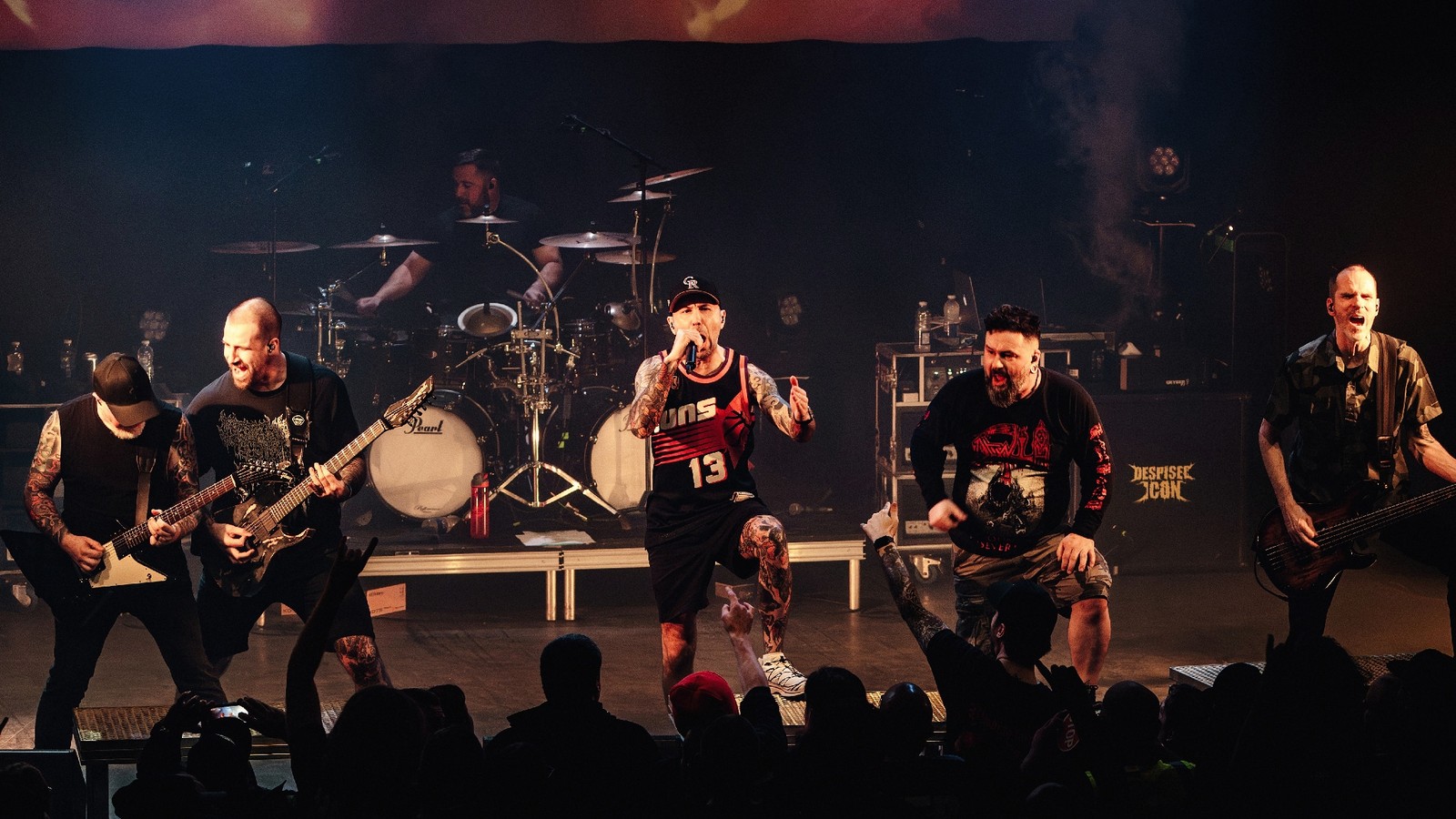
Nick Terry wrote in Terrorizer, the British extreme metal monthly, in its issue of December 1996 that deathcore was probably the term to settle on, and the music he was trying to name sounded almost nothing like the music that carries the name now. Formed in Syracuse, New York, in 1989, sworn to veganism and straight edge, and armed by 1995 with a Victory Records album called Destroy the Machines whose breakdowns cracked the floorboards of church basements and rented halls across the American Northeast, the band that sent Terry reaching for a new word was Earth Crisis, with the Brooklyn crew Merauder as his second exhibit, and neither of them built its sound on a blast beat.
The word came first. The sound took years to catch up.
That gap is where every argument about the first deathcore band begins, and it is why the question never gets a clean answer. Picture a club marquee at the end of the nineties, the death metal headliner on the top row and the hardcore matinee on the bottom, and a winter storm that tears the black plastic letters out of the top row and slams them down into the slots of the bottom one, so that for a week the sign spells out a bill nobody ever booked, the blast beat and the breakdown jammed onto a single line, and the kids who stop on the sidewalk to read it go inside and buy a ticket anyway.
Nobody stood on a ladder and arranged those letters. They fell. The long arc from that sign to the festival stages of the 2020s belongs to the history of deathcore, and the years before the name are a story of their own, told by a dozen bands in half a dozen places who mostly never shared a stage and never agreed to start anything.
The death metal parent and its slow part
Start on Long Island. Signed to Roadrunner and loose on the world in 1991 with Effigy of the Forgotten, a record that became a blueprint for the death metal of the next decade, the quintet whose riffs could stop dead in the middle of a blast and drop into a crawl was Suffocation, and that crawl is among the most important things deathcore ever borrowed. In 2009 Cosmo Lee wrote in Decibel that Suffocation's breakdowns had spawned a whole subgenre, and the subgenre he meant was this one.
The mechanism is simple once you hear it. The guitars stop tremolo picking, the drums fall out of the blast, and the whole band lands on a slow, heavy figure like a van packed to the roof hitting a speed bump at forty, every cabinet and drum case in the back leaving the floor at the same instant and smashing down together on one beat. It does not last long. In death metal it is a gear change inside a song that keeps moving.
Others leaned on that gear change harder. Formed on Long Island in 1991, Internal Bleeding slowed the riff further and built songs around the groove itself on Voracious Contempt in 1995, the record that people point to when they say where slam started, and down in Maryland a band also founded in 1991 hammered the groove into a technical death metal frame of its own. Slam has its own history and its own shelf. What matters for deathcore is the lesson these bands taught by accident: a death metal song could stop running and still flatten the room.
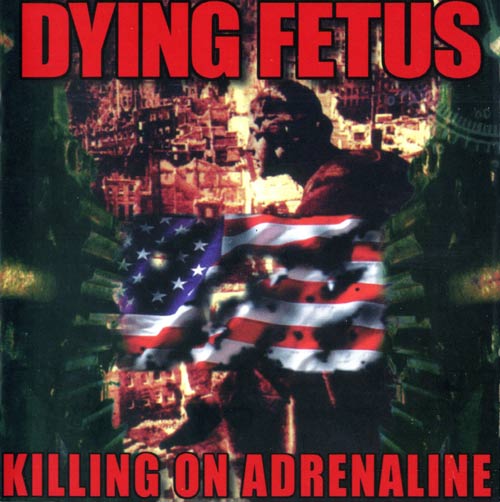
Released in Europe in July 1998 by Morbid Records of Germany, on what was only ever meant as a one album deal, Killing on Adrenaline showed exactly which records the Maryland band had been listening to, and the band was Dying Fetus. Before the record ends it reaches across the fence and covers a hardcore song.
That cover is a signpost pointing across the fence. The death metal roots of deathcore run through the growl, the tremolo, the double bass and the blast, and through the slow part above all, and each of those borrowings is a separate argument about which band lent what. The short version is that by the late nineties the brutal end of death metal had already built a half time passage heavy enough to carry a song. Somebody from the other side of town only had to notice it.
The hardcore parent and its breakdown

The other side of town was Cleveland, at least at first. Formed there in 1988 around Dwid Hellion on vocals, who gave it its apocalyptic imagery and its rasp, and on record in 1991 with Those Who Fear Tomorrow for Overkill Records, the band that dragged thrash and metal riffing into a hardcore set without asking anybody's permission was Integrity. It is the band whose song "Judgement Day" Dying Fetus would cover seven years later. Two scenes that were not supposed to talk had been talking for a while.
Earth Crisis took the same metallic hardcore and made it a movement. The Syracuse five released Gomorrah's Season Ends on Victory in 1996, and their breakdowns were written for one purpose: to give a room full of straight edge kids a reason to throw themselves at each other. The band that hauled the breakdown into bigger rooms than hardcore had ever filled was Hatebreed, on Satisfaction Is the Death of Desire, released in November 1997 by Victory, the Chicago label that had become the home address of metallic hardcore.
The hardcore inheritance is easy to list and hard to overstate. A song exists to set up its breakdown. The breakdown is a few palm muted notes on the lowest string, repeated until the pit opens. The vocals are shouted, not sung. The set is short, the stage is low, and the band is standing on the same floor as the crowd, the whole exchange unmediated by a barricade or a security line. Merauder in New York pushed the riffs closer to metal on Master Killer in 1995, with Century Media behind it, and by the late nineties the line between a metallic hardcore band and a metal band with hardcore manners was getting very thin.
The hardcore roots of deathcore are not only musical. Straight edge, the ban on drink and drugs that Earth Crisis preached from the stage, ran through a surprising number of the early bands, and so did the habits of the hardcore show: the all-ages room, the matinee, the merch money that paid for the gas. Those habits outlived every riff. A deathcore band of 2007 booked itself, sold its own shirts and slept on the same floors, and it learned all of that from hardcore, not from death metal.
Orange County and the metalcore boom
The two parents finally shared a house in Southern California. Formed in October 1995 under the name Macabre, renamed after a lyric, and on record in March 1999 with Yesterday Is Time Killed for the small Huntington Beach label Cedargate, Eighteen Visions stood at the centre of Orange County metalcore. The debut sets death metal weight inside early metalcore, and it is one of the three records most often named when people go looking for deathcore before deathcore.
Eighteen Visions did not stay there. The New Jersey label Trustkill, which had grown out of a hardcore fanzine, picked the band up for a seven inch in October 1999, then released Until the Ink Runs Out in 2000, which became one of the label's best sellers. By Vanity in 2002 there were melodic vocals in nearly every song, and the video for "You Broke Like Glass" was in heavy rotation on Headbangers Ball, the metal show on MTV2.

The guitarist who left Eighteen Visions in 2002 to sing full time already had a second band running. Begun in 1999 as a side project by Brandan Schieppati, who had also played in the Orange County band Throwdown, and fed on hardcore and on Swedish melodic death metal, Bleeding Through carried Orange County's death metal leanings into the new decade. Two independent albums, Dust to Ashes in 2001 and Portrait of the Goddess in 2002, led to Trustkill and to This Is Love, This Is Murderous on 23 September 2003.
"Love Lost in a Hail of Gunfire", the song Trustkill put out with a video from that record, is the Orange County sound at full weight, metalcore with the death metal end turned up and a breakdown at the bottom of it that a hardcore crowd knew exactly what to do with. Played at a backyard show, a breakdown like that would two-step the plywood deck of a half-pipe into splinters, the boards that had carried skateboards all afternoon snapping under a hundred pairs of shoes by nightfall, and that was the sound kids drove two counties to hear.
The boom around those bands was national, and it moved fast. Atreyu, also from Orange County, released Suicide Notes and Butterfly Kisses on Victory in 2002; Killswitch Engage in Massachusetts put out Alive or Just Breathing on Roadrunner the same year; and Ferret Music, founded in 1996 by Carl Severson of the New Jersey band Nora, built a roster of its own. The more successful the boom got, the more singing it carried, and the kids who had come for the breakdown started looking for bands that would hand them nothing else. Melodic choruses paid for tour buses.
The more successful the boom got, the more singing it carried, and the kids who had come for the breakdown started looking for bands that would hand them nothing else.
That is the part of the Orange County story that matters most for deathcore. It grew out of the boom and it grew up against it. A generation of kids who had come in through Eighteen Visions and Bleeding Through kept the breakdown, kept the low end, kept the floor punch of hardcore, and threw away the clean chorus that metalcore was now selling. The deathcore that came out of California a few years later sounds like a refusal of that chorus, and it was one.
Three records before anyone called them anything
The records that come up first, whenever anybody tries to date the start, are three releases from 1998 and 1999 by bands from three different states. They are proto-deathcore records: not yet the thing, already most of its parts.
The oldest came from Texas. Formed in the early 1990s as a death metal band called Supplication, renamed after a first demo, and signed in 1997 to Solid State, the metal arm of the Christian label Tooth and Nail, the Arlington band that stripped the gore out of death metal and kept the riffs, the growl and the weight was Embodyment. Embrace the Eternal came out in 1998, recorded with Barry Poynter, with Bruce Fitzhugh of Living Sacrifice guesting on "Religious Infamy", and the band played it on bills with Living Sacrifice and Zao, the heaviest end of the Christian hardcore circuit.
Then it walked away. The next album, The Narrow Scope of Things, came with a new singer and an alternative metal sound, and each record after it got lighter. That matters to the first deathcore band argument. A band that makes one deathcore record and spends the rest of its life making something else has a strong claim on the record and a weak one on the genre.
Another came from North Carolina. Formed in Raleigh in 1996 and signed to the small label Tribunal, Prayer for Cleansing pushed metalcore harder into death and black metal than anything else in their scene, and they recorded Rain in Endless Fall between February and May 1999 at Grooveworks Recording Studios in Torrance, California, a long way from home, for release that June. The band broke up in 2000. Three of its members, Paul Waggoner, Tommy Rogers and Will Goodyear, turned up in Between the Buried and Me, which took the same appetite for extremes in a very different direction.
The last is Yesterday Is Time Killed, the Eighteen Visions debut of March 1999, Orange County's entry. Put the three side by side and the pattern is plain: three bands in three states, each setting death metal inside a hardcore or metalcore frame, and none of them calling it deathcore at the time.
A band that makes one deathcore record and spends the rest of its life making something else has a strong claim on the record and a weak one on the genre.
Antagony, All Shall Perish and the Bay Area thread
The band with the longest-running claim on the genre itself came out of the San Francisco Bay Area, and it is the one whose founder gets called the father of deathcore. Formed in December 1999 by former members of the Bay Area crust punk band Y.F.H., with Nick Vasallo on guitar and vocals, Ben Orum on guitar, Carlos Saldana on bass and Jody Handy on drums, the four who threw grindcore, hardcore, death metal and doom into one set were Antagony. They opened with an EP called Expect the Worst and followed it in 2001 with an album, See Through These Eyes.
The bills tell the story better than the records. Antagony played with Malevolent Creation, Incantation, Obituary and Cattle Decapitation on the death metal side, with Pig Destroyer from grind, and with As I Lay Dying from the metalcore end, and a band that the death metal crowd and the hardcore crowd both booked was, by definition, standing on the line between them.
The thread runs straight on from there. In 2001 Antagony toured the United States with two other Bay Area bands, End of All and Boof, and out of that tour Ben Orum started a second band with members of those two. Founded in Oakland in 2002 from former members of exactly those three bands, Ben Orum among them, the five who would carry the Bay Area sound into the deathcore canon were All Shall Perish, and their debut Hate . Malice . Revenge came out in 2003 through the Japanese label Amputated Vein before Nuclear Blast reissued it in 2005.
Antagony is the forebear in the most literal sense, and together with All Shall Perish it makes the most direct line of descent in the whole story: one band whose members were playing this music in 1999, handing a guitarist to another that was still playing it on Nuclear Blast in 2006. On the marquee nobody stood on a ladder. Here somebody did, and moved the letters by hand.
Montreal and New England, 2001 to 2005
The other city every origin story has to visit is Montreal, where a technical death metal scene already ran hot and a small chaotic hardcore scene ran alongside it. Formed in the late summer of 2001 by Antoine Lussier and Sébastien Chaput on guitars, who wanted something more complex than anything they had played before, and finished early in 2002 by a singer and a bassist recruited from local black metal bands, the band that took the Montreal blueprint toward odd time signatures and dissonance was Ion Dissonance. Its first show, in April 2003, opened for Every Time I Die and The Dillinger Escape Plan, which says a great deal about where its riffs came from.
Breathing Is Irrelevant followed on 2 September 2003 through Willowtip, produced by Yannick St-Amand. Its riffs lurch like a rolling rack case with one seized caster, shoved down the concrete hallway behind a club, veering left on every third push and gouging the cinder block wall, so that every riff arrives lopsided, its whole weight thrown onto the wrong foot. That angular strand stayed a side street. It belongs more to mathcore than to anything else, and it is why the first Montreal riffs lurch where the Californian riffs of 2007 hit square.
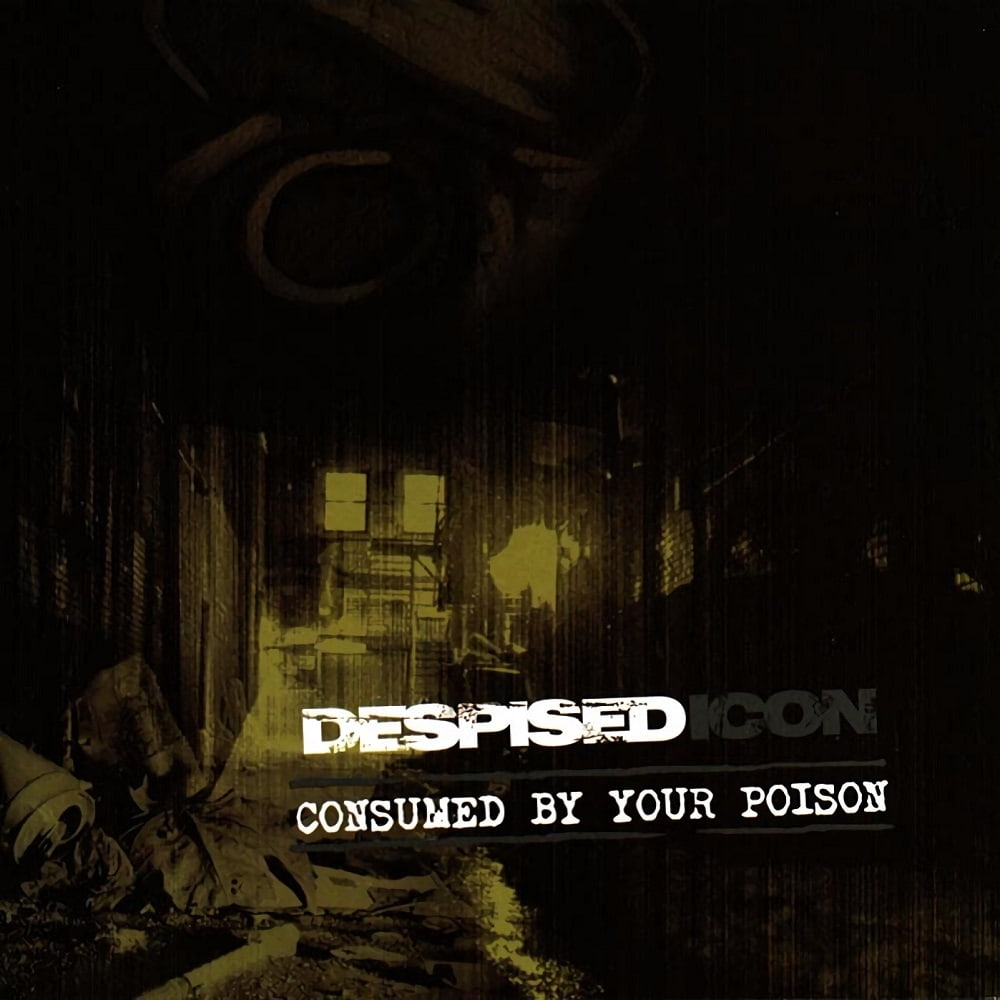
St-Amand mattered even more next door. Founded in Montreal in January 2002 and on record that October with Consumed by Your Poison for the local label Galy, produced by St-Amand on guitar, with Marie-Hélène Landry and Steve Marois sharing the vocals and Alex Erian behind the drums, the band that would turn two singers into its signature was Despised Icon. The debut is brutal death metal by most measures, tight and technical, and it already carries the hardcore drop and the trade between two throats that the next records sharpened.
The line-up that people remember arrived in 2004, when Landry left and Erian stepped out from behind the kit to sing beside Marois. A self-financed EP, Syndicated Murderers, and a split on Relapse followed, then a worldwide deal with Century Media in January 2005, and on 5 April 2005 The Healing Process, which opens on "Bulletproof Scales" and tears through blast beats and drops into breakdowns a hardcore room could use. Over Alex Pelletier's blasts the two throats took the songs apart from both ends, like two stagehands tearing down a drum riser after the last band, one wrenching the low bolts out with a pry bar while the other rips the carpet off the top, until the platform collapses between them. That year they toured with Cryptopsy, Suffocation and Deicide. The death metal circuit had taken them in.
New England was working on the same problem in the same years. Formed in Revere, Massachusetts, in 1999 by Guy Kozowyk on vocals and Kevin Rampelberg on guitar, and on record in 2002 with Fused Together in Revolving Doors, cut with Andrew Schneider producing for the label Robotic Empire, the band that mixed grind, death metal and the stop-start of metallic hardcore into something nobody could file cleanly was The Red Chord. Clients, released on Metal Blade in 2005, went on to sell more than fifty thousand copies in the United States.
Kozowyk also ran a label, Black Market Activities, and its second release was the only proper record by a band that existed for barely two years. Formed in Brookline, New Hampshire, in 2002 and gone by 2004, the band whose lone self-titled EP of 2003 spread its members across half the scene was Deadwater Drowning. Its members scattered into The Acacia Strain, The Red Chord, Through the Eyes of the Dead and later Fit for an Autopsy, and Jonny Fay went on from its guitar line to record Whitechapel in his own studio. Few bands that lasted so short a time left so many fingerprints.
Who was the first deathcore band?
Every candidate wins on one test and loses on another, which is why the question stays open. The word test is the oldest and the weakest. One of the earliest known uses of "deathcore" belongs to a New York band, NYC Mayhem, who called their mix of hardcore punk and thrash by that name on the Mayhemic Destruction demo, reviewed in Metal Forces in 1985, and Terrorizer's 1996 use pointed at Earth Crisis and Merauder. None of those bands plays deathcore. The name was a loose label lying around the hardcore and thrash scenes, picked up and dropped again, long before it stuck to anything.
| Band | Where, formed | Key early release | The case for | The case against |
|---|---|---|---|---|
| Embodyment | Arlington, Texas, early 1990s | Embrace the Eternal (1998) | The earliest record here with the full mix | Left extreme music on the next album |
| Antagony | Bay Area, California, 1999 | See Through These Eyes (2001) | Played it from 1999; fed All Shall Perish | Small output, little heard at the time |
| Eighteen Visions | Orange County, California, 1995 | Yesterday Is Time Killed (1999) | Death metal weight inside early metalcore | Turned melodic within three years |
| Prayer for Cleansing | Raleigh, North Carolina, 1996 | Rain in Endless Fall (1999) | Death and black metal inside metalcore | Broke up in 2000 |
| Despised Icon | Montreal, Quebec, 2002 | Consumed by Your Poison (2002) | Locked the template | Formed four years after the earliest claims |
| Deadwater Drowning | Brookline, New Hampshire, 2002 | Deadwater Drowning EP (2003) | Members seeded four later bands | One EP, gone by 2004 |
| All Shall Perish | Oakland, California, 2002 | Hate . Malice . Revenge (2003) | Direct line from Antagony | Arrived after its own forebear |
The sound test favours Embodyment, whose 1998 record already puts death metal riffing, growls and hardcore breakdowns on one disc. The lineage test favours Antagony, a band playing the hybrid from 1999 whose members went on to found All Shall Perish. The template test favours Despised Icon, the band that by 2005 had fixed the blast beat, the breakdown and the two-voice trade into a shape later bands worked from. The other four fail on the same ledger: Eighteen Visions and Prayer for Cleansing sat inside metalcore's frame and left it, Deadwater Drowning lasted one EP, and All Shall Perish arrived after its own forebear. Antagony and Despised Icon, the two bands most often called the true pioneers, both turned the deathcore label down in public, Antagony's Nick Vasallo by 2013 and Despised Icon's Alexandre Erian in 2007.
So the honest answer to the first deathcore band question, whatever the chroniclers of any one scene prefer, is a short list, not a name. If the test is who released the first record that sounds like the genre, the record shows Embodyment in 1998. If it is who played it first and kept playing it, Antagony has the best claim. If it is who built the model the next decade followed, it is Despised Icon. The narrower questions, who invented deathcore, when it started and which album came first, split the same way, and none of them ends with a single name either.
What the list does settle is the shape of the birth. Deathcore did not start in one city with one band and spread outward. It turned up independently in Texas, North Carolina, Orange County, the Bay Area, Montreal and New England within about five years, made by people who had the same two shelves of records at home. That is a stronger origin than any single founder. It means the idea was waiting in the music itself.
2005: the floor the MySpace years were built on
By the end of 2005 most of the pieces were in place. The Healing Process was out on Century Media, Hate . Malice . Revenge had been reissued by Nuclear Blast, and in South Carolina Through the Eyes of the Dead, formed in Florence in 2003, released Bloodlust on Prosthetic. Laid end to end, the dates from 1985 to 2005 make a short and very uneven timeline: a word in 1985, the word again in 1996, three records in 1998 and 1999, and then a rush of bands between 2001 and 2003.
The rush had a reason, and the reason was not on any record. A free website for bands went live in August 2003, and everything after it belongs to what that site did to the music. In Glendale, Arizona, a group of teenagers formed Job for a Cowboy that December, and in December 2005 they released an EP called Doom.
What happened next is the story of myspace era deathcore, the years in which Suicide Silence, Carnifex, Whitechapel and a hundred bands with friend counts instead of record deals took everything the founders had worked out and made it a scene. The founders did not vanish. Despised Icon and All Shall Perish rode that wave, Antagony came back with Rebirth in 2005, and the records made in the decade before were reissued, remastered and rediscovered by kids who had found the genre through a profile page.
The bands that came before the name are easy to undersell, because almost none of them sold many records and several did not last. They did the hardest part anyway. They took two kinds of music whose fans did not share rooms, welded the blast beat to the breakdown inside one song and played it to both crowds until the argument collapsed. Everything that came after only had to turn it up.

