
Reviewing Die Without Hope for Exclaim! on 28 February 2014, Bradley Zorgdrager wrote that the band behind it had put the final nail in deathcore's coffin. He meant it as a compliment to the record. As a forecast for the genre it lasted about three years.
Back from an indefinite hiatus, signed to Nuclear Blast and holed up at Audiohammer Studios in Sanford, Florida, with Mark Lewis producing and a new lead guitarist, Jordan Lockrey, making his first record with them, the San Diego five who were supposed to be carrying the coffin to the grave were Carnifex, and what they actually carried out of that studio was a black metal tremolo bolted onto breakdowns heavy enough to tear the lid off the box and fling it into the street. The burial was cancelled.
What followed was not a funeral but a scattering. The best deathcore albums of the 2010s came out of Blacktown, Jersey City, Connecticut, Hull, Perth and Yekaterinburg as much as out of the founders' home towns, and by the end of the decade a downtempo record from the north of England and a self-released orchestral record from New England shared a genre name, a tuning and very little else.
Take the coin-operated boxing machine by the coat check of an American Legion post that rents its hall out for all-ages shows on Sunday nights, a red leather bag on a hinged steel arm that drops when the quarter goes in, and ten years of kids in ten different band shirts walking up to it between sets and throwing ten different punches at it: the wild haymaker, the short jab, the two-handed hammer from over the head, the run-up from the bar. The machine does not care how the arm was drawn back. It reads one thing, the force of the bag slamming into its stop, and rolls that number onto a cracked red display, and by the end of the decade the leather has split along its seams and the hinge bolts have been wrenched half out of the wall. That is the only honest way to rank records from branches that barely sound like each other. The orchestra, the sweep, the tremolo and the slow crawl are the wind-up. What gets ranked is the hit.
Three famous records of the decade already have their place among the deathcore records to own: Holy War, My Damnation and Until I Feel Nothing. Hate and The Valley mattered most for what they set moving, which is a different measure. Nine more, in the order they still hit, make the ranking.
| Rank | Record | Released | Label |
|---|---|---|---|
| 1 | Thy Art Is Murder, Dear Desolation | 18 August 2017 | Nuclear Blast |
| 2 | Carnifex, Die Without Hope | 4 March 2014 | Nuclear Blast |
| 3 | Whitechapel, A New Era of Corruption | 8 June 2010 | Metal Blade |
| 4 | Fit for an Autopsy, The Great Collapse | 17 March 2017 | eOne |
| 5 | Shadow of Intent, Melancholy | 16 August 2019 | Self-released |
| 6 | Suicide Silence, The Black Crown | 12 July 2011 | Century Media |
| 7 | Black Tongue, The Unconquerable Dark | 4 September 2015 | Century Media |
| 8 | Make Them Suffer, Neverbloom | 25 May 2012 | Roadrunner |
| 9 | Slaughter to Prevail, Misery Sermon | 5 May 2017 | Sumerian |
Why Dear Desolation leads the best deathcore albums of the 2010s
Produced, engineered, mixed and mastered by Will Putney, released by Nuclear Blast on 18 August 2017 and over in 38 minutes and 17 seconds across ten songs, the last record with founding drummer Lee Stanton and the first with Kevin Butler on bass, the fourth album by the five from Sydney's western suburbs is Dear Desolation, and the band that made it the best deathcore record of the decade is Thy Art Is Murder. It is the shortest record near the top. It wastes nothing.
Joe Smith-Engelhardt, reviewing it for Exclaim! in August 2017, called it the band's strongest album to date and heard it leaning toward the death metal of Behemoth and Cannibal Corpse. That lean puts a riff under every drop. The riffs are built to stand on their own, so each drop arrives as the payoff of a song, and every one of them hits the bag square. In the United States the record entered the Billboard 200 at number 95 on about 6,500 first-week copies. The stand-alone single the band put out in January 2017, "No Absolution", was a leftover from the Holy War sessions, and it was already better than most bands' singles.
Second is the record the coffin was built for. Released by Nuclear Blast on 4 March 2014, led by the single "Dragged into the Grave" in January and given guitar solos by Mark Lewis and Jason Suecof and piano by Cassie Morris, Die Without Hope scored 81 on Metacritic, drew nine out of ten from Jack Rogers in Rock Sound, and in 2021 Revolver put it among its fifteen essential deathcore albums as an entry point for newcomers and a classic for everyone else. Lockrey's tremolo sweeps across the drops like a circular saw ripped down the length of a pallet, throwing a rooster tail of sawdust over the monitor wedges, and then the breakdown comes down like the cut halves dropping out of the frame onto the shop floor. By common consent it peaked at number 98 on the Billboard 200. It did not peak on the floor.
Third is the oldest record here, and the one that proved the founders could change the recipe and keep the weight. Tracked at Audiohammer from 27 December 2009 into January 2010 with Jason Suecof producing and playing the solos on "A Future Corrupt" and "Necromechanical", carrying Chino Moreno of Deftones on "Reprogrammed to Hate" and Vincent Bennett of The Acacia Strain on "Murder Sermon", and selling just under 10,700 copies in its first American week to enter the Billboard 200 at number 43, the Knoxville sextet's third album was A New Era of Corruption, and the band was Whitechapel. It was their first record without a concept and the last with Kevin Lane on drums. Blabbermouth gave it eight out of ten and singled out the counterpoints and moving leads the three guitarists threw across one another, and Rock Sound matched the score; AllMusic stopped at three stars out of five. The record shows a band hammering three guitar parts into one wall without losing the line through it. Whitechapel's own Our Endless War charted higher four years later. The better songs came first.
Jersey City, Connecticut and Riverside in the middle
Fourth comes from the same desk as the first. Recorded at Graphic Nature Audio in Belleville, New Jersey, with Will Putney producing and playing guitar in the band he founded, and trailed by three singles before release, "Heads Will Hang", "Iron Moon" and "Black Mammoth", The Great Collapse is the fourth album by Fit for an Autopsy. Kronos at Angry Metal Guy scored it four out of five and called the band a headliner not to miss. Exclaim! gave it nine out of ten.
The reason it lasts is in its middle. "When the Bulbs Burn Out", which opens on a sample from the climate documentary Before the Flood and is about overpopulation and a warming planet, carries the record's subject on a groove the band refuses to hurry, and the breakdowns around it smash through the speakers with the weight of the argument behind them. Kronos singled out the tom work and called the vocal delivery completely on point. It is a political record that never stops being a heavy one.
Fifth is the record with nobody's logo on the spine. Produced by guitarist Chris Wiseman, engineered, mixed and mastered by Christian Donaldson of Cryptopsy, 52 minutes long, the first with Andrew Monias on bass and the only one with Anthony Barone on drums, and trailed in June 2019 by "Barren and Breathless Macrocosm" with Trevor Strnad of The Black Dahlia Murder as its guest, the Connecticut band's third album was Melancholy, and Shadow of Intent put it out themselves. It left the Halo storyline behind for a concept about a demonic goddess who drives a population to mass suicide. Distorted Sound gave it nine out of ten and heard it beat Reclaimer, the band's previous album; Dead Rhetoric heard the biggest leap in restraint, in the melody and atmosphere left room to breathe. Both readings land on the same thing. The orchestra is there to set up the hit, not to stand in for it.
The band toured it as a headliner across the United States from January to February 2020, its first major run at the top of a bill, with Inferi, Signs of the Swarm and Brand of Sacrifice underneath, and an instrumental version of the whole album went out on 22 November 2019. A record that can be released twice, once without its singer, has songs that stand up without the voice.
Sixth is the record that took the founders' blunt instrument and gave it a swing. Produced by Steve Evetts and entering the Billboard 200 at number 28 on about 14,400 first-week copies, the Riverside quintet's third album, the one Rock Sound praised for dropping the old monotony in favour of churning, lengthy breaks and Metal Underground for its respect for real hardcore, the tough stuff, was The Black Crown, and the band was Suicide Silence. Two reviewers, one conclusion: the record put the groove of real hardcore back under the death metal riff.
It is the last album Mitch Lucker sang on. Lucker died on 1 November 2012 after a motorcycle crash in Huntington Beach, California. He was 28. The band released no new studio album until July 2014.
Hull, Perth and Yekaterinburg close the nine
The music changes gear here, and the next record changes it furthest. Formed in Hull in 2013 by school friends, two of whom, Eddie Pickard on guitar and Aaron Kitcher on drums, also played in the technical band Infant Annihilator, signed to Century Media in 2014 and released by that label on 4 September 2015 with guest vocals from Eddie Hermida and CJ McMahon, the debut album that slowed the breakdown down until each chord had to be waited for was The Unconquerable Dark, and the band was Black Tongue. Every chord lands like a steel fire door on a slow hydraulic closer, a long hiss of travel and then the whole leaf slamming into its frame so hard the exit sign jumps on its chain, and then the long wait while the arm resets.
The reviews split on exactly that. James Weaver of Distorted Sound gave it nine out of ten and heard Alex Teyen's low register as the record's real strength; Richard Holmes of Rush On Rock gave it five and a half and complained that the slow passages cut the band's best ideas short. Both of them heard black metal coming in on "L'appel du Vide", the single the band released that June. That is the flaw and the marrow of the record in one place: it asks a listener to sit through the gap. The downtempo branch has built its whole house on that gap ever since.
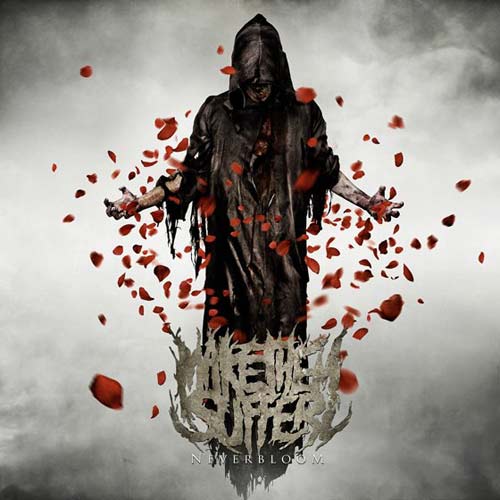
Eighth is the Australian record nobody outside Australia ranks high enough. Produced and mixed by Roland Lim and released by Roadrunner on 25 May 2012 after its title track and "Widower" went out as singles ahead of it, the Perth debut that set a piano and a keyboard player's clean voice against the breakdown was Neverbloom, and the band was Make Them Suffer. Loud scored it 85 out of 100 and called it venomous and unrelenting deathcore mixed with the band's other influences, and KillYourStereo agreed the attention was deserved. The keys do not decorate the drops. They make the drops land harder by contrast, the way a quiet room makes a slammed door louder. The band moved toward metalcore on the records that followed.
Ninth is a first album, and it is ranked on what it already does rather than on what came after. Released by Sumerian on 5 May 2017, introduced by the single "King" and carried on the road that spring on the Revelation Tour with Oceano, Aversions Crown, Spite and No Zodiac, the debut full-length by the Yekaterinburg band built around Alex Terrible's voice and Jack Simmons's guitar was Misery Sermon, and the band was Slaughter to Prevail. Its lyrics run in Russian and in English, often in the same song. Simmons told The Noise Cartel in March 2017 that the band knew the album had surpassed its previous work. Terrible's growl is the main event, a voice that drags the whole mix down into the subfloor, and the riffs underneath it do their job without yet doing much more. It is ninth because the band's next record, four years later, did more. It is on the list because nobody else in the decade sounded like that singer.
The orchestra, the sweep, the tremolo and the slow crawl are the wind-up. What gets ranked is the hit.
Just outside the nine, and where the branches went
Several records stood at the door. Lorna Shore spent the decade on Psalms in 2015 and Flesh Coffin in 2017, two drafts of a band still looking for its singer. Despised Icon came back with Beast on Nuclear Blast in 2016 and played like a bastion nobody had managed to storm. Whitechapel's Our Endless War charted higher in America than A New Era of Corruption and loses to it on the songs. The technical branch had The Palpable Leprosy of Pollution, released by Infant Annihilator through Total Deathcore on 12 December 2012, and the Bay Area's Rings of Saturn; the slam branch had Ingested from Manchester and The Surreption in 2011; Brisbane had Aversions Crown and Tyrant. Each of them has an onslaught worth hearing. Each has a case. The nine have the better argument.
Look at the nine together and the dates and the credits say more than the genre tags. Three of them came out in 2017, three years after a magazine had called the genre buried. Will Putney produced two of them, for a band from Sydney and for his own. Eight of the nine came out on six labels and one came out on none, which is the plainest measure of how far the music had spread from the handful of labels that carried its first records.
What the decade passed on was a set of branches that no longer needed each other. The orchestral records, the slow ones, the blackened ones and the ones built around a single enormous voice all went into the next decade with their own audiences, and those audiences filled bigger rooms than the founders ever had. Where they went from 2020 is the story of the best deathcore albums of the 2020s.
Dear Desolation first, Die Without Hope second, and seven more from seven different directions, from a genre a magazine wrote off in 2014.
