
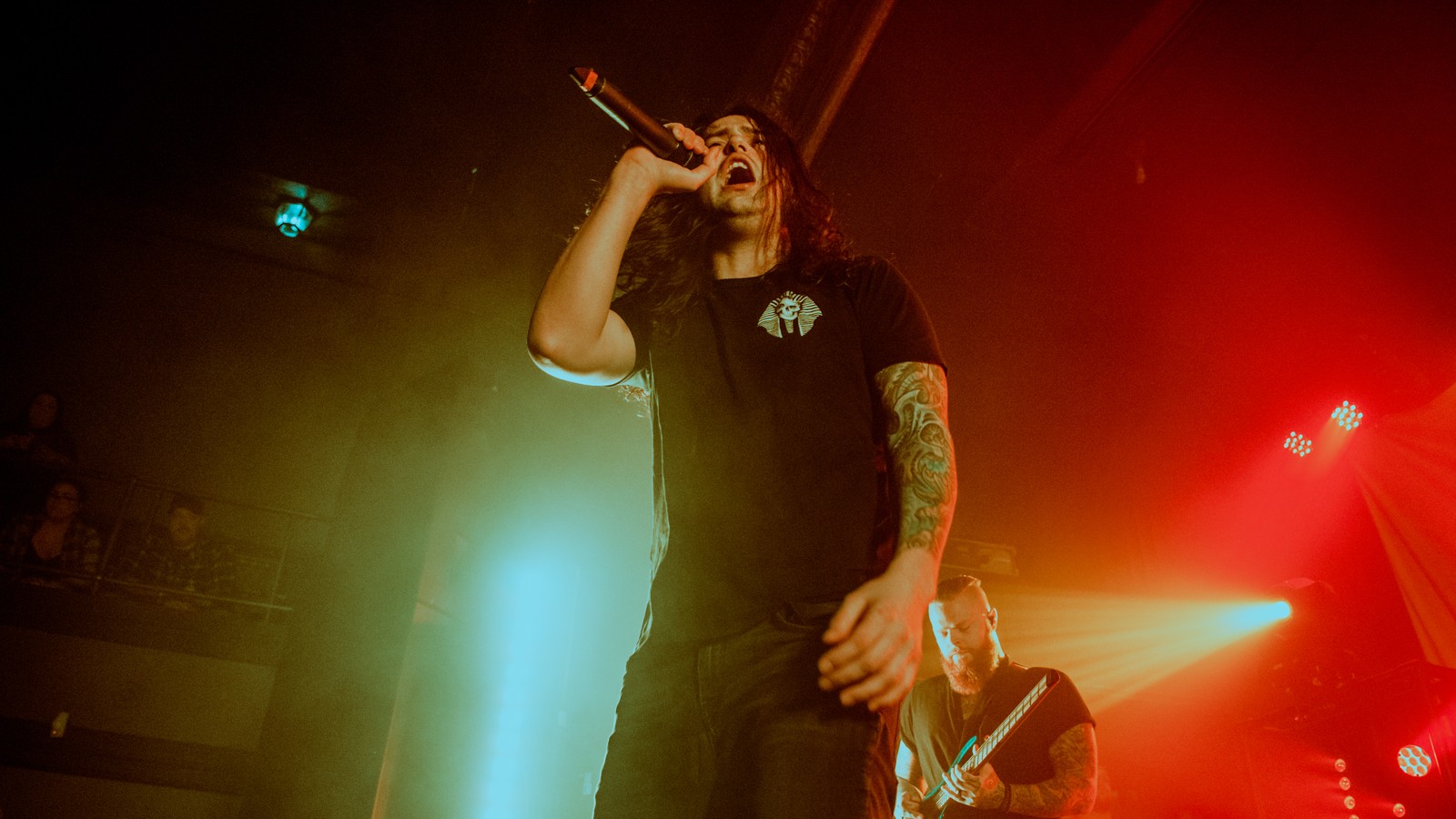
Licensed by a rail company that wanted the sound of a ruined journey, and laid under footage of a driver stuck in a traffic jam, changing a flat tyre and finally being arrested, while the train half of the screen rolled along to Spandau Ballet's "True", the deathcore song that crashed into British living rooms in a Virgin Trains advert in 2017 was "Answers in Mourning", and the San Diego band that wrote it, which complained on Twitter on 14 September 2017 that others were profiting from its music while the musicians saw none of the money, was Carnifex.
Nobody in the advert had asked for deathcore. The advert called the song thrash metal, and the band took the label as an insult as well as a mistake.
The agency needed a few seconds of chaos and found them on The Diseased and the Poisoned, a Victory album of 2008, in a song that does its work in 2:46, and that is the hardest test deathcore songs ever face: a listener who did not choose the music, a song given a handful of seconds, a verdict before the first riff has finished. "Answers in Mourning" was dropped into a commercial built to make it lose and still blew the soft-focus train journey off the other half of the screen.
A great deathcore song works the way a wheel clamp works in the car park behind a venue. The yellow steel jaws snap shut round the front tyre of a car that was only passing through, and the driver who floors it anyway rips the tyre off the rim and drags the wheel arch screaming across the tarmac, so the only sane thing left is to kill the engine and sit there until the song is over. The best deathcore songs are judged on exactly that: the opening that shuts the jaws, the hook that keeps them shut, the voice that keeps the driver in the seat.
None of that is the drop. The breakdowns everybody knows are a separate canon with their own arguments, and a song defended only on its drop is a breakdown with a title stuck on.
A song defended only on its drop is a breakdown with a title stuck on.
The four songs every fan names first, "Entombment of a Machine", "Wake Up", "Pray for Plagues" and "To the Hellfire", stand with their records in the account that frames it, the essential albums those songs were cut from. The ten that come after them in any honest count belong to ten different bands and run from 2005 to 2024.
Before 2010: speed up front, and an opening that sticks
Formed in Montreal in 2002, put on Century Media in 2005 with The Healing Process and fronted by two vocalists at once, Alex Erian and Steve Marois, the band whose fifth track on that record still makes the strongest case for the grind end of the genre is Despised Icon, and the song is "Retina". Michael Gluck, reviewing the album for Lambgoat in July 2005 and scoring it 8 out of 10, heard "Retina" start at very high speed before it settled into chugging choruses and bridges. That is the hook: the speed up front, a bridgehead taken in the first bars, the front row flattened against the barricade before the chug takes over and lets the room catch up.
Released by Sumerian on 22 July 2008 as the third track of Rareform, with Matthew Downs as a guest voice and Justin Lowe, the band's rhythm guitarist, among its producers, the song that two of the four writers in an Everything Is Noise retrospective on that album kept returning to was "Cursing Akhenaten", named for the pharaoh who tried to replace the gods of Egypt with a single sun disc, and the Minnesota band that made it was After the Burial. Spencer Adams called it his personal favourite track on the record. Billie Helton, in the retrospective of 20 July 2019, said its opening still energises her and that she was struck by how catchy the song is. Two writers, one song, and one of them points straight at the front of it. Catchy is the word that matters here, and it works like a fish hook snagged through a jacket cuff in the pit: the only way out is to tear the cuff, and nobody does.
The record around it was not loved by everybody. Rob Parker's Lambgoat review of 2008 gave Rareform a 5 and called it not a bad album, but not a great one either. The hold of the song on the people who grew up with it is attested by a retrospective written eleven years after the record. A lukewarm verdict on a record and a song that its listeners still single out are two different facts, and the second is the one that lasts.
Deathcore songs of the 2010s, and what each one leads with
Issued as a single in June 2013, two months before Sumerian released Tomorrow We Die ∆live on 20 August, and landing on an album where, in AllMusic's hearing, Joe Buras's synthesised soundscapes took a bigger share than on the two before it, the lead single of the Illinois band was "Machine", and the band was Born of Osiris. Jimmy Rowe at Heavy Blog Is Heavy, in November 2013, called "Machine", the lead single, the weakest track on the album, built largely from sections copied and pasted.
The complaint describes a hook. A line that returns unchanged is a line a listener can find again. A line pasted in again unchanged is the siren on an ambulance forcing its way down a jammed street: it shoves every car up onto the kerb, and it is the siren that somebody three blocks away turns round for, never the engine. On the progressive wing, that review shows how a repeated line looks from the outside: the reviewer hears paste, and a listener hears the part that returns.
Streamed in early June 2014 as a taste of Ashes to Ashes, which Artery Recordings put out on 8 July, and given its video on 18 August, after the band's run on the Vans Warped Tour, "Playing with Fire" was the single, and the Salt Lake City band that sent it out was Chelsea Grin. Lisa Lunney, at Louder Than War on 29 August 2014, named the song among her favourite tracks on the record, alongside "Nightmares" and "Sellouts". Lunney's pick is the song, and the video is the door a stranger came in by: a dancer whirling two burning heads on chains through the dark, cut against a band hammering at its instruments, burns through a thumbnail and is the first thing a stranger sees.
Premiered as a video on Blabbermouth on 7 June 2019, seven weeks before Nuclear Blast and the band's own Human Warfare label put out Human Target on 26 July, and made by Wilson Bambrick from scenes of warfare, genocide, police states, famine and riots, cut with footage of the people responsible, the second single by the Sydney five was "Death Squad Anthem", and the band was Thy Art Is Murder. Andy Marsh told Blabbermouth on 15 July 2019 that the new drummer, Jesse Beahler, helped make some sections more groovy, technical and faster, and told Billboard nine days later that Beahler brought fresh ideas on how to push and pull with the verses. That is the hook the band itself points to: the groove in the verse, the pit shoved into the barricade and hauled back off it on the same bar. The song is over in 3:13.
Placed last on Melancholy, tenth of ten tracks and 5:42 long, and still sent out as a single on 26 July 2019, three weeks before the album of 16 August, the closing track that the Connecticut band trusted to sell the record was "Malediction", and the band is Shadow of Intent. A closer released as a single is a band betting the end of a record on the first impression of a stranger. It also follows the ten-minute instrumental that sits ninth on the album, and in Daniel Fella's 9 out of 10 review for Distorted Sound, on 15 August 2019, the singer, Ben Duerr, comes back on "Malediction" after that instrumental to keep the blackened assault going. A voice returning after ten minutes without one is a rampart raised at the far end of the tracklist, and the review hears it keeping the blackened assault going to the last track.
| Band | Song | Record | Year | What does the work |
|---|---|---|---|---|
| Despised Icon | Retina | The Healing Process | 2005 | Speed up front, chug after |
| After the Burial | Cursing Akhenaten | Rareform | 2008 | An opening that sticks |
| Carnifex | Answers in Mourning | The Diseased and the Poisoned | 2008 | A few seconds of chaos in 2:46 |
| Born of Osiris | Machine | Tomorrow We Die ∆live | 2013 | A line that returns unchanged |
| Chelsea Grin | Playing with Fire | Ashes to Ashes | 2014 | A video as the way in |
| Thy Art Is Murder | Death Squad Anthem | Human Target | 2019 | Groove in the verses |
| Shadow of Intent | Malediction | Melancholy | 2019 | A closer sent out as a single |
| Fit for an Autopsy | Pandora | Oh What the Future Holds | 2021 | Melody under the ferocity |
| Lorna Shore | Into the Earth | Pain Remains | 2022 | A voice that works in rhythm |
| Slaughter to Prevail | Kid of Darkness | Grizzly | 2024 | A thrash-tinged single |
The 2020s: melody, voice and a thrash edge
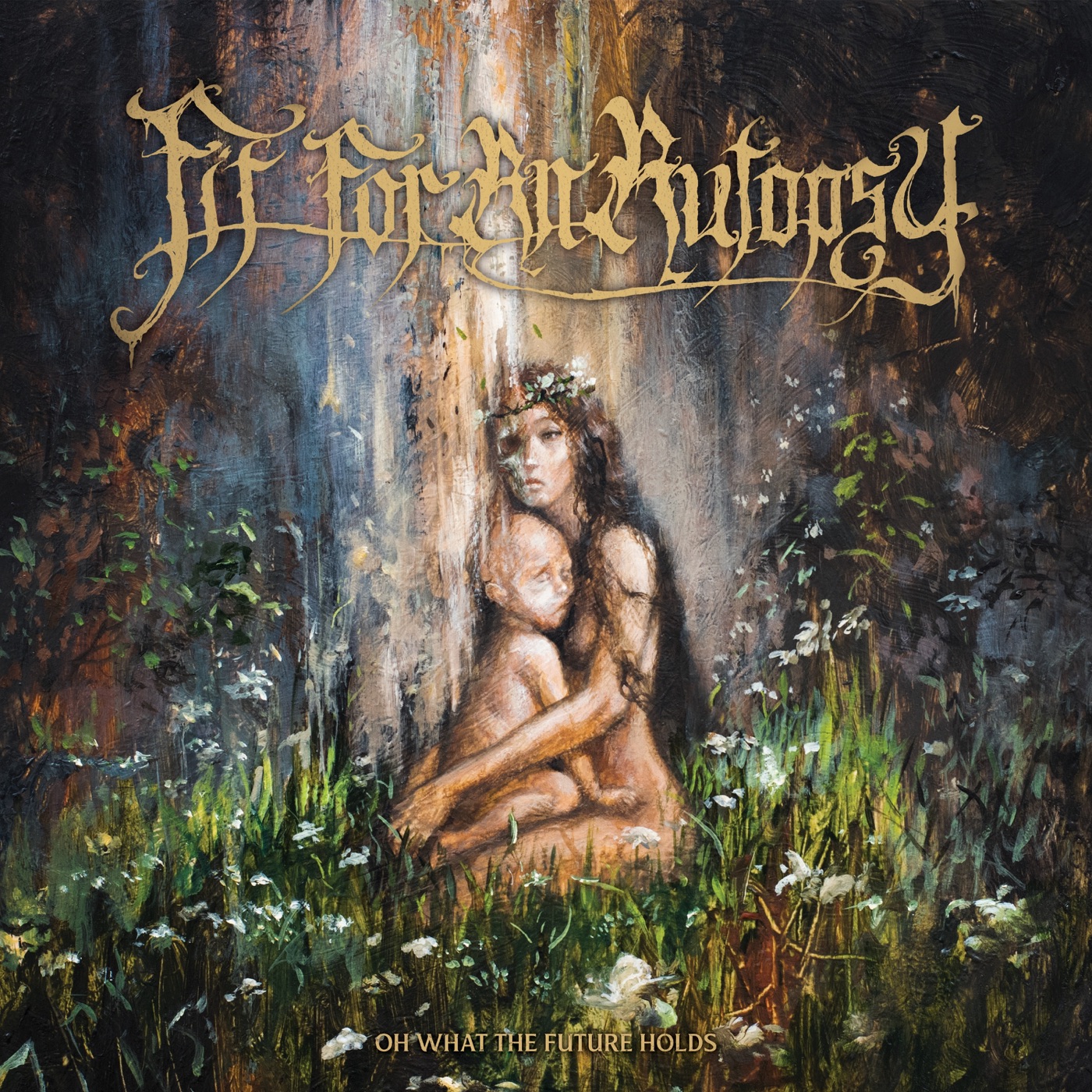
Released by Nuclear Blast with a video in late October 2021 as the second single, ahead of Oh What the Future Holds on 14 January 2022, produced like the rest of that record by Will Putney, who also plays guitar in the band, and described by the band as the inevitable path to environmental destruction via the mechanisms society has been allowed to run on, "Pandora" was the song, and the New Jersey six behind it was Fit for an Autopsy. Noisecreep, on 29 October 2021, heard unrelenting ferocity tempered only by the melody underneath it. The Metal Wanderlust review of the album, on 21 January 2022, said the melodic elements of "Pandora" and above all its guitar solo first caught the reviewer's interest. Two outlets, two different hooks, one shared word: melody. The ferocity is the redoubt a deathcore band is expected to hold. The melody underneath it is the part a stranger carries home.
Out on 22 June 2022 as the second single from Pain Remains, with a video and four months ahead of the album, the song that Ricky Aarons, writing at Wall of Sound on 21 June, heard burst into oblivion within its first ten seconds was "Into the Earth", and the New Jersey band with an orchestra parked behind its guitars was Lorna Shore. It comes in like a pickup driven through the front window of a doughnut shop at six in the morning, counter, glass cases and coffee urns smashed across the tiles before the alarm has even started. The band said the song was about the first fear of the subconscious and then accepting it, while falling into a lucid dream. What Aarons singled out was the voice: Will Ramos and his uncanny ability, in that review's words, to spit hellish tones in a rhythmic manner. A voice that works in rhythm is the hook that review lands on.
Previewed on its singer's own YouTube channel in late May 2024, out on streaming services days later, and carried through to Grizzly, which Sumerian released on 18 July 2025, the single from the band formed in Yekaterinburg was "Kid of Darkness", and the band was Slaughter to Prevail, Alex Terrible at the microphone. CtrlAltMusic, on 28 May 2024, and Grimm Gent both filed it as a thrash-tinged single. A band known for the depth of its singer's growl put a thrash edge on the song it chose to introduce its next record, and two outlets heard it.
Ten songs, ten different tools
Lay them side by side and every one of them reaches for a different tool. Despised Icon used speed up front, After the Burial an opening that sticks, Born of Osiris a line that returns unchanged, Chelsea Grin a single and a video, Thy Art Is Murder a groove in the verse, Shadow of Intent a voice on a closing track, Fit for an Autopsy a melody under the ferocity, Lorna Shore a voice that works in rhythm and Slaughter to Prevail a thrash edge. Carnifex did it by accident, inside somebody else's advert.
The bloodline of those tools, and the order in which they arrived, follows the order of KaosMetal's account of deathcore, from Montreal's two singers in the early years through the keyboard and progressive branches of the 2010s to the orchestras and the melody and voice of the 2020s. Each decade found a new way to make a first impression, and none of them threw the old ways out.
A breakdown can be lifted from one song and set down in another. A first impression has to be written for the song it opens, and the songs that have it are the ones that keep being played long after the records around them have been filed away.
