
A deathcore song is built backwards, from one bar. Every blast beat, every tremolo riff, every squeal and every scrap of horror-film dialogue leaking out of the PA before the first chord exists to drag a room up to the moment the band drops into half time and drives a palm-muted open string down through the soles of everybody's shoes, and the deathcore style, from the first Montreal records of 2002 to the arena tours of the 2020s, is the craft of clearing everything else out of that moment's way.
The rest is engineering.
The New Jersey guitarist who builds other bands' breakdowns at a mixing desk and writes his own for his band is Will Putney, and between Thy Art Is Murder's Hate in 2012, Lorna Shore's Psalms in 2015, After the Burial's Dig Deep in 2016 and the records of his own band, Fit for an Autopsy, his Belleville desk has torn the mud out of more seven-string low ends than anyone has bothered to count. His job, and the job of every band he records, is to make one part land. Nothing else is negotiable.
Out on the state highway there is a bowling alley that books all-ages shows in its back room on Fridays. A sixteen-pound house ball goes down lane twelve with everything the bowler has behind it, rumbling over the maple, hooking late, and then it smashes into the pocket and the pins explode backwards into the pit, and the sweep bar slams down to rake the wreckage away before anybody has finished hearing it. The ball is the blast and the riff. The pins are the breakdown. Everything about the throw, the weight, the speed, the late hook, is there so that the impact arrives at full force.
How a death metal blast and a hardcore breakdown ended up inside one song is the full story of the genre. The machinery is narrower and easier to put your hands on: a breakdown with rules of its own, a song shape that serves it, a riff vocabulary borrowed from death metal and bent toward rhythm, guitars with more strings than the old rulebook allowed, a bass and a sub drop working underneath the threshold of hearing, a drummer locked to a grid, and a studio method that makes all of it audible at once.
The breakdown, taken apart
Strip a breakdown to its bolts and four parts are left. The first is the half-time feel: the drummer moves the snare from the second and fourth beats of the bar to the third, so the pulse halves while the tempo on paper stays exactly where it was, and two hundred kids who were spinning in a circle a second earlier find themselves stamping on a beat twice as wide. The second is the open string, the lowest note on the guitar, played with the heel of the picking hand resting on the strings at the bridge, which chokes the ring off every note and turns pitch into impact.
The third part is the drop itself, the instant the song falls out of the fast section and into the slow one, and the fourth is the cue that tells the room it is coming. Those two are where the drama lives. A breakdown that simply starts is a slow riff. A breakdown that is announced, held back for one beat and then let go is an event.
Inside the breakdown the kick drum usually stops keeping time and starts doubling the guitar hit for hit, so what the room hears is not a beat at all but a pattern of chugs and gaps cut into the half-time pulse. The gaps carry as much weight as the hits. A chug pattern grouped in threes against a bar of four lands its heaviest note in a different place every time round, the floor never quite settles, and the crowd spends the whole passage leaning into a blow that keeps arriving a fraction early.
The gaps carry as much weight as the hits.
The cue is where deathcore put its own stamp on a device it inherited. New York and New Jersey hardcore bands of the early 1990s already built their songs around a slow section for the floor, announced with a shouted count or a dead stop, and deathcore's contribution was to tune it lower, slow it further and set a blast beat on either side of it. The announcement changed too: a pig squeal, a blegh barked across the last bar, a pick dragged down the wound strings, a crash cymbal grabbed and choked, or a single beat of total silence in which the whole hall seems to hold its breath. Then the floor takes the hit.
The voice works inside this machine as a timing instrument as much as a sound. The low growl and the high scream that make up deathcore vocals are placed in the arrangement like percussion: the high one rides the blast, the low one sits down on the breakdown with the guitars, and the squeal that announces the drop does the job a tom fill would do in any other genre.
The last breakdown of a song is usually the slowest, and bands often slow it again for its final passes, cutting the tempo in half a second time until each chug hangs in the air before the next one lands. Scene shorthand calls it the ender. It is the part the whole song was written to reach, and the reason a deathcore song rarely fades out: it stops on the heaviest note it has.
Blast, build, drop: the deathcore style as a song form
Take the verse and chorus out of a song and something has to hold it together. In the deathcore style that something is a chain of sections, each one built to make the next one hit harder: an intro of feedback, a sample or a single ringing chord; a fast section of tremolo riffing over blast beats, with the high scream on top; a mid-tempo groove riff in the hardcore two-step tradition; a build in which a riff repeats with a snare roll tightening underneath it or a dissonant chord held until it hurts; then the breakdown. A second fast section, a second build, and the ender.
| Section | Drums | Guitars | Low end | Voice |
|---|---|---|---|---|
| Intro | Silent, or tom swells | Feedback or one ringing chord | A swell, or a sample | None, or a single scream |
| Fast section | Blast beats, double bass | Tremolo riff, often dissonant | Bass doubling the guitar | High scream, trading with the low |
| Groove | Two-step groove or d-beat | Chug riff with stabs higher up | Bass locked to the kick | Low growl |
| Build | Snare roll, cymbal chokes | A repeated figure or a held chord | Rising tension, then a gap | The cue: squeal, blegh or silence |
| Breakdown | Half time, kick doubling the chugs | Palm-muted open low string | Sub drop on the first hit | Lowest growl in the song |
| Ender | Half time slowed again | Fewest notes, widest gaps | Everything below hearing | Sparse, or nothing |
The form comes from hardcore and the vocabulary comes from death metal, and the two never quite agree on what a song is for. Death metal songs travel; they take a riff somewhere and leave it there. Hardcore songs return; they exist to bring the room back to the part it already knows. Deathcore takes the death metal riffs and puts them to work in the hardcore shape, so the fast sections are the travelling and the breakdown is the homecoming.
With no chorus to come back to, the breakdown does the chorus's job. It is the part the room recognises on the second listen, the part the kids wait for through three minutes of blast beats, the part a band builds its live set around. That is why so many deathcore songs run short, often under four minutes. There is only so long a room can be kept waiting.
With no chorus to come back to, the breakdown does the chorus's job.
The Tennessee band that has kept three guitarists in its front line since 2007 and hung single after single on that homecoming is Whitechapel, and "The Saw Is the Law", the single Metal Blade put out in February 2014 ahead of Our Endless War, sent the homecoming out first: the album followed on 29 April and entered the Billboard 200 at number 10, and the band kept the song in its set long enough to film it for The Brotherhood of the Blade in 2015.
Not every band keeps the chain so tidy. The technical wing crams more sections in, the downtempo wing throws most of them out and keeps the breakdowns, and the symphonic bands stretch the build until it becomes an orchestral passage in its own right. The skeleton underneath barely moves. Blast, build, drop is the order that every variation still answers to.
The riff: tremolo, chug and the chromatic crawl
Three kinds of riff carry almost every deathcore song, and each one does a different job. The tremolo riff comes straight off the death metal shelf: a single note or a line picked as fast as the hand will go, so that the attack of each stroke disappears and what is left is a continuous, shivering stream of pitch. Over a blast beat it stops sounding like notes at all. It runs across the top of the song like a belt sander held against the rusted wheel arch of a tour van, one unbroken scream of grit stripping everything around it down to bare metal, and the ear hears speed and colour before it hears a tune.
The chug is the opposite: the palm-muted open string again, picked in sixteenths and broken up by stabs on notes higher up the neck, milled to identical lengths so the kick drum can follow them. A chug riff is rhythm first and pitch second. Where the tremolo riff is a texture, the chug is a set of instructions for the drummer and the room.
The third kind is the one that gives deathcore its unease, the chromatic crawl: a riff that moves by the smallest step the guitar has, one fret at a time, sliding down the neck note by note with no scale to hold it up. Listen to one and it sounds like a cymbal boom with a stripped wing nut sinking one notch with every hit through a whole set, until the ride that started at shoulder height is down by the drummer's knee. Nothing falls. It just keeps going down.
The darkness has a few dependable sources, and you can hear them without knowing a single scale name. The first is the note one fret above the open string: riffs keep leaning on it and falling back home, and that rub of a half step against the root is the sound people mean when they call a riff evil. Guitar teachers file it under the Phrygian mode. The second is the diminished sound, notes stacked at equal distances so the riff never settles into a key and never sounds resolved. The third is the plain dissonant chord, two notes a fret apart rung together and held, the sound of a build refusing to let go.
None of these was invented by deathcore. They come from death metal, from the mathcore records being made in the same years, and from the slam riffs that death metal owns outright. What deathcore did with them was point them all in one direction. A dissonant chord in a technical death metal song is a place the song passes through. In a deathcore song it is usually a lever, pulled to make the room want the breakdown more.
Seven strings, eight strings and the weight of the open note
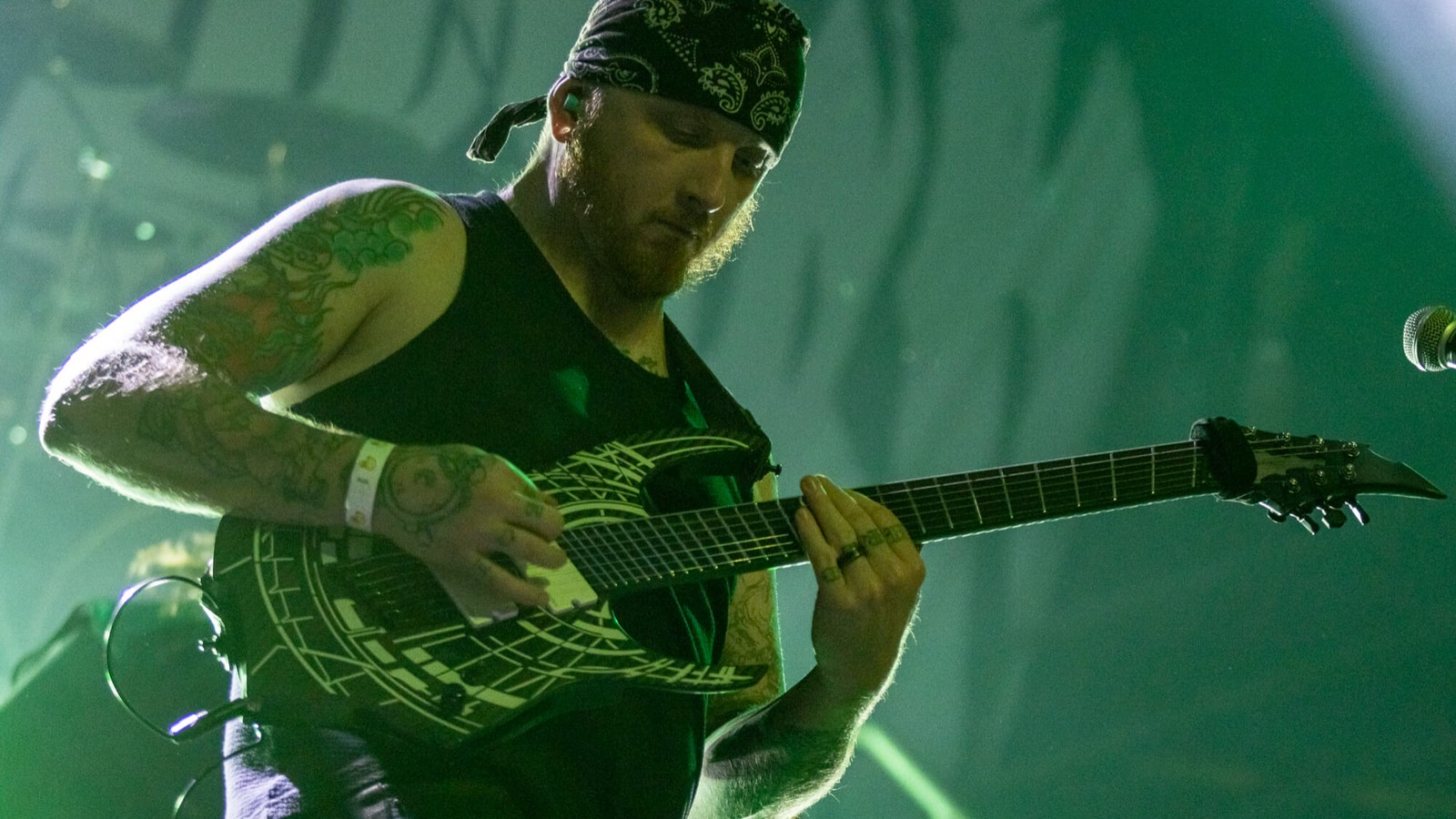
By the end of the 2000s the genre had settled on seven-string guitars in drop A or drop B, and by now that low A is as much a part of the deathcore sound as the blast beat. The reason is physical rather than fashionable. A palm-muted note that low reads to the ear as a thud standing beside the kick drum rather than above it, which makes the guitar half a percussive instrument, and the strings above it are left free to carry the tremolo lines and the dissonant chords.
That is what the extra strings are really for. A seven-string guitar in drop A keeps a full six-string neck above the low note, so a riff can climb into the high register and drop back to the open string without changing position, and the chromatic crawls and stabs that would be awkward on six strings fall under the fingers. The eighth string is not there to go lower so much as to give the riff somewhere to stand.
Eight-string guitars push the open note down to F sharp, around 46 hertz, within a whole step of a bass guitar's open E, and the downtempo and technical bands use that range for opposite ends. The downtempo bands want the weight, a breakdown so low that the guitars and the bass are effectively playing the same note. The technical bands want the span, eight strings of fretboard to sweep across at speed. Both are chasing the same thing from different sides, a guitar that can be a drum and a lead instrument in one bar.
The sound itself is built in the studio as much as on the instrument. Deathcore rhythm guitars are usually recorded four times over, two takes panned to each side, so that the slight differences between performances thicken the part into a wall, and the low end of each take is trimmed in the mix, because a seven-string at full gain would otherwise flood the mix with a boom no drummer could punch through. The heaviest guitar sound in the genre is, in practice, a carefully thinned one.
Where the solos went, and how they came back
In 2007 a guitar solo in a deathcore set was about as rare as a sung chorus. The songs were short, the structure ran from blast to build to drop, and the lead guitarist's job was the tremolo line, the pinch harmonic squealing off the top of a chug and the occasional harmonised melody, never a minute of shredding while the room stood still. The MySpace years made a virtue of it. A solo was a place where the breakdown was not.

The Bay Area quintet that kept lead guitar in the middle of the song through those years was All Shall Perish, and The Price of Existence, released by Nuclear Blast on 8 August 2006 with Chris Storey on lead guitar and Ben Orum on rhythm, hammered breakdowns into songs that also stopped for arpeggiated solos and harmonised leads, and "Eradication", the single, went out to MTV2's Headbangers Ball carrying both. It was an exception the rest of the decade admired and mostly did not copy.
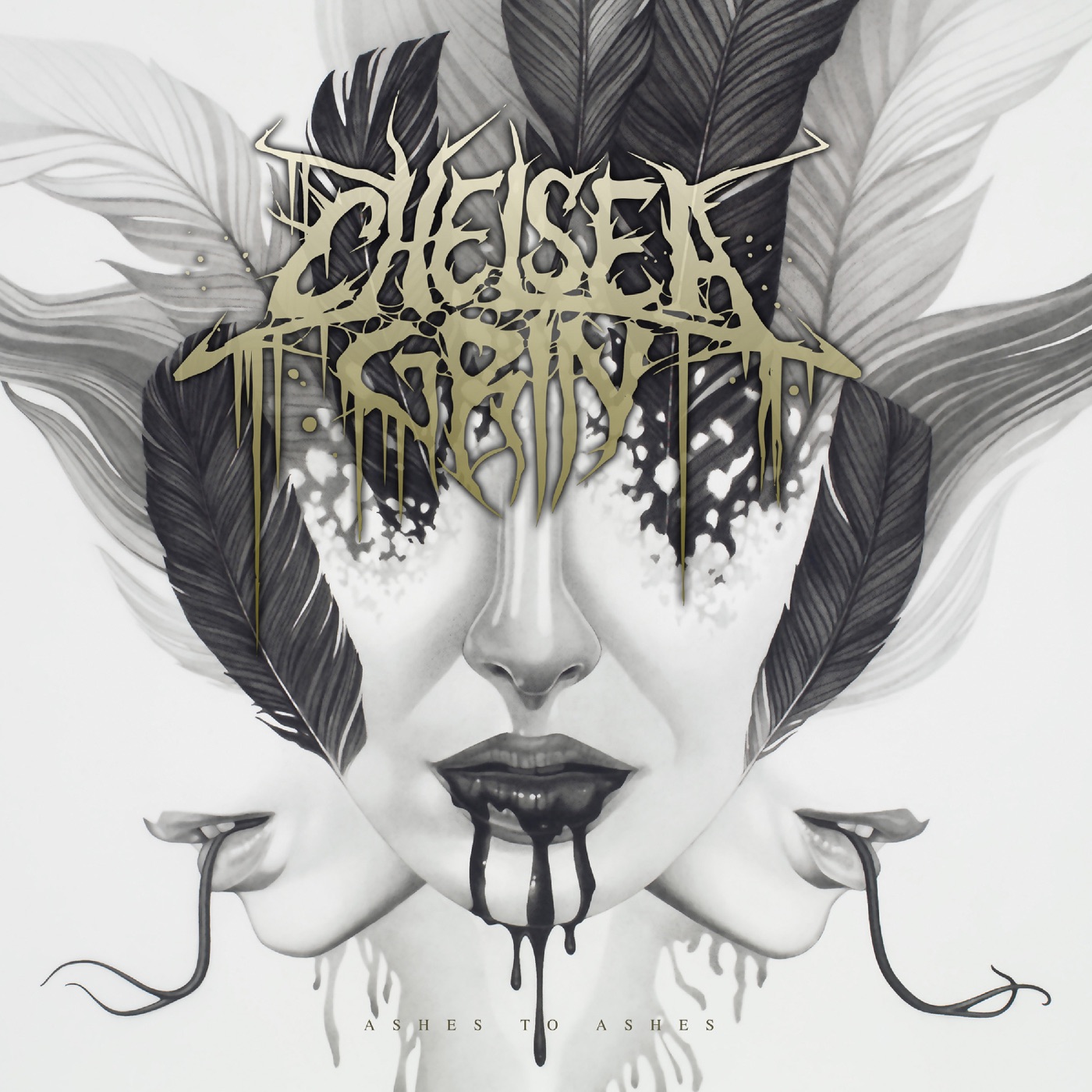
The solo came back through the side door in the early 2010s. The guitarist who arrived in Chelsea Grin with a shredder's reputation already made was Jason Richardson, whose first record with the band was the 2012 EP Evolve, and Ashes to Ashes, released by Artery and Razor & Tie on 8 July 2014, set his lead playing against the band's Salt Lake City breakdowns, a pairing AllMusic praised for its dazzling guitar work. It was his last record with the band, and he left in 2015. The idea stayed.
The melodic and symphonic bands of the next wave finished the job. The New Jersey band that closed a 2022 album with a three-part title suite was Lorna Shore, whose Pain Remains, released by Century Media on 14 October 2022, gave Adam De Micco room for solos that a 2007 audience would have walked out on, from the frantic one in the opening track to the wild leads of the closing stretch. The solo is back. It still has to make way for the breakdown.
The bass, the sub drop and the horror intro
The bass in deathcore has the hardest job in the band and the least credit for it. On most records it doubles the guitar's low string, at the same pitch or an octave below, and it sits so far underneath the stacked rhythm guitar takes that a listener on a pair of earbuds may never know it is there. Take it away and the breakdowns lose their floor. The bass is less a voice in the band than a foundation poured under it.
The trouble is physics. A bass tuned an octave under drop A plays a fundamental lower than most club PA systems reproduce cleanly, so bass players and engineers lean on the upper harmonics instead: a distorted track for the growl that can be heard, blended with a clean one for the weight that can only be felt. That gap in the bottom of the mix is exactly where deathcore put an electronic instrument.
The sub drop is a tone, usually a sine wave or a sampled 808 kick pitched to slide downward, fired from a laptop or a sampler on the first hit of a breakdown and left to fall through the lowest octave the system can carry. It comes in like a loaded semi engaging its engine brake on a mountain grade behind the van, a stuttering roar that falls in pitch as the rig slows and rattles the back windows in their seals, and the breakdown lands in the space it clears. Downtempo bands stretch the sweep across whole bars. Every branch of the genre uses it somewhere.
The samples did not stop at the low end. MySpace-era records loved an intro: a line of dialogue from a horror film, a drone, a news broadcast, the hiss of a room before the band comes in. The house lights die, a slasher film's voice crackles out of the PA, and the first chord rips through the end of the sentence like a boot through a speaker grille. The revival bands of the 2020s rebuilt that habit on purpose, along with horror and video-game samples and a snare tuned up until it rings out, as The Harvard Crimson noted of the Indianapolis band Mauled in March 2026.
Drums on the grid: blasts, gravity rolls and triggers
The blast beat came to deathcore from death metal, and deathcore uses it as contrast. The plain version alternates kick and snare at speed under a ride or crash; the hammer blast hits kick, snare and cymbal together on every stroke; and the bomb blast runs double bass underneath a snare pattern. In a deathcore song the blast is rarely the destination. It is the fast ground the breakdown is measured against, and the faster the blast, the deeper the drop feels when it comes.
The gravity roll is the drummer's answer to a speed the wrist cannot reach. The stick is pivoted on the rim of the snare and rocked so that one movement of the hand produces two strokes, a technique that lets a player fire a burst of snare hits faster than a normal grip allows. Deathcore drummers use it in short flurries, often in the last bar before a drop, a burst of artillery that clears the ground in front of the breakdown.
Then there are the triggers. A small sensor on the drum head fires a recorded sample every time the drum is struck, so that a kick played at the end of a long blast sounds exactly as loud and as hard as the first one, whatever the drummer's foot is doing by then. The result is the click the MySpace records are known for, every kick landing like the ink stamp the door guy slams onto each hand in the line at an all-ages show, the same mark at the same pressure whether it is the first kid of the night or the four hundredth, and that sameness is what lets double bass at deathcore tempos cut through four guitars at all. In a small club with a cheap PA, the trigger is often the only reason the kick drum can be heard.
The drummer also carries the hardcore half of the genre. Between the blasts sit two-step grooves, the bouncing mid-tempo patterns of a hardcore floor, and the galloping punk pulse of the d-beat, and it is the drummer who moves the song from one world to the other in a single fill. A deathcore drummer plays two genres in one song and has to make the joins invisible.
The grid and the people who built it
The genre arrived at the same time as cheap digital editing, and it shows. By the mid-2000s a band could track its drums to a computer, cut the performance into individual hits and slide each one onto the grid, then replace or reinforce the drums with samples, so that a debut recorded on a small budget came out with the tensile, machine-tight finish that had once belonged to bigger-budget records. It was never an accident.
The records that set the template came out of a handful of rooms. Tue Madsen produced Suicide Silence's The Cleansing in 2007, Yannick St-Amand sat behind the desk for Despised Icon's The Ills of Modern Man the same year, and the Bay Area and Tennessee records followed the same line, Zack Ohren on All Shall Perish's The Price of Existence and Jonny Fay on Whitechapel's This Is Exile in 2008. The sound they shared, in the judgement of most later listeners, was bright, dry and loud: clicking kicks, a high snare, guitars scooped in the middle and a master pushed until it had no quiet left in it.
The Indiana producer who went on to sell his sound to bedroom bands as software was Joey Sturgis, who recorded Oceano's Depths (Earache, April 2009) and Emmure's Speaker of the Dead (Victory, February 2011) at The Foundation Recording Studio in Connersville, Indiana. His company, Joey Sturgis Tones, now sells plug-ins and drum samples, some of them taken from his own sessions. A whole generation of home recordings starts there.

Will Putney moved the target in the 2010s. Working out of Graphic Nature Audio in Belleville, New Jersey, he kept the weight of the low strings but pulled each note apart from the next, so that a breakdown on a Putney record sounds like a sequence of separate blows rather than one long rumble. The Sydney band that went back to him again and again is Thy Art Is Murder, and he produced Holy War in 2015, Dear Desolation in 2017 and Human Target, released by Nuclear Blast on 26 July 2019, the third in that run.
The Jersey City band whose guitarist produces its records is Fit for an Autopsy, and "Far From Heaven", the first single from Oh What the Future Holds, came out in September 2021, four months ahead of the Nuclear Blast album on 14 January 2022. Putney plays on the record and produced it.
A breakdown is the only part of a metal song that gets louder by taking notes away.
Curtis Vance, KaosMetal
Josh Schroeder produced Lorna Shore's Pain Remains, the record that stacked an orchestra on top of the guitars. The revival bands, meanwhile, went the other way and set out to sound like 2007 again. Between them they show what the studio has become for this music: not a place where a performance is captured, but the last instrument in the band.
That is the whole of the method. Death metal supplies the speed and the darkness, hardcore supplies the shape, the guitars and the bass are tuned and thinned until the low note behaves like a drum, the drummer is welded to a grid, and a producer makes sure every one of those parts is audible in the half second when the song drops. Change any of them and the genre survives. Take the breakdown out and it does not.

