
...that we but teach / Bloody instructions, which, being taught, return / To plague the inventor.William Shakespeare, Macbeth
Booked to headline a summer run in 2007 with The Faceless and A Life Once Lost on the bill, and with Despised Icon, a band that had been splitting its songs between a grinding blast and a half-time drop since 2002, opening for it night after night, the Arizona band whose six-song EP of 2005 had hammered that same split into every bedroom with a modem was Job for a Cowboy.
The older record opened for the newer one. Later that year Despised Icon did it again, under Suicide Silence, with Winds of Plague on the same bill, and a band whose debut had come out on a small Montreal label watched the shape it had been playing for five years rip the floorboards up under other bands' names.
That reversal is how the most influential deathcore albums have to be counted. Influence is what happens after a record: who gets signed, who opens for whom, which branch starts growing and on which label. Quality is a separate question. Several of the records that moved this music furthest are not the ones anybody reaches for first.
Why the most influential deathcore albums are not always the best ones
A crowd surfer's boot comes down on the rack-mounted graphic equaliser at the back of a club, shoves every slider in the low band to the top of its slot and cracks the faceplate so that none of them will ever move again, and every band booked into that room for the next ten years plays through the bent setting, until the low end one boot forced into the system is simply how the room sounds and nobody remembers it was ever set any other way. That is a turning-point record. The boot was never the point. What it left behind was.
Ranked that way, a record earns its place through what came out of it: the bands that followed, the branch it started, the changes on the bills and the label rosters in the years after. Anyone after where to start on record wants the other ranking, the one built on what still lands after a hundred plays, and the two orders cross less often than you would expect.
Set against how the genre grew, eight records did most of the moving. Three opened label doors. Two moved the map. Three started branches that took a decade to grow.
| # | Record | Year | Label | What it set moving |
|---|---|---|---|---|
| 1 | Job for a Cowboy, Doom (EP) | 2005 | King of the Monsters, then Metal Blade | A band signed off its online plays |
| 2 | Suicide Silence, The Cleansing | 2007 | Century Media | Deathcore on the big summer metal bills |
| 3 | Despised Icon, Consumed by Your Poison | 2002 | Galy, reissued by Century Media | Century Media's deathcore roster |
| 4 | Lorna Shore, ...And I Return to Nothingness (EP) | 2021 | Century Media | The rooms reopened, and a second wave on one label |
| 5 | Thy Art Is Murder, Hate | 2012 | Halfcut, then Nuclear Blast | An Australian headliner over American bands |
| 6 | Born of Osiris, The New Reign (EP) | 2007 | Sumerian | The progressive branch and a label's house sound |
| 7 | Winds of Plague, Decimate the Weak | 2008 | Century Media | The keyboard player as a full member |
| 8 | Whitechapel, The Valley | 2019 | Metal Blade | Clean singing kept inside the template |
Three records that opened the label doors
Released by King of the Monsters, an independent label in Scottsdale, Arizona, carried onto the Sounds of the Underground tour in 2006 and worth a management deal and a Metal Blade contract that same year, the EP that taught labels to sign a band off its online plays was Doom, and the quintet that rode it from a desert indie onto one of the largest independent metal labels in America was Job for a Cowboy. The labels took the lesson. Genesis sold nearly 13,000 copies in its first American week in May 2007, and by July 2008 Metal Blade was releasing Whitechapel too. The band that opened the door walked out through it toward death metal. The door stayed open.
The older record opened for the newer one.
Two years later the consequence was counted in tour posters. The Riverside quintet whose first album carried the breakdown from all-ages halls onto the amphitheatre lawns of the Mayhem Festival in the summer of 2008, then across Europe and Australia with Parkway Drive, and in 2009 onto the Pedal to the Metal tour beside Mudvayne, Static-X and Black Label Society, was Suicide Silence. That June No Time to Bleed went in at number 32 on the Billboard 200 on 14,000 first-week copies. What The Cleansing changed was a line on a label's spreadsheet: after it, a deathcore band was a budget, not a gamble.
Whether it belongs among the best deathcore albums of the 2000s is a separate quarrel with separate evidence. Its consequence is beyond dispute.
The oldest of the three moved slowest. Put out in October 2002 by Galy, a small Montreal label, twenty-six minutes long with two voices on it, the debut that won its makers a worldwide Century Media contract in January 2005 and was remixed and reissued by that label in April 2006, in new artwork by Sven de Caluwé of Aborted, was Consumed by Your Poison, and the band that brought deathcore onto Century Media's roster was Despised Icon. The roster grew around it. Suicide Silence signed to the same label in 2006, Winds of Plague put its first album out there in 2008, and in 2019 Century Media signed Lorna Shore.
How Montreal arrived at that sound before anybody had a name for it is the longer account. What counts, measured by consequence, is the roster that grew out of one small-label record, and the support slot its makers ended up playing under a band that same label had since signed.
Two records that moved the map
Recorded with Josh Schroeder at Random Awesome! in Bay City, Michigan, released by Century Media on 13 August 2021 and only eighteen minutes long across three songs, the EP that reopened the rooms for a genre that had been told it was finished was ...And I Return to Nothingness, and the New Jersey band behind it, with Will Ramos newly confirmed at the microphone, was Lorna Shore. Its title song, the one Century Media gave a video, and the single in front of it went through the shut clubs of 2021 like hands tearing the plywood off a venue's boarded windows, every sheet ripped from its frame and flung into the gutter, the blast beats doing the tearing and the breakdowns arriving as the queue pouring straight through the empty frames before anyone has unlocked a door.
What changed after it was the size of the room and the shape of a roster. "To the Hellfire" went viral that summer, by 2022 the band was on the open-air stage at Bloodstock, and in 2023 the label that carried the EP put out records by Distant, Ov Sulfur, Signs of the Swarm and Mental Cruelty. The second wave had a spearhead, and a label standing right behind it.
Another record moved the map the opposite way. Recorded in April 2012 at the Machine Shop in Belleville, New Jersey, with Will Putney producing, released at home by Halfcut that October, promoted with videos for "Reign of Darkness" and "The Purest Strain of Hate" and picked up by Nuclear Blast within three months, the album that sent an Australian headliner across America with American bands opening for it was Hate, and the band from Blacktown that made the trip was Thy Art Is Murder.
The Hate Across America tour ran through November and December 2013, more than twenty dates, with I Declare War, Kublai Khan, The Last Ten Seconds of Life and Fit for an Autopsy, the band Putney plays guitar in, filling the support slots. A record made in New Jersey had come back to the States as the name at the top of the poster. In early 2014 the same band headlined Europe with Aversions Crown from Brisbane underneath it, and the Australian scene had a vanguard of its own.
Branches that took a decade to grow
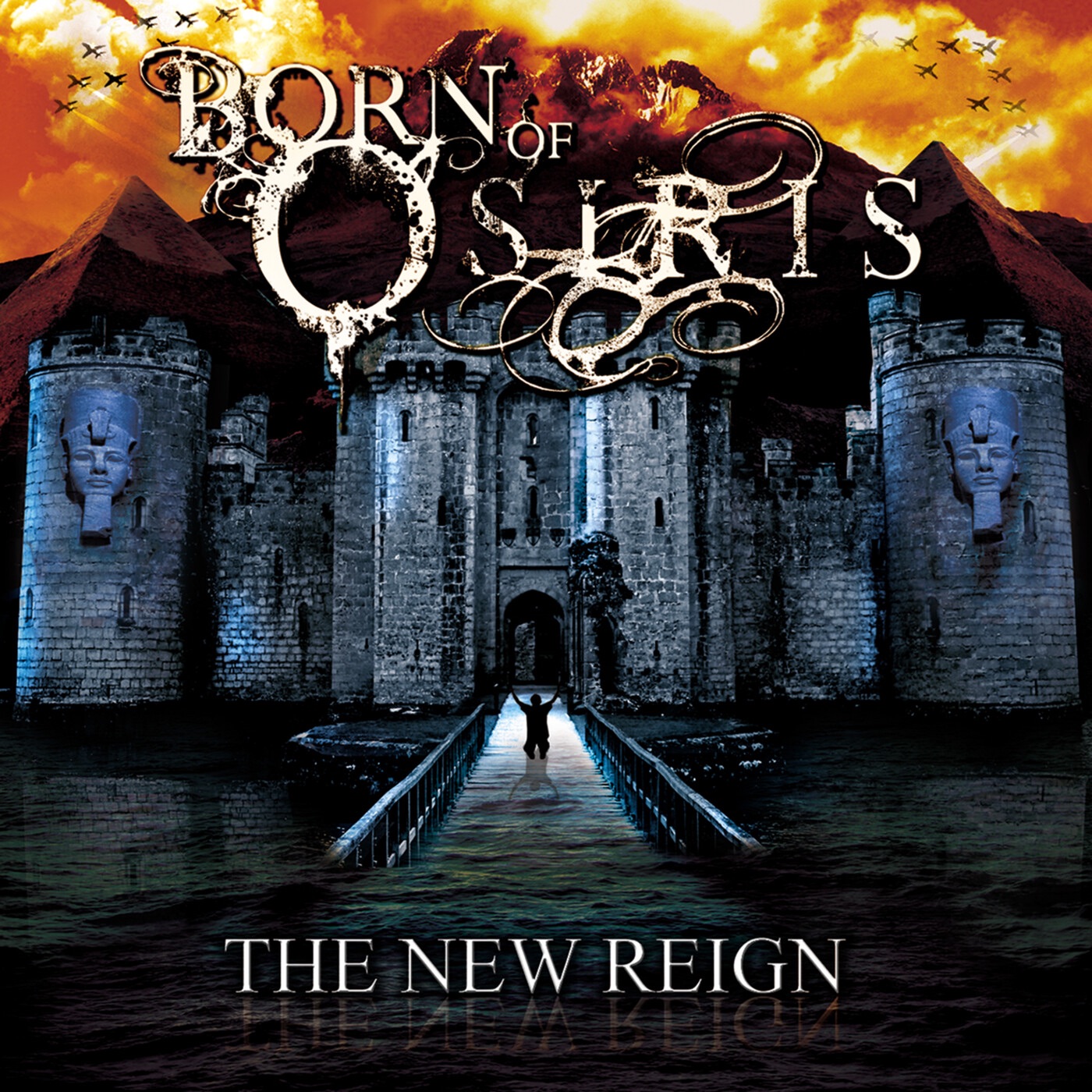
Written entirely by its drummer, Cameron Losch, between the ages of fourteen and sixteen, and released by a label founded only the year before, the EP that gave Sumerian Records its first house sound and gave deathcore its progressive branch was The New Reign, and the band from Palatine, Illinois, that made it was Born of Osiris. The consequence ran in two directions at once.
"Empires Erased", the EP's second track and the one Sumerian later gave an official video, is the place to hear where the branch started. On one side the label built a roster beside it, Veil of Maya and After the Burial first and then Periphery, whose debut came out on Sumerian in 2010. On the other, Born of Osiris kept walking, from A Higher Place at number 73 on the Billboard 200 in 2009 toward the progressive metalcore it is filed under today. A branch can breach the wall and leave by the hole it made. The label it fed went on to sign Slaughter to Prevail and, in May 2026, Carnifex.
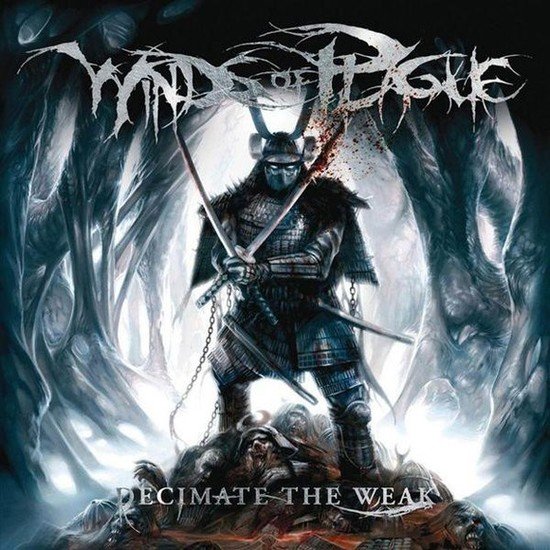
Released by Century Media on 5 February 2008, mixed and mastered by Tue Madsen, who had produced The Cleansing the year before, the album that put a full-time keyboard player in a deathcore line-up on a major metal label was Decimate the Weak, and the Upland band that kept that chair filled through a run of keyboard players over the next decade was Winds of Plague. The keyboards rode on top of the breakdowns like an air horn off a scrapped fire engine gaffer-taped to the top of a bass cabinet and wired to a footswitch, blaring over every drop while the cabinet underneath shook the tape loose.
It took ten years to pay off. Make Them Suffer carried a keyboard player in its line-up on Neverbloom in 2012, Shadow of Intent scored whole orchestras over the drop, and by the time Lorna Shore made Immortal in 2020 the sound that had once been taped on top was holding the songs up.
The newest consequence is still running. Released by Metal Blade on 29 March 2019 and produced by Mark Lewis, two years after a clean-sung Suicide Silence album had been rejected in public by much of the band's own audience, the record that put sung lines inside a three-guitar wall without losing the floor was The Valley, and the Knoxville band that took the risk was Whitechapel. In America it stopped at 143 on the Billboard 200 and at 7 on the hard rock list; in Germany it reached 27. The singing sat in the songs like a bartender's radio left on behind the bar through the headliner's set, a slow song still audible between the hits while three 4x12s shake the bottles off the back shelf.
On 14 April 2020 the band put out an acoustic "Hickory Creek", its first song sung clean from end to end, and Kin carried more singing still. Any deathcore band that wants a sung line now has a precedent that did not cost its makers their audience.
Line the most influential deathcore albums up and one thing stands out. Not one of them needed to be the best record of its year. Each changed who got signed, who headlined, or what a deathcore band was allowed to put on top of the breakdown, and each change was paid for afterwards in other people's records. That is what influence costs. The band that sets the shape rarely gets to keep it.
