
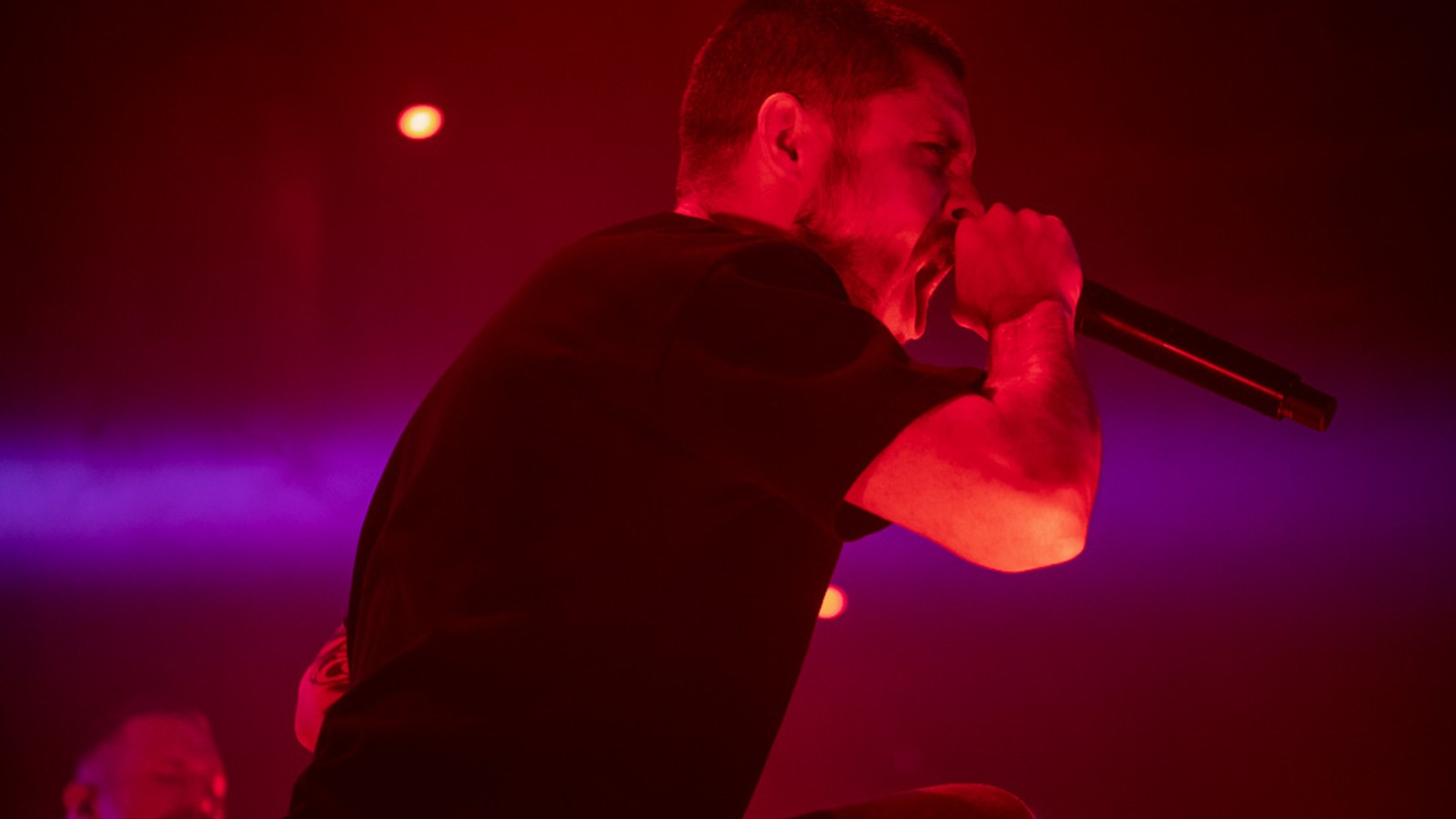
In the first week of November 2021, for the first time since its debut of 2007, a Whitechapel album failed to reach the Billboard 200.
Released by Metal Blade on 29 October 2021, produced by Mark Lewis and carried by roughly 4,500 American sales and streams in its first week, a total that got it to number 3 on the hard rock albums list and nowhere near the main chart, the record that ended a run of six straight Billboard 200 albums was Kin, and the Knoxville band that had put a deathcore album into the top ten seven years earlier and now made one of the best records of its career in the very week the chart stopped counting it was Whitechapel. That gap is the whole problem. Sales say one thing. The floor says another.
Any honest list of the best deathcore albums has to start from that gap, because this is a genre that spent its first decade being discovered one song at a time, on a profile page or a phone, and only afterwards bought, if it was bought at all. The records that matter are the ones whose breakdowns still rip the ceiling tiles out of a club on the two hundredth play. Chart peaks, first-week numbers and review scores are evidence. They are not the verdict.
Why the best deathcore albums are so hard to count
Picture the zip-up CD wallet strapped to the sun visor of a touring van at the end of a long summer, every sleeve scuffed white by a thousand potholes, and a driver who rips out any disc that skips or bores him and flings it out of the window onto the shoulder of the interstate, where it shatters on the asphalt and is gone, while the discs that are still in their sleeves when the van limps home in September, the ones whose breakdowns hit as hard in Nebraska as they did on the first night, are the only canon that has ever counted in this music. Nobody votes. The road does the culling.
That is a harder test than it sounds, and it explains why deathcore's own short lists look so strange next to the canons of the genres it came from. Death metal canons are lists of albums, because death metal records were made to be heard whole, from the first riff to the fade. Deathcore was built in the other direction. Formed in Glendale, Arizona, in December 2003 and on the map two years later with an EP the band first pressed itself, the five teenagers whose Doom taught a whole generation to judge a band by one song on a profile player were Job for a Cowboy, and the scene they fed counted itself in EPs, singles and videos long before it counted in albums.
So the unit keeps changing. Some of the genre's most important releases are six songs long. Some of its best known moments are thirty seconds of a single track. And some of its strongest full-length records sold a fraction of what weaker ones did, because they arrived the year a band's audience had moved on, or the year a label stopped paying for posters. A list that takes only albums, and only big ones, throws half the evidence out of the window with the scratched discs.
The records that matter are the ones whose breakdowns still rip the ceiling tiles out of a club on the two hundredth play.
The fair test is mechanical. A record earns its place when its breakdowns are placed where a crowd can find them on the first listen and still feel them on the hundredth, when the fast sections pay for the slow ones instead of filling time, and when the production lets the low note land as a blow rather than a smear. Everything else, the cover art, the label, the haircut in the band photo, is the jacket the record came in.
Five records for your first month
If you are starting from nothing, start with five, one a week, and leave the rest until the first five have done their work on you. The order matters less than the spread. Each one comes from a different stretch of the story, and together they show the same two parts, the blast beat and the breakdown, put to work by five different sets of hands.
| Week | Record | Year | Why it is here |
|---|---|---|---|
| 1 | Job for a Cowboy, Doom (EP) | 2005 | The release the MySpace years were built around |
| 2 | Suicide Silence, The Cleansing | 2007 | The template at full volume, Billboard 200 number 94 |
| 3 | Whitechapel, This Is Exile | 2008 | Three guitars on one low riff |
| 4 | Thy Art Is Murder, Holy War | 2015 | ARIA number 7, the genre outside America |
| 5 | Lorna Shore, Pain Remains | 2022 | The orchestra and the breakdown together |
Begin with the EP, because it is short and because it is the shape the whole scene grew from. Doom runs 23 minutes and 21 seconds across six tracks, a little over 27 with the bonus track Metal Blade added in 2006, and the song that carried it, "Entombment of a Machine", had a video behind it. Then go to Riverside. Released by Century Media on 18 September 2007 and selling 7,250 copies in its first week, the record on which the quintet with the pig squeal out front hammered every riff toward a drop was The Cleansing, and Suicide Silence is still the band most newcomers hear first for a reason. It is blunt. It works.
Week three belongs to Knoxville and This Is Exile, released by Metal Blade on 8 July 2008, the first Whitechapel record with Zach Householder on guitar, so that three guitars could lean on one low riff and let the weight do the arguing. Week four leaves the country. The band from Blacktown whose Holy War, released in June 2015, went in at number 7 on the Australian chart was Thy Art Is Murder, and that record is the proof that the template travelled without losing an ounce on the flight. Week five is the newest and the biggest: Lorna Shore and Pain Remains, released on 14 October 2022, orchestral arrangements hung over the guitars and a three-part title suite to close.
Five is a deliberately small number. A beginner given thirty records is buried by the eighth. A beginner given five hears five different answers to the same question, and the sixth record chooses itself. You will know which branch you want by the end of the month, and the rest of the map is waiting for you on the other side of it.
The second shelf: records one row behind the famous ones
Every genre has a second shelf, the records that sit one row behind the famous ones and get played more by the people who already own the famous ones. In deathcore that shelf is unusually crowded, because so many strong records came out in years when the audience was looking somewhere else. Four of them make the case.
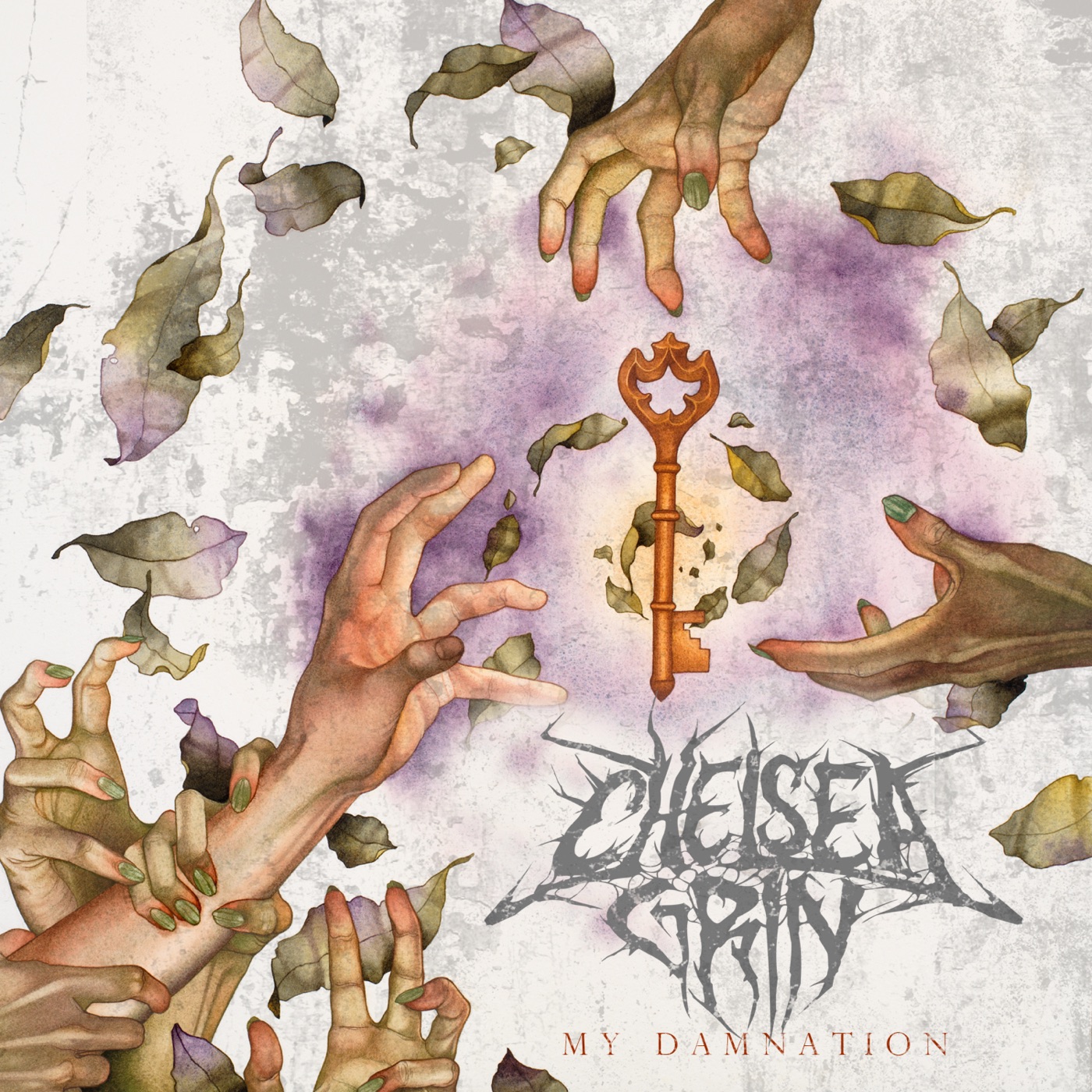
Released by Artery Recordings on 19 July 2011, produced by Chris Harris, the studio man the scene knows as Zeuss, and credited to a line-up with three guitarists in it, the second album that took the Salt Lake City band to number 64 on the Billboard 200 was My Damnation by Chelsea Grin. Three guitarists on one record is a crowded wall, and the producer's job at the desk is to clear it, like a pressure washer blasting ten years of stapled flyers off the brick wall behind a club, every scrap and staple torn away until only the hard red surface is left.
The title track went out first, in April 2011, and it is the right way in: the "relentless deathcore barrage" AllMusic heard in the whole record, with the story Alex Koehler said he wrote, a man's road from selfish tyrant to hell and on toward forgiveness, running underneath it. It is not a clever record. It is scorched earth.

Three months later came the record that closed the first chapter of a San Diego band. Released by Victory in October 2011, meant by its makers to join the more advanced writing of Hell Chose Me to the sound the early fans wanted, and sent to number 4 on the Heatseekers chart and number 12 on the hard rock list, Until I Feel Nothing was the last record Carnifex made with Ryan Gudmunds on lead guitar. It fires its riffs like a batting-cage pitching machine with the speed dial wrenched off, every ball smacking into the chain-link backstop, and then the breakdown jams the machine and the whole cage shudders on its posts. Blabbermouth's review found the songwriting much improved on Hell Chose Me and the breakdowns frequent yet well placed. The black metal turn came later, and this is the last look at the band before it.
Then the clean voice arrived, and the second shelf got its strangest record. Phil Bozeman had sung clean for the first time on Mark of the Blade in 2016, and Kin arrived as, in Bozeman's own description, a bit of a sequel to The Valley, about his teenage years and a darker self that follows him. Three guitars, the full weight, and a singer who wanted to set clean singing beside his screams and growls.

"Lost Boy", the single Metal Blade put out on 31 August 2021, is the quickest way into Kin, and the sung lines Bozeman set beside the screams sit inside the heaviness like one porch light left burning in a house a storm has ripped down to the studs, the roof gone, the windows blown in, the bulb still lit over a door that opens onto nothing.
Sales say one thing. The floor says another.
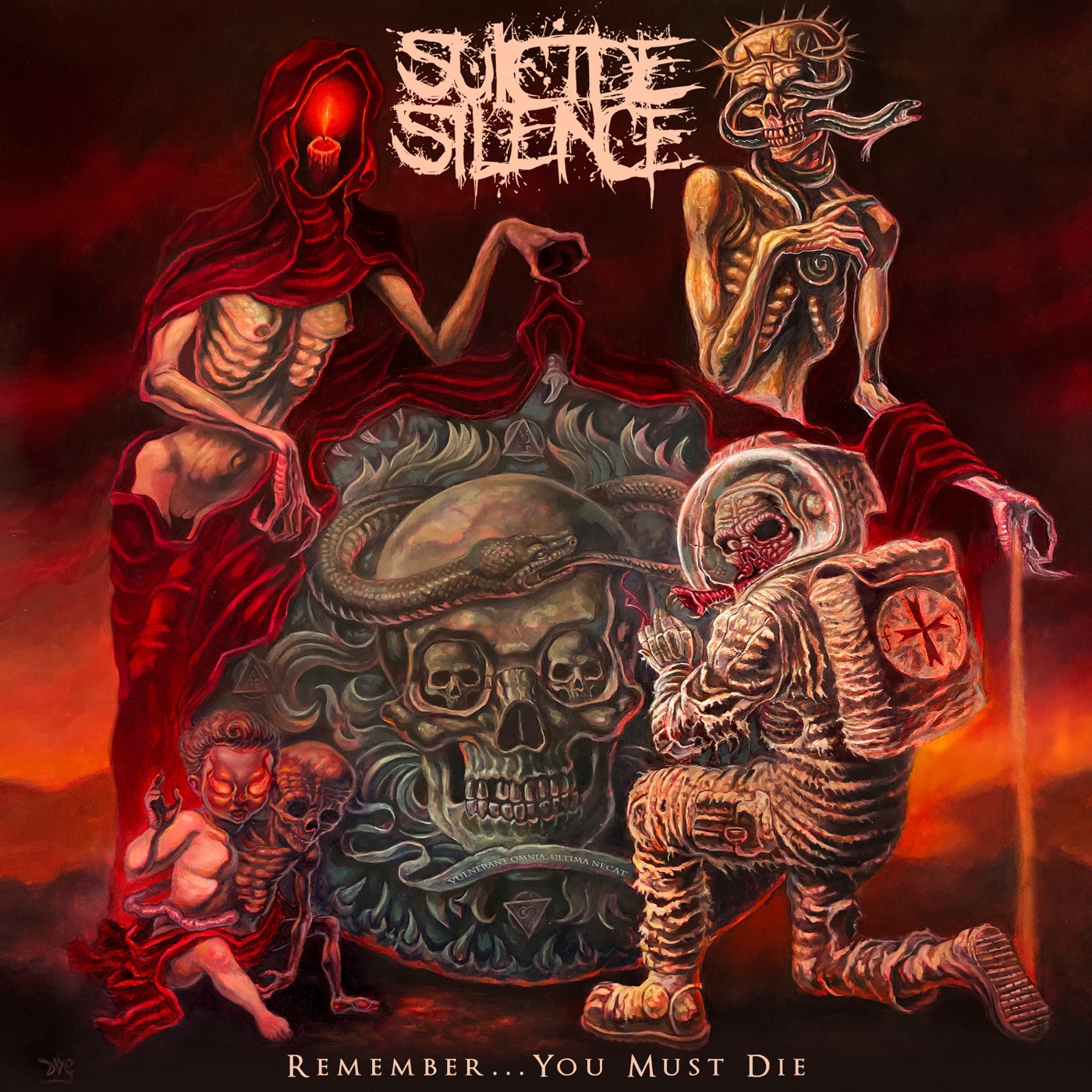
The fourth record on the shelf is a homecoming. Released by Century Media on 10 March 2023 and produced by Taylor Young, Remember... You Must Die put Suicide Silence back on the label that had carried The Cleansing, with Eddie Hermida in front, and reviewers six years on from the self-titled album of 2017 heard a return to the band's older deathcore sound. The record does not imitate 2007. It takes the old contract, riffs that exist to set up a drop, and signs it again with a voice that had been recording since 2006.
None of those four is on most beginners' lists. All four are on the visor.
Songs that outran their albums
A deathcore album is often remembered through one track, and the track is often remembered through one passage of it. That is not a weakness of the records. It is how the music was built and how it travelled: a song that opens on a blast and pays off on a breakdown inside its first minute will stop a stranger scrolling, and a stranger who stops is a stranger who goes looking for the album afterwards.
The pattern runs through every stretch of the story. In 2006 the song was "Entombment of a Machine", the track of the MySpace years, which came with a video that year. In 2009 it was "Wake Up", the opener of No Time to Bleed, sent out by Century Media with a video. On 11 June 2021 it was "To the Hellfire", the day Lorna Shore named Will Ramos as its permanent singer, and it then travelled through reaction videos on phone after phone. Three songs, three formats, one mechanism.
Some songs outlived the band's interest in them. "Pray for Plagues", from Count Your Blessings (Visible Noise, 30 October 2006), is the clearest case. The Sheffield five who made it were Bring Me the Horizon, and they spent the next decade walking away from that sound and toward arenas while the song stayed behind in a great many playlists.
The deep version of that argument, which deathcore songs are the best and why, is long and still contested. What matters at the level of the records is simpler. A song that outruns its album is a flyer stapled to a pole a week ahead of the show, and the album has to arrive behind it with the tonnage to be the show. The five in the first month all do. Plenty of records with a famous single do not.
The breakdowns a whole room counts in
Narrow the focus one more time and the unit stops being the song. It becomes the breakdown, the eight or sixteen bars a crowd knows well enough to count in before the band does, to shout the barked cue with the singer and to land on the first hit together. A handful of those passages are known across the whole scene, regardless of which record they come from, and they are passed on like a dialect. A crowd that knows one lands on its first hit like a moving crew dropping a sofa bed down the last flight of a stairwell on a shouted three count, the frame splintering on the landing and every tenant in the building feeling it at once.
That kind of breakdown is not always on the best album. It is often on the most played one, or on the record that happened to be in the van the summer a scene was forming, and the list of breakdowns everybody knows is a different list from the albums, built on what a floor remembers rather than on how a record holds together. It deserves an argument of its own. For the records, the lesson runs the other way: an album whose biggest breakdown is famous tends to be heard as the setting for that one passage, and the rest of the record pays an unsparing price for it.
The albums that survive the visor test are the ones that refuse to let one passage carry them. Put My Damnation and Until I Feel Nothing against that test and ask it of every drop on them: does this one make the next land harder, or is it carrying the record's whole reputation on its own? That is the difference between an essential album and an album with an essential moment on it.
Covers, carols and the jokes on the record
The genre also laughs at itself on record, and it does it with the same tools it uses for everything else. Deathcore covers of pop songs take a melody everybody knows, keep it on top, and drag a down-tuned breakdown underneath it until the tune either survives or is buried, like a wedding DJ's speaker set on the lip of the stage and kicked over on the drop, the chorus still squawking out of it face down on the boards while the band tramples the cable. The best of them are tests of the method as much as jokes, because a breakdown that can carry a chart hit can carry anything, and the worst of them are thirty seconds of a joke stretched over four minutes.
Christmas is the same game with older tunes, and the scene has its own small library of carols turned over to the growl, from Bring the Season, the 2007 Christmas EP by the Seattle band I Declare War to the joke projects of the streaming years. Neither belongs on a list of essential albums. Both belong in any honest account of what deathcore records are for, because the scene that made them never took itself so seriously that it forgot how to play.
In Germany We Butter the Bread with Butter ran German children's songs through blast beats and breakdowns on its 2008 debut, Das Monster aus dem Schrank, proof that the genre's inheritance, blast beat and breakdown, can carry a nursery rhyme as easily as a chart hit.
Three decades, three lists, and a fourth that ranks by consequence
The full lists split three ways, by decade. The 2000s list is the founders' list, the records made between Montreal in 2002 and the end of the MySpace boom, where the question is which of a crowded field of first albums still stands up. The 2010s list is the splinter list, records from half a dozen branches that by then barely sounded like each other. The 2020s list is the newest and the least settled, a second wave whose records are still being argued about in the comment sections while the bands play the arenas.
A fourth list cuts across all three and asks a different question. It ranks records not by how good they are but by what they caused: which album sent the next hundred bands into the rehearsal room with a new idea. The answers overlap with the best-of lists less than you might expect, and that is a long argument of its own.
The records on all of those lists make most sense read against the story they came out of, and KaosMetal's history of deathcore lays that story out in order, from the late-nineties records nobody had a name for to the second wave of the 2020s. The dates in it are the dates these records were made in, and a record heard against its year sounds different from one heard in a vacuum.
The branch you end up loving after the first month will also decide which list you trust. A listener who falls for the orchestra wants the 2020s list; one who falls for the slam riff wants a shelf of records most best-of lists leave out entirely. The map of where those branches go, and which records anchor each one, is drawn in the deathcore subgenres, from the symphonic records to the slowest downtempo crawl.
So keep the list short and keep it honest. Five records for the first month, four from the second shelf for the month after, and then whatever keeps getting played. A chart can tell you what sold in a given week. It cannot tell you what you will still be playing in five years, and in this genre that has always been the only measure that counted.
