
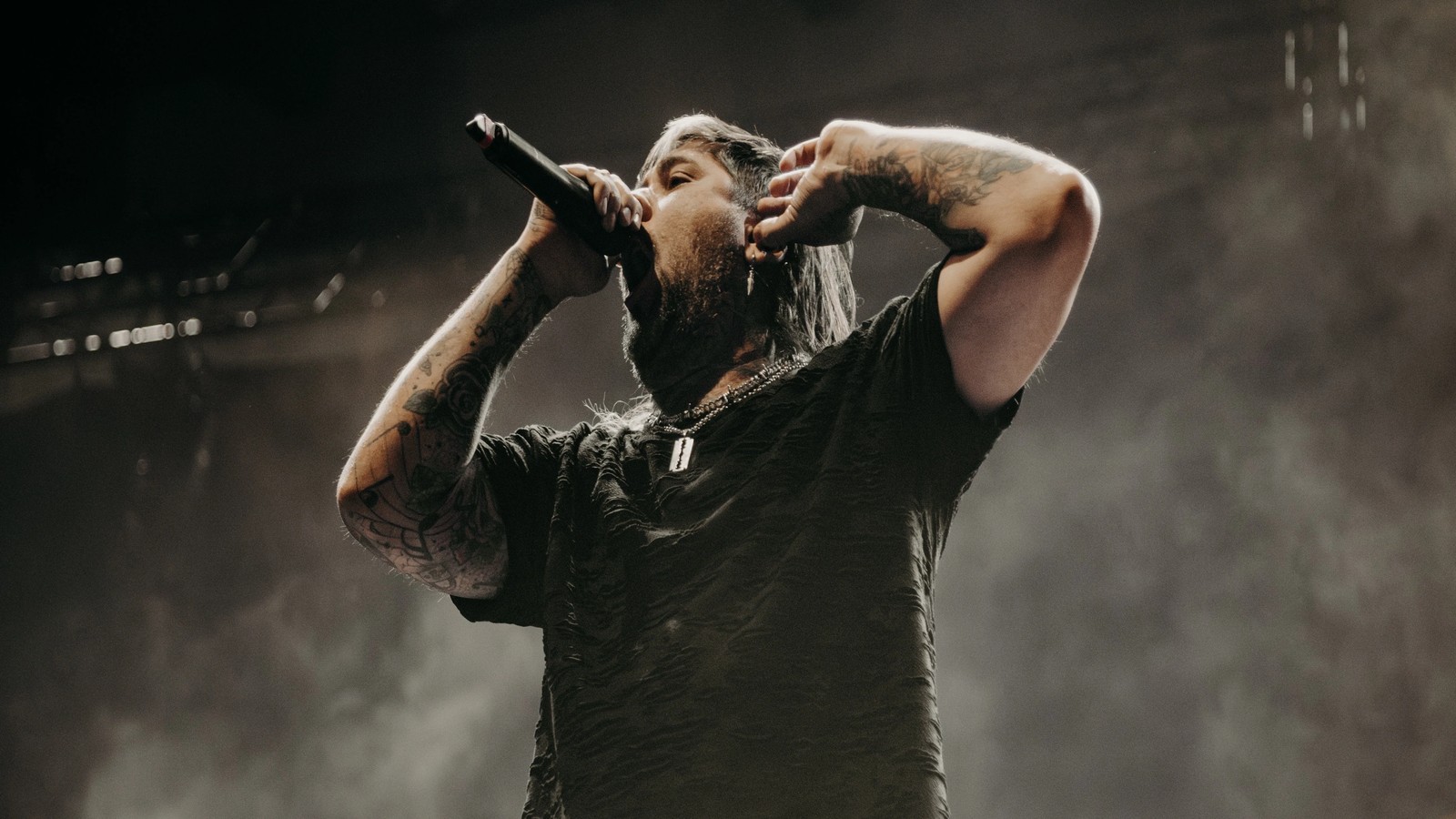
The package that dragged the American breakdown across the club floors of eleven countries was the first Never Say Die! club tour, twenty-three nights from Berlin to Wiesbaden in November 2008, which would later take the name of a merch retailer from Leipzig, Impericon, and which drove Despised Icon, Whitechapel and Carnifex through the clubs of Germany, Britain, Italy, Hungary, Denmark and six more countries on a bill shared with Parkway Drive, Unearth, Architects and Protest the Hero, and the three deathcore bands on it hammered the same breakdowns into European stages that they had been hammering into American ones since their MySpace pages first played them.
The booker who strung those dates together was Marco Walzl of Avocado Booking. The tour came back in 2009 with Despised Icon at the top of the bill beside Architects, and again in 2011 with Suicide Silence headlining over Emmure and As Blood Runs Black. A deathcore scene is built out of exactly that kind of traffic: a room that will book the music, a label that will press it, a tour that keeps coming back and a few hundred people who turn up the second time as well as the first.
Picture the house kit, the drums a promoter borrows from whoever in town owns a set whenever a touring band flies in without its own, a different kit in every country, the floor tom held together with hose clamps at one show and the bass drum stuffed with a sleeping bag at the next, and every night the same breakdown driven into it until something caves in, the spurs folding under the bass drum in one room, the snare stand buckling in another, the batter head of the floor tom splitting clean across in a third. The blow never changes. Where the kit gives way is the local scene.
When each scene arrived belongs to the full story of the genre. Where each one stands, and what it built that the others did not, is a matter of rooms, labels and tours, and the map is wider than any single decade of it.
Riverside, Knoxville, San Antonio: the American map
Southern California is where the map is densest, and the density is the point. Formed in Riverside in 2002, on Century Media within a couple of years and sharing a home town with the Christian band Impending Doom, the quintet that turned the Inland Empire into a deathcore address was Suicide Silence, while Winds of Plague came out of Upland a short drive west, Carnifex out of San Diego and As Blood Runs Black out of Los Angeles. Four towns, one freeway system, and a club circuit that became a killing ground for the whole genre. The scene there was less a city than a commute.
The labels lived in the same sprawl. Founded by the California brutal death metal band Deeds of Flesh and run by Erik Lindmark, who played guitar in it, Unique Leader Records had been pressing brutal and technical death metal since the late nineties, and it became the label that signed the deathcore bands closest to its own sound, Rings of Saturn, Fallujah and later Worm Shepherd among them. Sumerian, set up in 2006, took the progressive end. Between them the two California companies split the genre's riff book down the middle.
The rest of the country did not wait for California. In Glendale, a suburb of Phoenix, Job for a Cowboy had already made Arizona part of the founding years, and in Knoxville, Tennessee, Whitechapel built its three-guitar sextet a long way from either coast. Chicago had more company. The city was home to Victory Records, the hardcore label that signed Carnifex and Emmure, and to Oceano and Veil of Maya, with Born of Osiris out in Palatine, so the Chicago area held both the plain, heavy end of the MySpace class and its most progressive end within an hour's drive of each other.
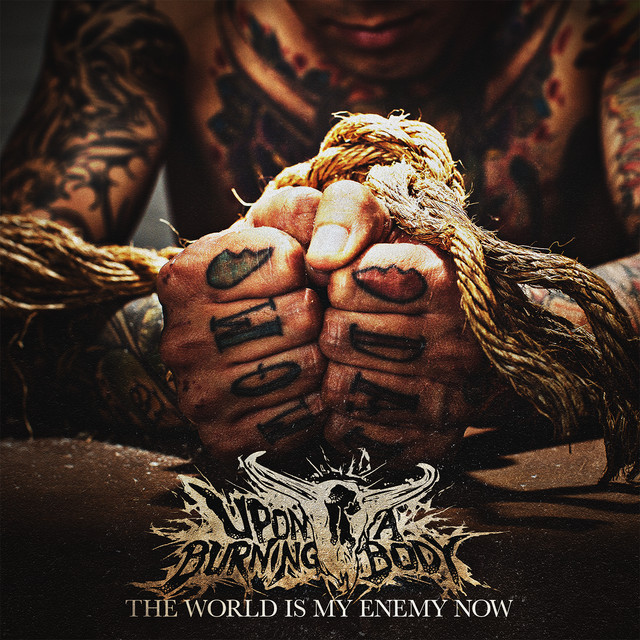
Texas had been there early, through the Christian band Embodyment in Arlington in the late nineties, and it came back with groove. Formed in San Antonio in 2005, signed to Sumerian for its debut The World Is Ours in 2010 and produced by Will Putney on The World Is My Enemy Now, which entered the Billboard 200 at number 39 in August 2014, the band that welded southern groove onto the deathcore breakdown was Upon a Burning Body. Its record titles carried the city too: Red. White. Green. in 2012, whose songs mostly borrow their names from Robert Rodriguez films, and Straight from the Barrio in 2016, whose title track is tagged 210, the San Antonio area code.
New Jersey supplied the second wave. Lorna Shore came out of the west of the state, Fit for an Autopsy out of Jersey City, and Putney, who plays guitar in the second band, produced Thy Art Is Murder's Holy War at Graphic Nature Audio, the studio he runs in New Jersey, and Lorna Shore's debut Psalms in the same year, 2015. The New Jersey scene is a studio as much as a stage. Its sound travelled on other bands' records.
The blow never changes. Where the kit gives way is the local scene.
Montreal and Quebec: deathcore in a death metal city
Montreal is a scene where deathcore arrived as a guest in a house that technical death metal already owned, a house that played its blast beats to the millisecond. The city had given the world Cryptopsy long before Despised Icon split a vocal line between two throats in 2002, and the younger band grew up in rooms that already knew what a blast beat was for. That inheritance is audible. The Quebec bands kept the grind speed and the clean, exact playing of their elders, and dropped the breakdown into the middle of it like a slab of concrete through a glass coffee table.
The circuit around them was small and tight. Ion Dissonance came up in the same years from the mathcore side, Beneath the Massacre took the technical death metal side onto the first Summer Slaughter tour in 2007, and Despised Icon spent most of the decade on bills that set it beside the death metal bands it had grown up on. Two vocalists, grind tempos, no compromise on the playing. That was the Montreal accent.

The traffic also ran the other way, once, and loudly. Recorded at the Garage Studio in Montreal and released by Century Media in 2008, with a new singer in Matt McGachy, a keyboardist and clean vocals in the mix, The Unspoken King pushed Cryptopsy toward the deathcore and metalcore of its younger neighbours, and the band's long-time listeners turned on it. The argument against the record was mechanical. People who had bought Cryptopsy for the most exact blast beats in the city heard those blasts give ground to breakdowns and sung lines, and the band went back to technical death metal on its self-titled album of 2012.
Beyond Quebec the Canadian map is thin but heavy. Brand of Sacrifice in Toronto and AngelMaker in Vancouver belong to the second wave, and Vancouver's Archspire, technical death metal by any filing, toured Europe with Despised Icon and Vulvodynia in 2018, a neighbour rather than a stranger.
Britain, from a youth club in Hamilton to the slow end in Hull
The British scene was built by a label as much as by its bands. Siege of Amida Records, a British independent, released Whitechapel's first album The Somatic Defilement in Europe in 2007, put out early records by Ingested, and in March 2013 signed a worldwide partnership with Century Media, whose announcement described the deal as a base for the British underground and named Whitechapel and Ingested among the bands the label had started. In June 2014 the same partnership signed Black Tongue.

Scotland got there through a youth club. Formed in 2005 in Hamilton, just outside Glasgow, by teenagers who first met to play Lamb of God covers, and signed by Rising Records in 2008 on the strength of two self-recorded EPs, the band that cut its first album as raw, home-made deathcore was Bleed from Within, and Humanity came out in the summer of 2009. The band later moved toward metalcore and kept moving. The first record stays where it was.
Further south the scene grew lower and slower. Ingested made Manchester the address of British slam from 2006, and the Hull area produced two bands at opposite ends of the tempo dial within a year of each other, Infant Annihilator in Hessle in 2012, which sheared the template down to speed alone, and Black Tongue in Hull in 2013, as slow as the genre goes. And Bring Me the Horizon in Sheffield made a deathcore record in 2006 and then walked out of the genre altogether, the British scene's best known export leaving before most of it had formed.
What Britain did differently was refuse the middle. The British bands that made their names inside the genre went to an extreme of the template, the slam riff, the impossible tempo, the breakdown slowed until it nearly stops, and left the centre ground to the Americans.
Leipzig, Paris, Zurich: the European deathcore scene
Germany built the continent's infrastructure, and it built it out of retail and record pressing. The tours carried the name of a Leipzig merch company, and the two biggest metal labels in the country did the rest: Nuclear Blast, founded in 1987 by Markus Staiger in Donzdorf, and Century Media, founded in Dortmund in 1988, between them signed a long list of American, Australian and Canadian deathcore bands in the 2010s and put them into European distribution. The German deathcore scene is, first of all, a supply chain. The bands came after.
When they came, they sounded like nobody else. Formed in 2007 by Marcel Neumann and Tobias Schultka, self-releasing a first pressing of a hundred copies before Redfield Records put out Das Monster aus dem Schrank on 21 November 2008, the project that soaked the breakdown in electronics and children's songs was We Butter the Bread with Butter, and its third album Goldkinder entered the German chart at number 27 in 2013. Mental Cruelty, formed in Karlsruhe in 2014, took the opposite road, toward brutality first and orchestras later.
France came through Sumerian. Formed in Paris in December 2008 and signed to Sumerian for North America and to Listenable Records for the rest of the world, the band that put orchestral keyboards and melody on top of a French deathcore rhythm section was Betraying the Martyrs, and "Man Made Disaster", released as a single on 4 September 2011, opened the account for Breathe in Life, which followed on 20 September.
The smaller countries punch above their size. Formed in Zurich in 2017, the Swiss band that dragged nu metal bounce back under the breakdown and released Cursed on 3 January 2025 through Blood Blast Distribution is Paleface Swiss. In Slovenia, Within Destruction, formed in Jesenice in 2010, broke out abroad with Void in 2016, released Deathwish in 2018 and signed to Unique Leader, the Californian shop window for slam and deathcore that does for the European underground what a MySpace page once did for the Americans. In Sweden, Humanity's Last Breath, formed in Helsingborg in 2009, signed to Unique Leader for Abyssal in 2019 and released Välde, Swedish for empire, on 12 February 2021.
Read the continent together and its scenes share one habit: most picked a single foreign ingredient and tested the tensile strength of the breakdown against it, further than the Americans would. Electronics in Germany, orchestration in France, nu metal bounce in Switzerland, the slam riff in Slovenia, and in Sweden the dissonance of the country's own thall bands. Few in Europe wanted the centre ground either.
Yekaterinburg and the long way out
The Russian deathcore scene reached the rest of the world through one band, and that band was built mostly from local parts. Formed in Yekaterinburg in 2014 around Aleksandr Shikolai, a singer with a following for his vocal covers on YouTube, with two former members of the band We Are Obscurity in its first line-up and a British guitarist, Jack Simmons, recruited from London's Acrania, the band that dragged the city's name onto American festival posters was Slaughter to Prevail, and its 2015 EP Chapters of Misery travelled far enough to bring a Sumerian contract in 2016.
The distance was the scene's handicap as well as its story. A 2017 American tour with Suicide Silence was cancelled over the American visa freeze for Russians, and other North American dates that year fell to the same visa trouble. The way east was easier. In January 2020 the band played three shows in Japan, booked by the Asian agency Slamman, with the Thai band Defying Decay on the bill.
The Russian sound that went abroad is a sound of bounce and voice, the breakdown loosened into a nu metal groove and carried by a singer who moves between low growls, pitched screams and the odd clean line. The groove came from Yekaterinburg. The audience came from everywhere.
| Scene | Band | Formed | Record to start with |
|---|---|---|---|
| Riverside, US | Suicide Silence | 2002 | The Cleansing (2007) |
| Montreal, Canada | Despised Icon | 2002 | The Healing Process (2005) |
| San Antonio, US | Upon a Burning Body | 2005 | The World Is My Enemy Now (2014) |
| Hamilton, Scotland | Bleed from Within | 2005 | Humanity (2009) |
| Aguascalientes, Mexico | Here Comes the Kraken | 2007 | Hate, Greed and Death (2011) |
| Paris, France | Betraying the Martyrs | 2008 | Breathe in Life (2011) |
| Perth, Australia | Make Them Suffer | 2008 | Neverbloom (2012) |
| Helsingborg, Sweden | Humanity's Last Breath | 2009 | Välde (2021) |
| Yekaterinburg, Russia | Slaughter to Prevail | 2014 | Misery Sermon (2017) |
| Durban, South Africa | Vulvodynia | 2014 | Praenuntius Infiniti (2021) |
| Kansai, Japan | Deviloof | 2015 | Purge (2016) |
| Zurich, Switzerland | Paleface Swiss | 2017 | Cursed (2025) |
Blacktown, Perth and a paddock in Gippsland
Australia built its scene around one band from Blacktown, on the western edge of Sydney, and then built a festival big enough to hold everyone who came after it. Thy Art Is Murder took the genre into the national charts. What followed it was a national circuit built for the long haul, strung between cities thousands of kilometres apart.
The west coast answered first. Formed in Perth in 2008 as a melodic deathcore band, self-releasing the Lord of Woe EP in September 2010 and signed by Roadrunner in February 2012, the band that carried keyboards across the Nullarbor into the national scene was Make Them Suffer, and Neverbloom came out on 25 May 2012. Aversions Crown held Brisbane, and Perth had proved a band could reach the rest of the country from the far side of a desert.
Then came the paddock. Started in 2015 as a two-day camping festival at the recreation reserve in Tarwin Lower, in South Gippsland, Victoria, Unify Gathering grew from 3,000 people in its first year to 5,000 in 2016 and 7,500 in 2017 and 2018, with Thy Art Is Murder on the 2017 bill. It was the kind of festival where a circle pit could gouge a ring into a country paddock down to the clay, the breakdown working on farm grass the way it had always worked on club carpet. A heavy scene with its own festival is a scene that no longer waits for the tour bus. The festival did not run in 2023.
Osaka, West Java, Hong Kong: deathcore scenes in Asia
Japan did something to deathcore that few other scenes tried: it dressed it up. Formed in the Kansai region in 2015 by three former members of the band All Must Die, entering Japan's Metal Battle in 2016 and releasing its first mini-album Purge that August, the Osaka band that welded the visual kei tradition of costume and stage make-up onto blast beats and gutturals is Deviloof, and in 2023 the Damned EP gave it a major-label release.
Watch a band like that and see a rail of stage costumes, lace, buckles and painted leather, pulled down off its hooks by a circle pit and trampled into a club floor, while the breakdown lands on the frills exactly where it would land on a black T-shirt. The clothes are new. The hit is the old one. Tokyo's Nocturnal Bloodlust works the same seam of visual kei and deathcore and made its European debut in 2016.
Elsewhere in Asia the scene is a network of small bands and one booking agency. West Java produced Revenge the Fate, which opened for Thy Art Is Murder at the Hammersonic Convention in Jakarta on 4 May 2025, a year after Suicide Silence had played the Hammersonic festival itself. Hong Kong's Massacre of Mothman toured mainland China in March and April 2015, twelve dates from Nanning to Nantong. A Mongolian band, Growl of Clown, formed around 2014, has played the Nine Treasures concert in Hohhot, Metal Hero in Beijing and Focus Wales in Britain.
Slamman Booking Asia ties much of it together, routing Slaughter to Prevail, Vulvodynia and Growl of Clown around the region. Asia's deathcore scenes are spread across the region and joined up by tours far more than by labels. The agent's route map is the scene.
The clothes are new. The hit is the old one.
Durban and Aguascalientes, the far ends of the map
South Africa entered the map through one band and a label from the other side of the Atlantic. Formed in Durban early in 2014 by Luke Haarhoff, then 16, and Duncan Bentley, then 19, who sang, signing to the small label Vicious Instinct for the debut Cognizant Castigation that October and to Unique Leader in May 2021, the band that carried the slam riff from KwaZulu-Natal onto stages in Europe, Australia and North America is Vulvodynia, and in 2018 it toured Europe and Britain with Despised Icon, Malevolence and Archspire.

What Durban did differently is written on the track lists. Mob Justice in 2019 dealt with life, politics and brutality in South Africa, and Entabeni, released by Unique Leader on 5 July 2024, carries song titles such as "Imbawula", "Isandlwana" and "Mamlambo", set over a riff style that came from abroad, and the band says many of the songs rest on African folklore, on old stories from poems, books and its vocalist's older relatives. The riff is imported. The subject matter is not.
"The Randlord", the third track on Entabeni, is written, in vocalist Lwandile Prusent's words, from the view of a wealthy narcissist, and takes its subject from the European financiers who seized South Africa's diamond and gold mining from the late 1800s; Unique Leader released it with an official video. A slam band from the far end of the map, singing about its own country's money, on an American label founded by a death metal band. That is how wide the genre had become.
Latin America's clearest deathcore name comes from central Mexico. Formed in Aguascalientes in 2007 by Tore González on guitar and his brother Deivis on drums, releasing a self-titled debut through 666mx and Concreto Records and touring Mexico and Europe behind it, the band that shot a video for "Don't Fail Me Darko" after its first national tour is Here Comes the Kraken. Its second album, Hate, Greed and Death, came out in 2011 through Sony Music and 666mx, with nu metal pushing into the sound.
Brazil is arriving now. Formed in São Paulo in 2020, with more than seven million streams before any label touched it, AXTY signed a worldwide deal with Napalm Records, which scheduled the debut The Pain Made Me Who I Am for release on 21 August 2026.
Laid side by side, the scenes add up to a plain conclusion. Deathcore did not spread by imitation alone. It spread along routes the business had already laid down: a German retailer's autumn tour, two German labels with European distribution, a Californian label run by a death metal band, an Asian booking agency working the region country by country. Where those routes reached, a scene tended to follow within a few years. What every one of those scenes shares on sight, from the merch table to the record sleeve, is the subject of deathcore art and the culture that grew up around the music.

