
Seventeen deathcore bands hold up the whole case, and any ranking of them falls apart the moment you ask where they came from, because they arrived in four stretches: out of the MySpace rooms of 2003 to 2009, out of the splinters of the 2010s, with the orchestral wave of the 2020s, and from the scenes in Yekaterinburg, Karlsruhe and Sydney. Rank them and the shape disappears. Map them and every band explains the one beside it.
Formed in Montreal in 2002, built around two vocalists who split the guttural low and the shredded high between them, and on Century Media from The Healing Process in 2005, the Quebec band that dragged grindcore's speed into the hardcore breakdown before most of the genre had a name for either was Despised Icon, and its records still rip the fire-exit signs off the wall above the doors of any hall that books them. It is not the only founder. It is the one furthest from California.
That distance matters, because the first thing the map shows is that deathcore was never one city's accent. A band in Oakland, a band in Riverside, a band in a suburb of Phoenix and a band in Knoxville all arrived at the same arithmetic within four years of each other: death metal riffs at full speed, then a drop into half time, single palm-muted notes on the open low string, and a voice that switches between a pit-bottom growl and a scream with no sung chorus to rest on. The records changed after that. The arithmetic did not.
The deathcore bands of the MySpace years
Six bands formed between 2002 and 2006 carry the founding claim, and they carry it together. MySpace went live in August 2003, the profile page played a song the moment it loaded, and a band with a breakdown in its first thirty seconds had an advantage no flyer on a club wall could match. The founders used it, and the label scouts found them there.
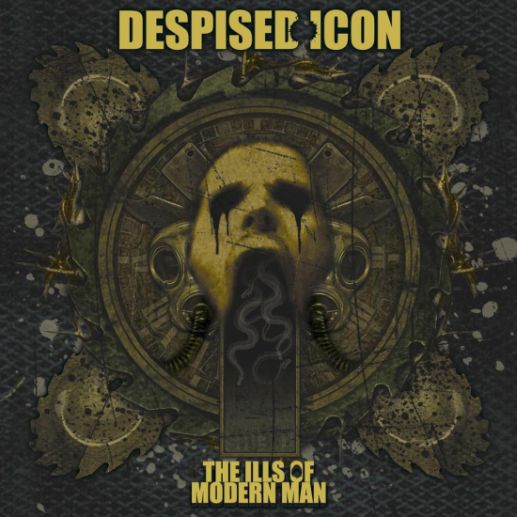
Despised Icon earns its place with The Ills of Modern Man, released by Century Media in 2007, where the two throats trade lines inside a single riff and the blasts run at a speed that owes more to grindcore than to anything in the hardcore record collection. The Montreal scene of those years also produced Ion Dissonance, whose angular, mathcore riffing sat in the same rooms, and the two bands together are the reason the city appears on any honest origin map.
Signed to Nuclear Blast in time for its second album and fronted on that record by the singer who would later take over the microphone at Suicide Silence, the Oakland band that kept sweep-laden solos and twin harmonies inside deathcore is All Shall Perish. Its first album, Hate, Malice, Revenge, came out in 2003, and The Price of Existence followed in 2006 with Eddie Hermida at the microphone and harmonised leads riding on top of the blast. That is the reason they are here. They are the melodic branch, years before anyone called it that.
Job for a Cowboy belong on the list for one record, the Doom EP of December 2005, and for the speed with which they left the sound behind: Genesis, in 2007, was a death metal album. The EP is their entry. Everything after it belongs to another genre.
The template those bands shared runs like a shopping cart sent down the ramp of a parking structure: the blast beat is the ramp, every wheel rattling at full speed and the frame shaking itself loose, and the breakdown is the steel crash barrier at the bottom, where the cart stops dead and the sound of the stop is the loudest thing in the building. Every founding band built a song that way. Most of them built a career on it.
Signed to Century Media for a debut that went in at number 94 on the Billboard 200 in September 2007, followed by No Time to Bleed in 2009 and then by The Black Crown in 2011, a record that reached number 28 on the same chart, the Riverside quintet that took the template furthest into the American mainstream was Suicide Silence. The breakdowns on The Cleansing gut a room the way a contractor guts a kitchen, down to the studs, and it is the record to start with. That reach is its reason for being on the list. Mitch Lucker sang on all three.
Mitch Lucker died on 1 November 2012 after a motorcycle crash in Huntington Beach. He was 28. The band continued, and in 2013 Eddie Hermida, the singer on The Price of Existence, joined Suicide Silence on lead vocals.
Three guitarists in the front line, one vocalist from first rehearsal to last tour and nearly every line-up change made behind the drum kit, the Knoxville sextet that showed what happens when three seven-strings land on one open note was Whitechapel. This Is Exile, released by Metal Blade in July 2008, is the record to hear first, and Phil Bozeman's voice on it became a measure that later deathcore vocalists were held against, and the band's place at the centre of the founding years is beyond dispute. The band later let clean singing into The Valley in 2019 without changing what the guitars do.
The San Diego band that formed in 2005 and has held its core four since 2007, apart from a short break between December 2012 and June 2013, is Carnifex, and its reason for being on the list is the slow turn the records made. The Diseased and the Poisoned, on Victory in 2008, is plain MySpace deathcore at its most direct. By World War X in 2019 and Necromanteum in 2023, tremolo and keyboards had crept in, and Shawn Cameron plays both drums and keys.
The late arrivals of the first wave fill out the founding years. Chelsea Grin, from Salt Lake City and formed in 2007, put out Desolation of Eden in 2010 and is still the name a lot of listeners type first. Bring Me the Horizon made Count Your Blessings in Sheffield in 2006 and then walked away from the sound. Winds of Plague from Upland, California, hung keyboards over the breakdown on Decimate the Weak in 2008, a first draft of the orchestral idea, and Emmure built songs that were almost nothing but breakdowns, the beatdown end of the genre. Oceano, the Chicago band that carried the founders' template intact into a new decade, released Depths on Earache in 2009.
Read together, those records are the opening act of the whole story of deathcore, and every band that follows either copies them, argues with them or tries to leave them. None of them can ignore them.
Rank them and the shape disappears. Map them and every band explains the one beside it.
The 2010s, when one sound broke six ways
The genre did not fade in the 2010s. It split. Across the decade the sound went the way of a tour itinerary ripped into six strips with a set of car keys on the counter of a truck stop diner, every strip still carrying the same first date and then running off down its own highway, toward technical speed, progressive form, slam groove, downtempo weight, the orchestra and the black metal tremolo, each road opening on the same show: the half-time drop of the breakdown. The bands of the decade are best heard by the line they followed.
The progressive line ran first, through the early roster of Sumerian Records. Born of Osiris, formed in Palatine, Illinois, in 2003, Veil of Maya from Chicago and After the Burial from Minneapolis, formed in 2004, took the syncopated low-string chugging of the Meshuggah school, added keyboard pads and longer forms, and kept the blasts and the gutturals on their early records. A Higher Place by Born of Osiris in 2009 and Veil of Maya's [id] in 2010 are the evidence. Later records from all three lean toward metalcore, and the line between the two genres runs through their catalogues by era.
The technical line went for density. Formed in the San Francisco Bay Area in 2009, self-releasing Embryonic Anomaly in 2010 before Unique Leader took them on, and stacking sweep-picked arpeggios at tempos that sound like a drill bit chewing through sheet steel, the band that gave its own style a joke name was Rings of Saturn, and Dingir from 2013 is where to begin. Infant Annihilator, formed in 2012 near Hull, pushed the same density further toward brutal death metal on The Elysian Grandeval Galèriarch in 2016.
The slam line took a riff from death metal and slowed it to a crawl. A slam riff is chromatic, palm-muted and swung, and it arrives with a bass drop that shakes the quarters out of the coin return of the vending machine by the bathrooms. Ingested, formed in Manchester in 2006, made it the centre of Surpassing the Boundaries of Human Suffering in 2009, and Signs of the Swarm, formed in Pittsburgh in 2014, brought it back into the deathcore song with Absolvere in 2021. The slam riff itself belongs to death metal. What these bands did was wire it into the breakdown.
The genre did not fade in the 2010s. It split.
The downtempo line cut the tempo in half and tuned below anything the founders used. Black Tongue, formed in Hull in 2013, and Traitors, formed in Florida the same year, write songs that are almost entirely breakdowns, and every hit on The Unconquerable Dark, the 2015 Century Media record by Black Tongue, lands as if the stage crew had rammed the venue's whole lost-and-found bin through the port hole of the kick drum, so the beater sinks into the hit instead of bouncing off it. The style is sometimes called doomcore. The name is shared with an electronic genre, and few in the scene lean on it.
Between the lines stand the bands who kept the template whole and simply made it hit harder. Fit for an Autopsy, from New Jersey, formed in 2008 around the guitarist and producer Will Putney, made The Great Collapse in 2017 a record about climate collapse and a society coming apart, and Putney's desk work shaped many of the decade's heaviest records from the other side of the studio window, Thy Art Is Murder's Hate among them. At the edge of the map, Fallujah, from the Bay Area, released The Harvest Wombs on Unique Leader in 2011 and then settled into technical and progressive death metal, which is a reason to know them and the reason they sit there.

Formed in Connecticut in 2013 by Ben Duerr on vocals and Chris Wiseman on guitars, releasing nearly everything themselves, and writing their first records around the battles of a video game universe, the band that drew the orchestral line straight across the decade is Shadow of Intent. Reclaimer, self-released in April 2017, sets choirs and string samples behind riffs that come from melodic death metal, and the breakdowns tear straight through the string section rather than waiting for it to finish.
"The Heretic Prevails", from Reclaimer, is the song to hear. The orchestra carries the melody, the guitars carry the weight, and the last breakdown arrives after the strings have already climbed as high as they go, so the drop has a long way to fall. It is the bridge between the decades. The black metal tremolo line leaves the decade by the same door as the choirs and reaches full size in the 2020s.
Orchestras, tremolo and bounce: the 2020s wave
The 2020s wave is the one most new listeners enter first, and it is crowded. The orchestral layer that Winds of Plague sketched in 2008 and Shadow of Intent refined in 2017 became, in the 2020s, the sound that brought deathcore back into large rooms and onto the big festival bills, with black metal tremolo and very wide vocal ranges riding alongside it.
Formed in New Jersey in 2009, through several singers before Will Ramos joined on tour in 2020 and for good in 2021, and on Century Media for a 2022 album that closes on a three-part title suite and went to number 6 in Austria, the band that turned the orchestral idea into the genre's largest draw is Lorna Shore. Pain Remains is the record to hear first. "To the Hellfire", released in 2021, went viral that year and carried a great many listeners into the genre, and Austin Archey's drumming underneath the orchestra throughout is the engine everyone else hears last and needs most.
Behind Lorna Shore the wave fills quickly. Worm Shepherd, formed in Brockton, Massachusetts, in 2020, made Ritual Hymns in 2022, symphonic and blackened at once, with tremolo lines thrown over the breakdowns like tarps over a stage in the rain. Ov Sulfur, formed in 2020, the Las Vegas voice of the same symphonic wave, put out The Burden ov Faith on Century Media in 2023. Synestia, a Finnish and American project started in 2020, belongs to the same wave. Brand of Sacrifice, from Toronto, built Lifeblood, released independently in 2021, around the story of the manga Berserk.
The bounce came back in the same years. Nu-deathcore, the strand Suicide Silence took up on their self-titled album in 2017, runs through bands that set groove riffs and a hardcore bounce at deathcore tuning. Paleface Swiss, from Zurich, are the clearest current case, with Cursed in January 2025, and the later records of Within Destruction moved the same way.
A smaller strand looks backward on purpose. A handful of recent bands rebuild the sound of the MySpace records from scratch, and Mauled, from Indianapolis, released a self-titled EP in April 2025 and When Your Eyes Are Shut in March 2026, which The Harvard Crimson reviewed as part of a deathcore revival drawing on the MySpace era. The revival copies the founders. That is its point, and it has carried a new generation of bands back onto the circuit of basements and small clubs the founders started in.
Deathcore groups far from California
The scenes outside California overlap all three eras, because by the end of the 2010s deathcore was being made at full strength on four continents. Several of the bands that matter most now come from places far from the founders' home rooms.

Formed in Blacktown, on the western edge of Sydney, in 2006, signed to Nuclear Blast after Hate came out on Halfcut in 2012 and reached number 35 on the Australian chart, the band that made Australia part of the core map is Thy Art Is Murder. Holy War followed in 2015 and went in at number 7 on the ARIA chart, the highest entry yet for an Australian extreme metal band. Those two chart entries are what put Australia on the list.
Formed in Yekaterinburg in 2014 by Aleksandr Shikolai, who performs as Alex Terrible, and the British guitarist Jack Simmons, signed to Sumerian Records and out with Misery Sermon in 2017, the band whose singer drags his voice down to a register that buzzes the guitar picks off the top of the amp heads is Slaughter to Prevail. Kostolom, released on 13 August 2021, is where to start, and Grizzly followed in 2025.
"Bratva", from Kostolom, shows the method in under five minutes: across the record the groove sits closer to nu metal than to the founders' blast, and the vocal does the heavy lifting, Shikolai moving between low growls, pitched screams and the odd clean line. It is the band's reason to be on the list. Few singers in the genre carry a song this way.
The German entry is a band that changed lines in the middle of its catalogue. Formed in Karlsruhe in 2014, filed under brutal deathcore for its early records and under symphonic blackened deathcore for its later ones, and on Unique Leader for a 2021 album that hauled orchestral and black metal colour into its slam-weight riffing, the band that crossed from one branch of the split to another is Mental Cruelty.

A Hill to Die Upon, released on Unique Leader on 28 May 2021, is the record that shows the turn. Zwielicht followed on Century Media in June 2023, and "Forgotten Kings" is the song to hear from it: black metal colour and orchestration around aggressive breaks, and a breakdown that rips the backdrop down off its pipe.
The rest of the scenes are a set of strong single entries. Within Destruction, formed in Jesenice, Slovenia, in 2010, began as slam-leaning deathcore and moved toward nu metal by Yōkai in 2020. Vulvodynia, formed in Durban in 2014, is the South African exponent of the slam line, and Praenuntius Infiniti in 2021 is the record. Humanity's Last Breath, formed in Helsingborg, Sweden, in 2009, sits on the border with the thall sound of their compatriots in Vildhjarta, and Välde from 2021 is their deepest record. Make Them Suffer, from Perth, brought keyboards into deathcore on Neverbloom, its first full-length, on Roadrunner in 2012. The British contingent, Ingested, Infant Annihilator and Black Tongue, already stands on the 2010s lines of slam, technical speed and downtempo.
A list of deathcore bands, one record each
Seventeen bands form the core of the deathcore map, each with the record that gives the clearest evidence for its place and the branch of the genre it belongs to.
| Band | Origin | Formed | Start with | Branch |
|---|---|---|---|---|
| Despised Icon | Montreal, Canada | 2002 | The Ills of Modern Man (2007) | MySpace era, grind-speed |
| All Shall Perish | Oakland, US | 2002 | The Price of Existence (2006) | MySpace era, melodic |
| Suicide Silence | Riverside, US | 2002 | The Cleansing (2007) | MySpace era, later nu-deathcore |
| Job for a Cowboy | Glendale, US | 2003 | Doom EP (2005) | MySpace era |
| Carnifex | San Diego, US | 2005 | The Diseased and the Poisoned (2008) | MySpace era, later keyboards |
| Whitechapel | Knoxville, US | 2006 | This Is Exile (2008) | MySpace era |
| Thy Art Is Murder | Sydney, Australia | 2006 | Hate (2012) | Deathcore |
| Chelsea Grin | Salt Lake City, US | 2007 | Desolation of Eden (2010) | MySpace era |
| Born of Osiris | Palatine, US | 2003 | A Higher Place (2009) | Progressive |
| Lorna Shore | New Jersey, US | 2009 | Pain Remains (2022) | Symphonic, blackened |
| Rings of Saturn | San Francisco Bay Area, US | 2009 | Dingir (2013) | Technical |
| Shadow of Intent | Connecticut, US | 2013 | Reclaimer (2017) | Symphonic, melodic |
| Black Tongue | Hull, UK | 2013 | The Unconquerable Dark (2015) | Downtempo |
| Signs of the Swarm | Pittsburgh, US | 2014 | Absolvere (2021) | Brutal and slamming |
| Slaughter to Prevail | Yekaterinburg, Russia | 2014 | Kostolom (2021) | Deathcore, nu groove |
| Mental Cruelty | Karlsruhe, Germany | 2014 | A Hill to Die Upon (2021) | Brutal, later symphonic blackened |
| Worm Shepherd | Brockton, US | 2020 | Ritual Hymns (2022) | Symphonic, blackened |
The formation years run in waves: five bands from 2002 and 2003, six from 2005 to 2009, five from 2013 and 2014, and one from 2020. The branches tell the 2010s split as a widening of the vocabulary, not as a change of subject. Through every succession of bands since, the breakdown and the two-voice attack have stayed in every branch, which is what still makes the branches one genre.
Each of those records is evidence for a band, not a ranking of albums. A list of the best deathcore albums is a different argument with different winners, because some bands made one record that towers over their catalogue and others made five good ones and no single peak.
Greatest, heaviest, and who sounds like whom
Every band on the map opens a question of its own, and each of those questions is a separate argument. Who the greatest deathcore bands are turns on influence and staying power as much as on records, and it sets the first-week sales of the founders against the stream counts of the 2020s, with the old question of whether the genre has a big four of its own riding on top. Which bands are the heaviest is a question of tuning, tempo and riff weight, and it is fought out mostly on the downtempo and slam lines of the 2010s.
The players are an argument of their own. The great deathcore drummers are judged by what they put on record, the blast held at the top of the tempo and the half-time drop placed exactly, and the great deathcore guitarists by the riffs and breakdowns they wrote rather than by their careers. The women at the microphone and behind the instruments of deathcore bands are spread across every branch on the map.
Listeners who arrive through a single band ask for the next one, and the bands like Lorna Shore, Suicide Silence and Whitechapel lead in three different directions: toward the orchestra, toward the groove and toward the three-guitar wall. Below the bands with label deals and festival slots are underground deathcore bands with one EP and a van, where the next stretch of the map is being drawn. And a Christian strand runs through the whole genre, led by Impending Doom and the roster of Facedown Records, with breakdowns as heavy as any on the secular side.
Deathcore kept two things from 2003, the half-time drop and the split between the low voice and the high one, and changed nearly everything else around them, which is why the genre is best known through its bands: each one is a different answer to the same two constraints, and the bastion they built in a few hundred rented halls now fills large rooms on four continents.
