Afoot and light-hearted I take to the open road, / Healthy, free, the world before me, / The long brown path before me leading wherever I choose.Walt Whitman, Song of the Open Road
Run from Soma in San Diego on 24 July 2009 to Club Vegas in Salt Lake City at the end of August, billed by its organiser Mike Mowery as the second annual edition and stacked so deep that some nights carried ten national acts on one ticket, with Emmure, Despised Icon, Veil of Maya, Oceano and Periphery packed in underneath DevilDriver, the package that hauled a whole summer of breakdowns across the American club circuit in one convoy of vans and trailers was the Thrash and Burn tour.
Ten bands is not a concert. It is a shift.
Ten bands on one bill means ten changeovers, ten merch tables fighting over one wall, and openers playing to a floor that is still coming in from the parking lot, and every one of those bands swung the same open low string at that floor like a tire iron at a hubcap, knocking a little more chrome off it every night. That is how most people who ever saw deathcore saw it. Not at a deathcore festival with the genre's name over the gate, but on a package bill rolling from club to club, with the festival fields a smaller part of the story, and mostly in Europe.
The field changes what the music has to do. A big open air festival hangs its sound off delay towers, scaffold frames planted in the middle of the crowd with a second stack of speakers clamped to the top, timed to fire a fraction of a second after the main stacks so that both reach the back rows together, and a deathcore breakdown hits one of those towers like a truck backing into it, the couplers shrieking on the poles, the ballast blocks dragged an inch across the trampled grass, the whole frame throwing the half time hit a second time over the heads of thousands of people the stage alone could never reach. The breakdown lives on a gap, the half second of nothing before the drop. Smear that gap across a hundred metres of field and the drop lands on the front rows while the back rows are still waiting for it. A club needs no tower. Its walls throw the breakdown back at the floor for free.
Thrash and Burn and the ten-band night
There was no thrash on the bill. The name was a promise about the floor, not about the riffs. DevilDriver played groove metal, Periphery played something more progressive than anybody else on the poster, and the bands in between ran from metalcore with a sung chorus to the lowest, slowest breakdowns of the 2009 class. What held them together was the audience. A kid who owned an Emmure record that summer probably owned a Veil of Maya record too, and a tour that put both on one ticket did not need to argue about genres. It needed a big enough room and a fast enough changeover.
The brand travelled. Booked for April and May 2009, from the Schlachthof in Wiesbaden on 19 April to the Essigfabrik in Cologne on 16 May, through eleven countries, a European Thrash and Burn put Carnifex and Beneath the Massacre under the co-headline of Bleeding Through and Darkest Hour, with War from a Harlots Mouth from Berlin on the same bill. Same name, different continent, same principle. Stack the heavy bands of one generation together and sell the night as one event.
The North American run kept the formula and moved the deathcore bands up the poster year by year. In 2010 Born of Osiris shared the top line with Asking Alexandria, with Chelsea Grin and Impending Doom further down, on a run that lasted from 16 July to 15 August. And when the brand went out again in the autumn of 2011, from 10 November to 14 December, the headline belonged outright to Winds of Plague, the Upland band with a keyboard player behind its breakdowns, over Chelsea Grin, As Blood Runs Black, For the Fallen Dreams, Upon a Burning Body, In the Midst of Lions and Like Moths to Flames. Two years earlier deathcore had been the middle of the bill. Now it was the bill.
The summer runs that set deathcore beside death metal and beside pop punk, Summer Slaughter and the Warped Tour, ran on their own tracks. The newer American brand did something different again. Launched in the spring of 2018 with Carnifex at the top, Oceano, Spite and Buried Above Ground on every date and Winds of Plague, Archspire and Shadow of Intent dropping in on selected nights, the package that set out to gather the heaviest end of the family into one van line every spring was the Chaos and Carnage tour, billed as its inaugural run, opening on 11 April in Mesa, Arizona and closing on 5 May in Los Angeles.
The 2019 run, announced on 14 January, made the point plainer. Whitechapel and Dying Fetus co-headlined twenty-four dates from the Starland Ballroom in Sayreville, New Jersey, on 18 April to the Ramkat in Winston-Salem, North Carolina, on 17 May, with Revocation and Fallujah underneath, which meant a Knoxville deathcore band, a Maryland death metal band that had been sawing through club PAs since the nineties and two technical death metal bands sharing one running order, one stage and one night's sweat. What those bills carried, the art, the shirts and the pits, has its place in the story too.
There was no thrash on the bill. The name was a promise about the floor, not about the riffs.
What a slot on the bill is worth
A package bill is a ladder of set times, and every rung has a price that never appears on the poster. The opener plays first and shortest, to a room that is half full and still buying drinks. The bands in the middle get a little longer and a little more light. The headliner gets the full room, the full production and the full set. That order decides who sells shirts, and shirts are what a support band lives on, because the money from the door goes first to the room, then to the headliner, and only then down the ladder.
The merch table is the engine of that whole campaign. A shirt sold at the back of the room on a Tuesday pays for the fuel to reach Wednesday, and a band that sells out of its medium size in the first week of a run has a problem as real as a dead alternator. The running jokes of the merch line, the shirt cut big enough to sleep in and the countdown the singer barks before the drop, rode from town to town in those vans long before they turned into deathcore memes.
Some slots are bought outright. The practice is called a buy-on: an emerging act pays for the opening slot on a tour instead of earning it. Who paid for which slot on which package is almost never printed anywhere.
A bought slot plays like a heat on a go-kart track paid for with the last cash in somebody's wallet, the kart floored into every corner, tires smoking, the hay bales on the bends knocked out of line lap after lap, because nobody brakes on a session they paid for: breakdown on top of breakdown, no long intro, no slow build, the singer counting the floor in before the first song has finished. Then the next band's drum riser rolls on.
The cheaper route onto a bill is the vote. In September 2011 the last slot of the Winds of Plague package went to whichever nominated band the fans picked, and it went to Volumes, a vote that costs a band nothing but its friend list and gives the tour a ready-made crowd for the opening set. It is the profile page economy turned into a running order. A band that could fill a comment section could fill the first twenty minutes of a night.
Europe's package: a retailer's tour and a roving festival
Europe built its deathcore circuit around a shop. Backed by its sponsor, the Leipzig retailer Impericon, which sells band shirts and streetwear to exactly the crowd its bills drew, the autumn package that widened year on year until it crossed twelve countries in 2011 was the Never Say Die! tour. The bands on stage and the racks in the warehouse spoke to the same kids. Nobody had to explain the business model to anybody.
The third edition, in October and November 2010, carried Emmure beside Parkway Drive, War from a Harlots Mouth, Comeback Kid and Bleeding Through. The fourth, in 2011, went through Germany, Austria, Britain, Belgium, France, the Czech Republic, Hungary, Italy, Luxembourg, Poland, Switzerland and the Netherlands, and the rooms it played had names a touring band remembers, Dürer Kert in Budapest and the Arena in Vienna. Suicide Silence topped that bill with Emmure, As Blood Runs Black and The Human Abstract among the rest. Twelve countries, one bill, one sponsor's name on every ticket.
The spring brother of that tour was a festival that moved. Spread in 2015 across seven cities, from Zurich on 24 April through Oberhausen, Vienna, Paris, Leipzig and Amsterdam to Manchester on 4 May, the one-day festival that loaded an entire bill into trucks after the last breakdown and unloaded it in another country a day or two later was the Impericon Festival. It had a festival's name and a festival's running order. It had a package tour's logistics. Halls, not fields.
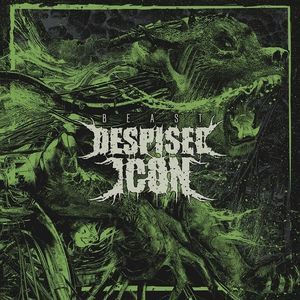
That format gave a returning band a stage before it had a record to sell. Disbanded in April 2010, back for reunion shows announced on 4 February 2014 and officially reformed in April 2016, the Montreal band with two singers on one microphone line was Despised Icon, and that spring it played the Impericon Festival in Oberhausen on 22 April and in Munich on 7 May. Nuclear Blast released Beast, produced by Yannick St-Amand, on 22 July 2016. The rooms had heard the band again before the shops had anything new to sell.
The video for "The Aftermath" was out on Nuclear Blast's channel by 11 June 2016, between the spring dates and the album. Two singers, Steve Marois and Alex Erian, share the microphone line on a Despised Icon record the way two stagehands pass a bass drum over the barricade at changeover, hand to hand, never letting it touch the floor.
A year later the roving festival had a deathcore headliner. Announced in March 2017 with the Sydney band named as its headliner and Carnifex further down, and routed from the Arena in Vienna on 14 April through the Neue Messe in Leipzig, the Academy in Manchester, the X-TRA in Zurich and the Turbinenhalle in Oberhausen to the Zenith in Munich on 30 April, the band named to headline the 2017 Impericon Festival, and closing its Manchester night at 9:45 pm, was Thy Art Is Murder, which played all six cities. Later that year the band put out an official live video for "Puppet Master". The floor is the advert.
The deathcore festival slot in Europe
Then there are the real festivals, the fields with campgrounds and four stages, and here deathcore found itself filed in a different drawer. An American package sorted bands by the age of their audience. A European metal festival sorted them by their blast beats, and put the genre next to death metal.
Founded in 1997 at Abtsgmünd, moved to Dinkelsbühl in Bavaria in 2006 and drawing around forty thousand people a summer, Summer Breeze shows the filing most clearly. Its 2008 bill, from 14 to 16 August, carried Despised Icon among the small names beside Cephalic Carnage, Rotten Sound and Aborted. In 2009 Suicide Silence played the same fields as Suffocation, Hate Eternal, Beneath the Massacre and The Faceless. By 2017 the deathcore contingent was Whitechapel, Chelsea Grin and Aversions Crown, booked into one weekend with Suffocation, Cryptopsy, Gorguts and Decapitated. Beyond dispute, the festival read deathcore as an extreme metal band in a younger shirt.
| Year | Festival | Deathcore on the bill |
|---|---|---|
| 2008 | Summer Breeze, Dinkelsbühl | Despised Icon |
| 2008 | Hellfest, Clisson | Job for a Cowboy |
| 2009 | Summer Breeze, Dinkelsbühl | Suicide Silence |
| 2012 | Resurrection Fest, Viveiro | Suicide Silence |
| 2015 | Summer Breeze, Dinkelsbühl | Carnifex, Thy Art Is Murder, Suicide Silence, Betraying the Martyrs |
| 2015 | Wacken Open Air | Suicide Silence |
| 2015 | Resurrection Fest, Viveiro | Suicide Silence, Carnifex |
| 2016 | Hellfest, Clisson | Thy Art Is Murder |
| 2017 | Summer Breeze, Dinkelsbühl | Whitechapel, Chelsea Grin, Aversions Crown |
| 2017 | Rock im Park, Nuremberg | Suicide Silence |
| 2019 | With Full Force, Ferropolis | Whitechapel |
| 2019 | Party.San Metal Open Air, Schlotheim | Vulvodynia |
| 2022 | With Full Force, Ferropolis | Suicide Silence |
| 2024 | Download Festival, Donington | Shadow of Intent |
| 2026 | Rockharz, Ballenstedt | Necrotted |
The slot itself tells the rest. Started in 2006 at Clisson, grown out of the Fury Fest and selling fifty-five thousand tickets a day by 2017, Hellfest had Job for a Cowboy on its field on 20 June 2008, and on the Saturday of the 2016 edition it sent Thy Art Is Murder out to open the day, where one review of that day found the band's own fans waiting for it. Morning. Sunshine. A breakdown fired across an empty field at people still carrying their first coffee of the day.
That is the mechanical problem with a deathcore festival slot. Everything the music was built on assumes a dark room with a low ceiling and the crowd within arm's length of the stage, and a midday festival set takes away the dark, the walls and the closeness in one move. Light shows mean nothing at noon. The sets are short, often half an hour, and the band cannot count on the floor knowing its songs, because the people in front of it are there for the next name on the running order. What survives is the riff and the drop. The bands that did well in daylight were the ones whose breakdowns any stranger could find on the first hearing.
Spain gave the genre a different kind of welcome. Held since 2006 in Viveiro, in the province of Lugo, and built on heavy metal, hardcore and punk at once, Resurrection Fest put Suicide Silence on its bill in 2012 and again in 2015, Carnifex in 2015 and Thy Art Is Murder in 2016, beside hardcore bands rather than death metal ones. The same band, a different filing. On a hardcore-leaning bill the breakdown is the common language, and the blast beats are the accent.
The German summer circuit kept the door open across the decade. Suicide Silence played Wacken in August 2015 and Rock im Park in June 2017, Whitechapel played With Full Force at Ferropolis, the old open-cast mining site full of rusting excavators, at the end of June 2019, and Suicide Silence was back there in June 2022. Party.San, a death and black metal festival by temperament, booked the slam-heavy Vulvodynia in August 2019. Daylight slots are a war of attrition, and the deathcore bands kept winning it the simple way. They came back.
American clubs and the festivals that came late
America kept the music in the clubs far longer, because the clubs were where it worked. A club lives on the door and the bar, and the fire code fixes how many bodies it may hold. Picture the enamel sign screwed beside a club's door with that number painted on it, the figure the whole night's money is counted against, rattling on its two screws through a ten-band bill until the last breakdown of the night shakes it off the wall and drops it face down in the spilled beer under the door, while the floor in front of the stage packs itself tighter than any number on any sign. That squeeze is the American deathcore show. The room is always slightly too small, and that is the point of it.
When American festivals did book the genre in the 2010s, they usually did it from the undercard. The eighth Mayhem Festival, the last of its touring editions, which ran from 26 June to 2 August 2015 through amphitheatres in the United States and Canada with Slayer and King Diamond heading the bill, put Whitechapel and Thy Art Is Murder on its undercard. The war party stood outside the main gate of the evening, not under its roof.
The next decade moved the genre to the top of the sheet. Launched in Worcester, Massachusetts, in 1999 and run for most of its life at the Palladium there, the festival that handed its 2025 headline slot, one day at the Palladium Outdoors on 20 September, to a deathcore band with an orchestra on its records was the New England Metal and Hardcore Festival, and the band was Lorna Shore, with Cannibal Corpse, The Black Dahlia Murder, Despised Icon and Shadow of Intent beneath it. Twenty-six years after its first edition, the top line of a festival named for metal and hardcore went to the genre built out of both. That took a while.
The bigger American festivals had already taken the band. Lorna Shore played Sick New World in Las Vegas on 27 April 2024 and Aftershock in Sacramento on 12 October. Those are rock festivals with tens of thousands of people in front of the main stages. The band on stage was playing songs written for rooms that hold a few hundred.
Laid side by side, the two continents took the same music through different doors. Europe met deathcore through a retailer's package in its clubs and then through its open air metal festivals, where the genre was filed beside death metal and handed an afternoon slot. America met it through packages that sorted bands by the age of the crowd, played in rooms with a number on the wall, and booked it onto big festival stages only once those rooms could no longer hold the people who wanted in. In both places the economy underneath was the same: a slot on a bill, a table of shirts, and a van that needed fuel by morning.
The packages did the heavy lifting because a package solved the problem every young deathcore band had. One band alone could not fill a room in a town that had never heard of it. Five or ten bands together could, and the crowd that came for one of them left knowing all of them. That arithmetic built the genre's audience long before any festival put its name on a poster.