
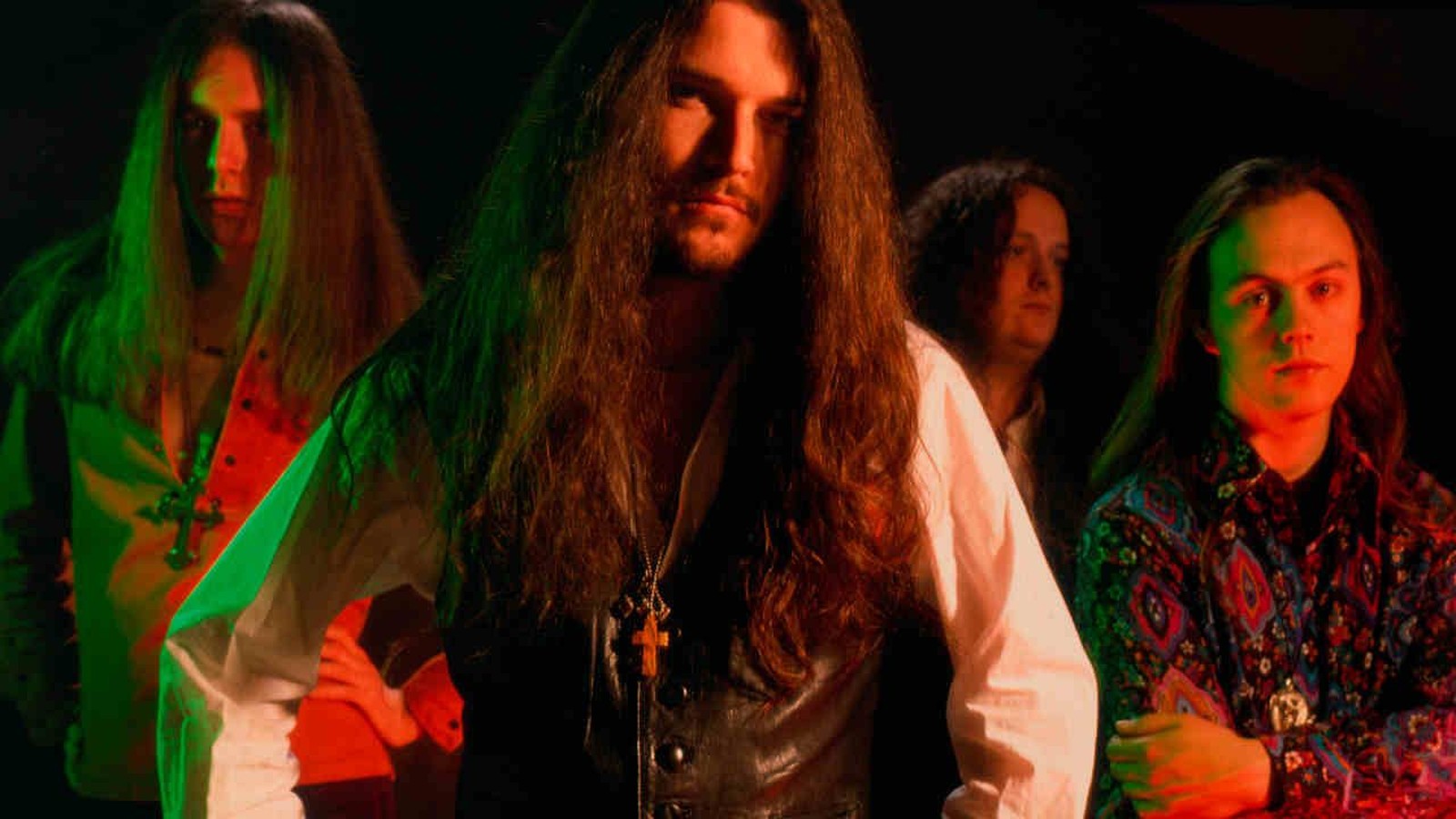
The four young men from Aston who carried their amplifiers into a small room at Regent Sound, on Denmark Street in London, one autumn day in 1969, played their live set more or less as they played it on stage and walked out after a single session of about twelve hours with an album on tape, did not cut a record so much as crack open a tar pit in the floor of rock music. Nobody in that room had booked a genre. They had booked a day. Behind the glass sat Rodger Bain, who would go on to produce the band's first three albums, and what Black Sabbath poured onto the reel, released as Black Sabbath on Friday 13 February 1970, swallowed the bright blues riff of the sixties whole and has been dragging every doom metal band since down into the same black pitch.
Nothing that went into that pit ever came back out. Each wave of bands sank its own layer onto the last without scraping away the one beneath, the way a tar pit keeps the bones of everything that ever wandered across its surface, so that a core drilled through a record made in 2023 still has the tritone of 1970 lying at the bottom, black and intact, under everything laid down since. The pit forgets nothing. Where thrash and black metal announced themselves by tearing down the house they were born in, doom has only ever added weight to what was already there, and the weight is the whole point. Tempos are held well below what a rock song asks for, guitars tuned down until the strings slacken, riffs repeated past the moment a listener expects them to change, and a voice, clean or growled, carries grief rather than aggression.
The layers overlap. Bands slide between them across a single career, and when the names stop lining up, the subgenre map sorts them by branch. The order in which they sank never changes.
Nothing that went into that pit ever came back out.
The bottom of the pit: a tritone, played slow
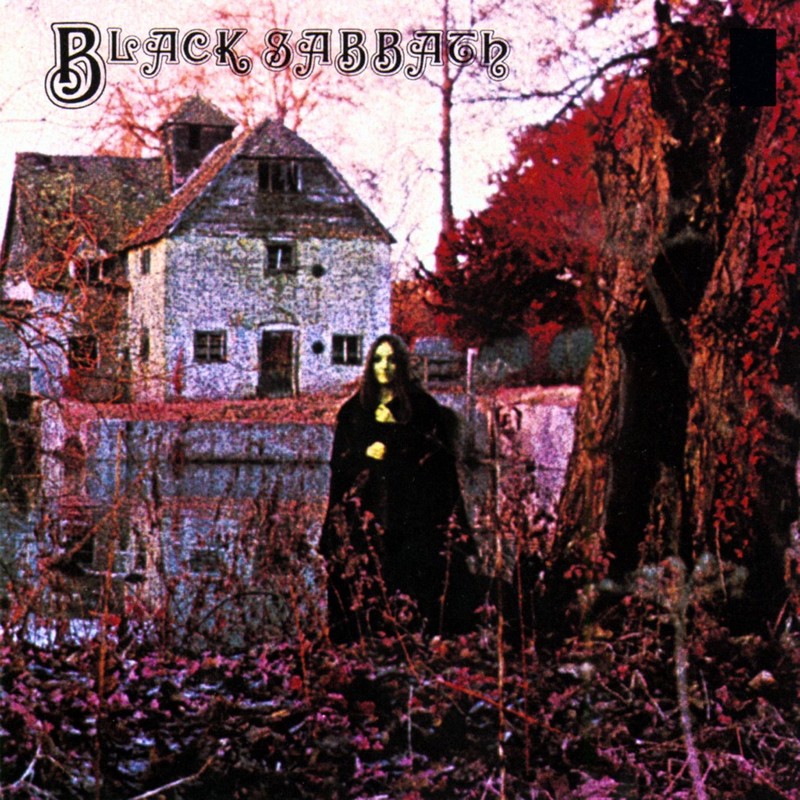
Built almost entirely on a tritone, the interval long nicknamed diabolus in musica, and played at a slow tempo on an electric guitar, the title track that opens the record rests on one decision, to drag a sinister interval down rather than whip a blues riff up, the seed crystal from which the whole genre grew. The album reached number 8 in the UK and number 23 on the American Billboard chart. The guitarist, Tony Iommi, had lost the tips of the middle and ring fingers of his right hand on his last day at a sheet metal factory, at seventeen. He turned to banjo strings, the lightest he could find, and later to lower tunings to make fretting bearable. By Master of Reality in 1971 he had tuned down three semitones on "Children of the Grave", "Into the Void" and "Lord of This World", and the low end of those songs, poured like molten lead into a mould and left to set, is the ingot every later band reached for first.
Black Sabbath did not stay where they started. The slow, dread-heavy side of the first albums was left in the pit for bands with no audience at all to wade in after. Formed in 1971 in the suburbs of Washington, D.C., around a singer called Bobby Liebling, the most stubborn of those heirs spent the rest of the seventies as a rumour. The band that went fourteen years without an album, Pentagram, did not put out a record until 1985, when songs cut in 1981 and 1982 under the name Death Row were partly re-recorded and self-released as Pentagram, later reissued by Peaceville in 1993 as Relentless. In England the Stourbridge band Witchfinder General released Death Penalty on Heavy Metal Records in 1982. Neither record sold. How the slow riff stayed alive with its face in the mud while heavy metal was being hammered into a stadium business is the subject of where doom metal came from.
The eighties: a creed kept in empty rooms
The second layer went down in rooms that were, commercially, empty. In March 1984 Metal Blade released the debut of a Chicago band called Trouble, an album issued under the band's own name and later known as Psalm 9. The same year SST, the label Greg Ginn had set up to release his own band Black Flag, issued the debut of the Los Angeles quartet that had named itself after the Black Sabbath song "St. Vitus Dance", Saint Vitus, recorded over two days in August 1982 at Total Access in Redondo Beach. SST sold it to a crowd of hardcore punks who had come for speed and found a band determined to confiscate it at the door and smash every stopwatch in the room. Early in 1986 Scott Weinrich, known as Wino, the frontman of The Obsessed in Maryland, replaced Scott Reagers as the singer of Saint Vitus, whose Born Too Late followed that year. The two American bands that had done most to keep the slow riff alive now shared a voice.

The Swedish contribution arrived fully formed. Built by the bassist Leif Edling out of what was left of his earlier group Nemesis, the band from the Stockholm suburb of Upplands Väsby, Candlemass, recorded Epicus Doomicus Metallicus in February 1986 at Thunderload Studios, with a session singer called Johan Längqvist brought in for the vocals. Black Dragon Records released it on 10 June 1986, six songs, from "Solitude" to "A Sorcerer's Pledge", that raised operatic singing over riffs slowed to a march and lowered the whole weight onto the decade of speed like a catafalque set down across a racetrack. In Metal Hammer's reading the band arrived at a complete sound and atmosphere on its first attempt, and the songs hardened into the template for what is still called epic doom. It sold poorly. Black Dragon dropped the band the same year, and Edling rebuilt it around a new singer, Messiah Marcolin, for Nightfall in 1987.
The four bands the chroniclers usually group together as the founding generation, Pentagram, Saint Vitus, Trouble and Candlemass, sold their albums of 1984 to 1987 in numbers a thrash band of the same years would have counted as a failure. That is exactly why the stubbornness matters. Nobody played this music in the eighties for money. There was none. The stubbornness hardened like pitch left out in the frost into a creed: the riff held longer than anybody wants, the tempo refused, the lyrics about loss and addiction and the end of things, sung clean and without irony. The full account of that creed is in the eighties chapter. In England, one of the people who owned every one of those records was singing in a grindcore band.
Cathedral: the grindcore singer who pulled the brake
Leaving Napalm Death in 1989, a year after he had started a record label on the government's Enterprise Allowance Scheme, the singer whose voice was already on the second side of Scum and on all of From Enslavement to Obliteration, Lee Dorrian, wanted the one thing grindcore had been built to blow apart. He wanted slower. He met Mark Griffiths, then a roadie for Carcass, and the conversation turned out to be about the same records, Black Sabbath, Candlemass, Pentagram, Trouble and Witchfinder General. With the guitarist Garry Jennings, formerly of the thrash band Acid Reign, and with Adam Lehan and Ben Mochrie completing the line-up by 1990, they formed the Coventry quintet that would drag doom through the whole decade like an anchor chain across a harbour floor, Cathedral. On 6 and 8 October 1990 they recorded the demo In Memorium at Rhythm Studios. By the summer of 1991 they had signed to Earache.

Recorded in July and August 1991 at Workshop Studios in Redditch, produced by Steve Gurney with Dorrian and Jennings, with the drummer Mike Smail, from the Pittsburgh doom band Penance, behind the kit, Forest of Equilibrium came out on Earache on 21 October 1991. It seized the label that had released Morbid Angel's blast beats and Napalm Death's one-second songs by the ankles, and dragged its tempo down to the rate at which silt settles through still water. Seven tracks run for fifty-four minutes. Among them are "Ebony Tears" and "A Funeral Request". In 2020 Chris Chantler of Metal Hammer still called it a unique recording, AllMusic and Kerrang! both gave it four stars out of five, and in February 2006 Decibel made it the twelfth record in its Hall of Fame.
Then Cathedral did what nobody buried beneath them had done. Instead of sinking further, the band turned towards the heavy rock of the seventies. Recorded at The Manor in Oxfordshire with the producer David Bianco, The Ethereal Mirror came out on Earache on 24 May 1993 and in America on Columbia on 6 July, which put a British doom band on a major label within two years of a debut that barely moved, and Kerrang!'s Xavier Russell rated it above the debut before the same magazine placed it at number 83 in its hundred best British rock albums. The Carnival Bizarre followed on 29 September 1995, recorded at Parkgate Studios with Kit Woolven. On its third track, "Utopian Blaster", Tony Iommi plays guitar. That session is the clearest single picture of how this music works: the man who had cracked open the pit in 1969 reaching up through twenty-five years of settled pitch to lay his guitar across the layer that had been pressed down on top of his own.
The band ran for another eighteen years, through a move to Nuclear Blast in 2005, and ended by choice with The Last Spire in April 2013. Not all the later records hold. The label is a different matter. The imprint Dorrian had started on a government start-up allowance, Rise Above, became the nursery in which much of the next seam was laid down, with Electric Wizard, Orange Goblin, Witchcraft, Blood Ceremony, Uncle Acid & the Deadbeats and Pentagram all on its roster at one time or another, and Dorrian has named Electric Wizard's Come My Fanatics... of 1997 as the turning point for the whole scene. On any honest reading, no British doom band after Black Sabbath drove more weight into the ground than Cathedral did, on record and off it.
Cut through almost any slow record of the last thirty years and you reach Cathedral. Cut through Cathedral and you reach the first Black Sabbath album. Nothing in this music has ever been cleared away to make room.
Ilse Brandt, KaosMetal
Peaceville, and the growl poured into the mould

While Cathedral were cutting their first demo, three bands from the north of England were pouring the death metal growl into doom's slow mould like slag into a trench. The Halifax quintet signed to Peaceville, Paradise Lost, released Gothic on 19 March 1991, setting orchestral parts and the guest voice of Sarah Marrion against the slow riff; the Bradford band that put a violin into its line-up, My Dying Bride, made Turn Loose the Swans in 1993; and the Liverpool band Anathema released Serenades the same year. The press called them the Peaceville Three. Decibel questioned that label in July 2012 in a feature titled "The Myth of the Peaceville Three", in which the bands said they had barely known each other at the start.
The deposit was thick, and it did not stay pure for long. By the end of the decade two of the three had torn themselves a long way loose from the growl: Paradise Lost went through Draconian Times in 1995 to the electronic textures of One Second in 1997 and Host in 1999, Anathema drifted into atmospheric rock, and gothic metal, a style these records had done much to invent, walked off with the keyboards and the female voices. The slow death metal underneath sank back underground. A second generation kept it there. Why the growl and the dirge fused in England at that moment, and what the bands who inherited the fusion did with it, is laid out in the death doom chapter.
Sludge: the pitch that boiled up through hardcore
The next seam did not come down from metal at all. It came up from below, boiling. Black Flag's My War in 1984 gave its entire second side to songs played at a crawl, an act of provocation towards a hardcore audience that expected speed, and it showed the young bands listening that punk could be slowed until it ground its own audience into the floor instead of lifting it off it. The trio from Washington state that had formed in 1983, the Melvins, took the lesson furthest: their debut, Gluey Porch Treatments, recorded in October 1986 and released on Alchemy Records in 1987, sealed hardcore's aggression inside Black Sabbath's tempo like a riot welded into a pressure tank, and the band has been credited ever since as the pioneer of sludge.

The heaviest deposit of it settled in Louisiana. Formed in New Orleans in 1988, the quintet that became the sound of the city's underground, Eyehategod, took the Melvins' tempo, Black Flag's hostility and a blues riff Black Sabbath had borrowed from the same American South, and held all three under a flood of feedback until they stopped kicking. The band released Take as Needed for Pain on Century Media on 22 November 1993, a record Terrorizer named the greatest sludge album of all in 2009. No sorcery. No afterlife. The lyrics of that scene were about poverty, addiction and pollution, and the sludge chapter follows them out of Louisiana.
Stoner: fuzz poured over the old riff
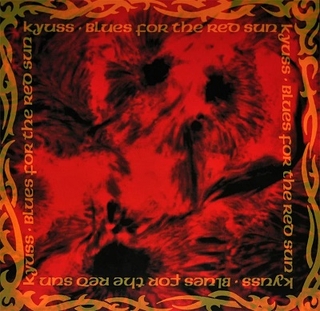
At almost the same moment a younger seam was being washed in from the opposite direction, like a flash flood tearing down a dry canyon, out of the psychedelic rock of the late sixties rather than out of hardcore. The four musicians from Palm Desert, California, who called themselves Kyuss, John Garcia, Josh Homme, Nick Oliveri and Brant Bjork, went into Sound City in Van Nuys with the producer Chris Goss and came out with Blues for the Red Sun, released by Dali Records on 30 June 1992. It is a record of down-tuned guitars and grooves in place of dirges, with a riff on "Green Machine" that Guitar Player later counted among the fifty heaviest of all time. It sold only around 39,000 copies. Eduardo Rivadavia at AllMusic has since called it a major milestone in heavy music. Monster Magnet in New Jersey and Fu Manchu in southern California were working the same seam.
The other founding band of the style came from San Jose and went further than anyone thought sensible. Sleep released Sleep's Holy Mountain on Earache in 1992, signed a potentially lucrative contract with London Records, and spent about four years writing a single song, which they recorded in 1994 in three sections because a reel of tape only held twenty-two minutes. London refused to release it. One riff sank the contract like a slab dropped through the floor of a rowing boat. The band broke up, and the song surfaced twice: as the unauthorised fifty-two minute Jerusalem on Rise Above and The Music Cartel in 1999, and as the sixty-three minute Dopesmoker, the version the band preferred, on Tee Pee in 2003. By then Electric Wizard had released Dopethrone on Rise Above on 25 September 2000, and the stoner chapter tells the whole story.
The floor of the pit: funeral doom and drone
Below death doom the tempo kept subsiding until it reached something close to stillness, and the first place it got there was Finland. The trio from Kaarina that began recording its only album in the autumn of 1992 and split a year before anyone heard it, Thergothon, left behind Stream from the Heavens, released by the Italian label Avantgarde Music on 15 June 1994 and counted among the first funeral doom albums, a record that goes down like a body through tar, too slowly for the eye to follow and far too steadily to stop. The Riihimäki band formed in 1991, Skepticism, released Stormcrowfleet on Red Stream in 1995 and set an organ sound at the centre of the style. Later, Ahab in Germany harpooned Moby-Dick and hauled a whole debut album out of it. What the style mourns, and why it is so often mistaken for a gimmick when it is the most disciplined music anywhere in doom, is the subject of the funeral doom chapter.
Drone went lower still by cutting the pulse out altogether. Founded by Dylan Carlson in Olympia in 1989 under the name Earth and drawing on the minimalism of La Monte Young, the band saw Sub Pop release Earth 2: Special Low Frequency Version on 5 February 1993, seventy-three minutes of guitar and bass held on long single tones until the riff stopped behaving like a riff and set into a geological stratum in its own right. From that record came Sunn O))), formed in Seattle in 1998 by Stephen O'Malley and Greg Anderson under a name chosen partly as a play on Earth's, whose debut ØØ Void appeared on 26 June 2000 and whose Life Metal, recorded to analogue tape by Steve Albini, came out on Southern Lord in 2019. The compression is total. Every layer laid down since 1970 fuses into a single seam and the music stops moving forward at all, which is where the drone chapter picks up the story.
| Layer | Band | Record | Year | Label |
|---|---|---|---|---|
| The first stratum | Black Sabbath | Black Sabbath | 1970 | Vertigo |
| American underground doom | Saint Vitus | Saint Vitus | 1984 | SST |
| Epic doom | Candlemass | Epicus Doomicus Metallicus | 1986 | Black Dragon |
| Sludge | Melvins | Gluey Porch Treatments | 1987 | Alchemy |
| Death doom | Paradise Lost | Gothic | 1991 | Peaceville |
| British doom revival | Cathedral | Forest of Equilibrium | 1991 | Earache |
| Stoner | Kyuss | Blues for the Red Sun | 1992 | Dali |
| Drone | Earth | Earth 2 | 1993 | Sub Pop |
| Funeral doom | Thergothon | Stream from the Heavens | 1994 | Avantgarde Music |
| The long form | Bell Witch | Mirror Reaper | 2017 | Profound Lore |
Pressure from above: the revival, 2000 to 2019
The new century piled on weight faster than any decade since the seventies, and most of it arrived through labels small enough to take the risk. Signed to the Canadian label Profound Lore, the Little Rock quartet Pallbearer released Sorrow and Extinction on 21 February 2012, a record built on clean singing and the long melodic riff of the eighties, lowering the old creed into the ground like a coffin. Sleep came back with The Sciences, released with almost no warning on Third Man Records on 20 April 2018. Candlemass brought Johan Längqvist back as a full member in 2018 and, on The Door to Doom in 2019, had Tony Iommi play a solo on "Astorolus - The Great Octopus", thirty-three years after the album that had borrowed his tempo.
The heaviest single object of those years was a song. After their former drummer Adrian Guerra died in 2016, the Seattle duo Bell Witch recorded Mirror Reaper, one continuous piece of eighty-three minutes released by Profound Lore on 20 October 2017, with unused vocal takes Guerra had recorded for the previous album set into it. It is nobody's first record. It is the proof that the long form had outgrown the novelty of its own length, because nothing in it is there to set a record. The full roster is gathered in the bands you need to know.
The top layer: the 2020s
The present decade has pressed its own weight down with unusual force, and much of the weight has come from bands already decades deep in the pitch. Pallbearer released Forgotten Days on Nuclear Blast on 23 October 2020, and the Denver band Khemmis followed with Deceiver on 19 November 2021. Thirty-three years after they formed, the New Orleans band Eyehategod put out A History of Nomadic Behavior on 12 March 2021. Candlemass, with Längqvist singing, released Sweet Evil Sun on Napalm Records on 18 November 2022, and The Obsessed came back with Gilded Sorrow in February 2024. The Halifax band Paradise Lost released Ascension, produced by their guitarist Gregor Mackintosh, on 19 September 2025, thirty-four years after Gothic. Nobody here climbs out.
One riff sank the contract like a slab dropped through the floor of a rowing boat.
The new names are not imitators of the lower strata. They are the pressure that keeps crushing them tighter. The Italian quartet Messa set a clean female voice over traditional doom on Close, released by Svart in 2022, and moved to Metal Blade for The Spin in 2025. The Oklahoma City band Chat Pile welded sludge to noise rock on God's Country, released by The Flenser on 29 July 2022 and named Best New Music by Pitchfork. The Seattle band Bell Witch opened a three-part work with Future's Shadow Part 1: The Clandestine Gate, another single track of eighty-three minutes, released by Profound Lore on 21 April 2023 and designed so that the end of the third part will overlap the start of the first and the whole can play on a loop, a serpent of tar swallowing its own tail. A song with no end, built from the oldest materials in the genre. The records worth owning from every stratum, from 1970 to this one, are chosen and argued for in the essential albums.
A history of this music that only lists records leaves out half of what holds the strata together. The painted sleeves Dave Patchett made for Cathedral, the occult lettering across the Rise Above catalogue, the tunings that drop a little further with each generation and the festivals programmed around slowness are sediment too, and they are set out in the culture around the music. Every one of those records, down to the newest, is still sinking toward the same floor: a single day in a small studio in 1969, one session, four young men from Aston.
